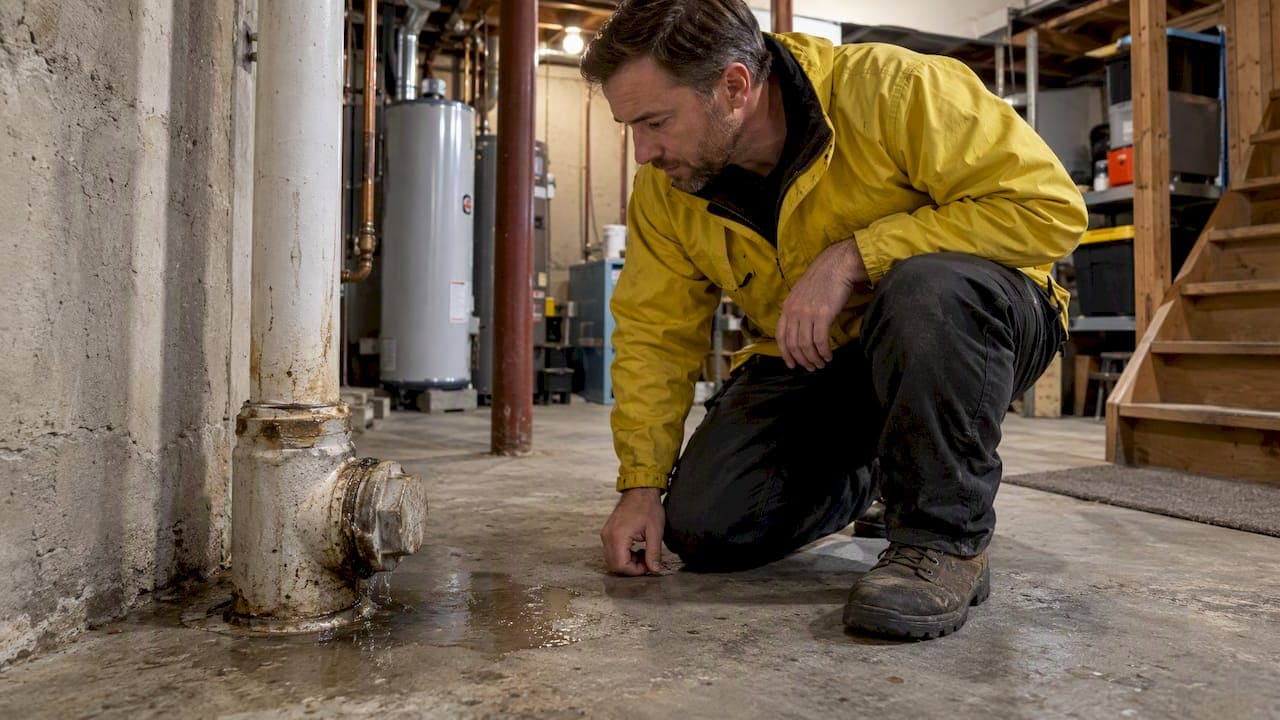
If your sewer cleanout is clogged or overflowing, stop using water in the house, keep the cap on unless a licensed plumber is there to service it, contain any spill, and call a licensed plumber. Sewage standing at the cleanout means the line between your house and the public sewer is blocked. That line is usually your responsibility, and the fix needs the right equipment. This guide covers how to read the signs, what to do in the first 15 minutes, what not to do, how to handle a leaking cap, and how to clean up safely afterward.
TL;DR
- Sewage coming up at the cleanout, or backing up in the lowest drains, points to a blockage in the main sewer line or lateral. Stop running water right away.
- Contain the spill, keep kids and pets away, and keep sewage out of storm drains.
- Do not pull the cleanout cap to "relieve" a backup. Some jurisdictions treat that as a health violation, and it can make the spill worse.
- A cracked, loose or missing cap is a separate problem. It lets sewer gas and sewage seep out and is usually a quick repair.
- Call a licensed plumber for any overflow. Call your town's sewer department if sewage reaches the street or you suspect the public main.
Table of Contents
- What a clogged sewer cleanout is telling you
- What to do right now when the cleanout overflows
- Why the cleanout clogs in the first place
- Where is the cleanout, and can it be inside the house?
- If the cleanout cap is leaking
- Cleaning up after sewage reaches your home or yard
- Who is responsible: you, or the town?
- When to call a plumber (and what to expect)
- Perspective: what we see in Arlington-area homes
- How we can help
- Preventing the next backup
- FAQ
- Sources
What a clogged sewer cleanout is telling you
A cleanout is a capped access pipe on your sewer lateral, the pipe that carries waste from the building to the public sewer. Plumbers use it to inspect the line and clear obstructions. According to Carlsbad's utilities department, cleanouts are usually within three to five feet of a home or business.
When the cleanout is full, bubbling or overflowing, water has nowhere to go downstream of that point. The blockage is somewhere between the cleanout and the public sewer, or in the public main itself. In the first case it's your problem to fix. In the second, the town needs to know.
Main line or lateral: how to tell
One useful rule comes from a sewer district's emergency guidance. Continuous, significant sewage flow from a drain while no water is running suggests the sewer main is plugged. Small, intermittent or slow drainage suggests a plugged lateral.
In practice, here is what homeowners see:
| What you notice | What it usually means | Who to call |
|---|---|---|
| One slow sink or tub, others fine | Local branch clog | Drain cleaning, or try the DIY steps in our slow kitchen sink guide |
| Gurgling in several drains, slow flushing | Partial blockage in the main line or lateral | Licensed plumber |
| Water or sewage at the cleanout, basement floor drain backing up | Blocked lateral or main | Licensed plumber now, sewer department if the street is affected |
| Steady sewage flow with no water running | Possible public main blockage | Sewer department first, then a plumber |
Gurgling is often the first warning. If you are hearing it but nothing has backed up yet, our walkthrough on fixing a gurgling drain at home helps you rule out simple venting and trap issues before assuming the worst.
What to do right now when the cleanout overflows
Treat this as a sanitation emergency, not a plumbing inconvenience. Raw sewage carries bacteria and viruses. Work through these steps in order.
- Stop all water use. No flushing, showers, dishwasher or laundry. Every gallon you send down goes to the same blocked pipe. Turn off the water supply if you can't keep people from using fixtures.
- Keep people and pets away. Children and animals should stay out of the affected area, as Burlingame's guidance for property owners advises.
- Contain the spill. San Diego's sewer lateral guidance recommends controlling the flow with sandbags, dirt or cat litter. Burlingame adds that sewage must be kept out of the storm drain system, using sandbags, dirt or plastic sheeting.
- Call a licensed plumber. Describe what you see and say it is an overflow, so the dispatcher treats it as an emergency.
- Notify the town if it reaches the street. If the spill extends into the public right-of-way, San Diego's guidance says to call the city's emergency line. In Massachusetts, that means your local department of public works or sewer department. Your town's website lists the number.
- Photograph the damage. If sewage reached finished space, take photos before cleanup for any insurance claim.
We get calls from homeowners who have already tried a plunger, a bottle of chemical cleaner and a garden hose. None of those helps with a main line blockage, and chemical drain cleaners add a hazard for whoever opens the line next.
What not to do
Don't pull the cleanout cap to "let it drain." It feels logical: open the pressure valve. But Carlsbad's utilities department says that removing a cleanout cap to relieve a backup is prohibited in some jurisdictions because it causes a sewage spill and counts as a health violation. A backed-up cleanout can release a surge, and you will own the mess.
Don't drop anything into the pipe. Wylie, Texas, cautions that parts dropped into the pipe when removing a cap will cause a new stoppage. Old caps can seize, crack or shed pieces, so forcing one with a pipe wrench is a bad idea.
Don't run a rented machine without knowing the line. A rented drain machine can work on a simple, straight, root-free line. In an older home with a cracked clay or cast-iron lateral, it can snag, push a clog deeper or scar the pipe. If the cleanout is already overflowing, there is also the question of where the sewage goes when you open it.
Why the cleanout clogs in the first place
The cleanout is rarely the cause. It just shows you where the line has backed up. The usual culprits:
- Tree roots. Roots find the joints in older clay, cast iron and Orangeburg pipe and grow into them.
- Grease buildup. Kitchen fats cool and coat the pipe wall until the opening narrows.
- "Flushable" wipes, paper towels and hygiene products. These do not break down like toilet paper.
- Belly or sag in the pipe. A low spot holds water and solids and clogs repeatedly.
- Collapsed or offset pipe. Soil movement, frost and age can separate joints or crush sections.
In New England, where many homes have lateral lines laid decades ago, root intrusion and old materials are common. If your house predates 1970, expect older pipe. In Wylie, for example, structures built before 1970 usually have a four-inch cast-iron cleanout pipe with a brass threaded cap. Local materials differ, but the pattern of older iron or clay is familiar in many older neighborhoods.
For a deeper look at the five most common triggers and the one inspection that heads off most floods, read our piece on sewer backup causes and prevention.
Where is the cleanout, and can it be inside the house?
Yes, it can be either place. The HUD inspection standard recognizes that a cleanout may be inside or outside. Common locations:
- A capped pipe sticking up from the ground near the foundation, often in a yard or a mulch bed.
- A capped fitting in the basement or crawl space, close to where the main line exits the house.
- A cap flush with the floor or hidden behind an access panel.
- A cleanout near the property line or curb on some lots.
If you can't find one, look where the main drain leaves the building, usually on the side of the house closest to the street. A property with no accessible cleanout is harder to service. A plumber can install one at the point where the line exits, which makes every future clog faster and cheaper to clear.
Older caps may be brass, cast iron, PVC or rubber. Don't try to open one that is overflowing. If you only need to locate it, note where it is and tell your plumber.
If the cleanout cap is leaking
A leaking cap is different from an overflowing cleanout, but it still needs attention. Seepage around the cap can mean a loose cap, a damaged gasket or threads, a cracked riser, or pressure from a partly blocked line.
HUD's inspection standard lists a detached or missing cap, and a cap or riser with a hole or crack, as deficiencies. It notes holes or cracks may let contaminated air or sewage seep out, and that lawnmowers often hit and crack them. It also sets a 30-day correction timeframe for a detached or missing cap in the inspection context. Carlsbad's guidance is simple: the cap must be tight at all times except when the lateral is being serviced.
Here is how to think about it:
- Dry crack or smell, no liquid: sewer gas is escaping. Keep the area ventilated and have the cap or riser replaced. Our guide to sewer smell in the house covers other sources of the odor, including dry traps.
- Weeping liquid at the threads while drains run slowly: the line is likely partly blocked and pressurizing the cap. Treat it like an overflow in progress and call a plumber.
- Cap loose or missing, no backup: a plumber can fit a proper cap or replace a broken riser. Cover the opening in the meantime so debris, animals and water can't get in.
- Cap cracked by a mower or vehicle: the riser below it may be damaged too, so have the whole assembly checked.
Don't seal a leaking cap with caulk or tape and walk away. That hides a symptom and may stop a plumber from opening it later.
Cleaning up after sewage reaches your home or yard
Sewage cleanup is a health task. Burlingame's guidance for property owners recommends:
- Wear rubber boots, gloves and goggles.
- Keep children and pets out of the area.
- Discard items that can't be washed and disinfected, plus contaminated drywall and insulation.
- Clean hard surfaces with hot water and detergent.
- For outdoor asphalt or concrete, a 2% bleach solution may be used, but it must not reach a storm drain.
- Hire a professional cleaning firm for large cleanups.
- Wash your hands and your cleanup clothes afterward.
The EPA's flood cleanup guidance similarly advises removing excess water, cleaning affected surfaces and drying them thoroughly, and notes that floodwater may carry contamination associated with raw sewage. Moisture left behind invites mold, so run fans and a dehumidifier in basements.
If a lot of finished space got wet, or anyone in the household is elderly, pregnant, very young or immunocompromised, call a professional remediation company instead of doing it yourself. Ask your homeowner's insurer about sewer backup coverage, as it is often a separate endorsement rather than part of a standard policy.
Who is responsible: you, or the town?
In most places the property owner owns the lateral from the building to the public main. Carlsbad's utilities department states it plainly: owners maintain and repair the lateral. Rules vary by town, and Massachusetts communities differ on where private responsibility ends, so check with your local sewer department.
Burlingame's guidance sets the logic: when the backup is in private internal plumbing or a private service lateral, call a plumbing professional to clear it. Notify the public sewer department about sewage spills.
A quick test that helps: if your neighbors also have slow drains or backups, or sewage is flowing steadily without any water use in your home, suspect the public main and call the town immediately. If only your house is affected, the blockage is most likely in your lateral.

When to call a plumber (and what to expect)
Call right away if:
- The cleanout is overflowing or bubbling.
- Multiple drains are backing up, especially basement floor drains, tubs and the lowest toilet.
- You have recurring clogs after clearing, which suggests a structural problem.
- You can smell sewage or see wet soil above the lateral.
- You can't locate or safely open the cleanout.
A licensed plumber will typically locate the blockage, clear it through the cleanout with a cable machine or a high-pressure water jet, then run a camera through the line to see the cause. Water jetting uses high-pressure water to blast away clogs and scour pipe walls. The camera matters: it shows roots, a bellied section or a break, so you can decide on repair rather than clearing the same clog every spring.
We suggest asking for the camera footage and a clear quote before any excavation or lining work. A line that clears and stays clear for years needs nothing more. A line that fails inspection needs a repair plan, and you deserve to see why.
Perspective: what we see in Arlington-area homes
We work in a lot of older houses, and the pattern is consistent. The cleanout almost never is the problem. A homeowner opens it, sees standing water, and assumes the cap or the fitting is at fault, when the actual blockage is 30 or 40 feet downstream, usually roots in an old joint or a grease-and-wipes mat.
Our advice is practical. Know where your cleanout is before you need it. Keep the cap tight and unbroken. Don't pour anything down the line that you wouldn't want to meet again in your basement. And if the line has backed up once, have it cleared and scoped rather than hoping it was a fluke. A camera inspection costs far less than an emergency overflow in a finished basement.
If you are buying or selling, sewer lateral condition is one of the most expensive surprises in an older property. Our guide on inspecting plumbing before closing explains what to ask for. Commercial owners should keep up a scheduled program, and our commercial sewer maintenance checklist for Massachusetts is a good place to start.
— Matt
How we can help
Mystic Valley Home Services is a licensed and insured, family-owned Massachusetts plumbing and heating company with direct owner oversight, same-day or next-day service, and transparent upfront pricing. We have deep experience with Arlington's older homes. Our drain cleaning and clog removal service covers blocked laterals and main lines, and our pre-purchase plumbing inspections look at the line before you close on a house.

If your cleanout is backing up now, stop the water, contain the spill and call us. If you'd rather prevent the next one, book a cleaning and inspection while the line is working.
Preventing the next backup
- Clean the lateral on a schedule. Carlsbad's utilities department says laterals should be cleaned regularly, ideally by a professional once a year, to remove debris and avoid costly repairs. Properties with known roots or grease issues benefit most.
- Protect the cap and riser. Mark the cleanout so mowers and snowblowers steer clear, and replace cracked parts promptly.
- Keep wipes, grease and paper towels out of drains. Bin them.
- Manage tree roots. Don't plant thirsty trees over the lateral, and ask a plumber about root control if the camera shows intrusion.
- Consider a backwater valve. Some municipalities require relief devices and backwater valves for certain properties. Grass Valley, California, for example, sets requirements to protect against sewage backup during public sewer cleaning or blockage. Ask a Massachusetts plumber and your town whether one makes sense for a low-lying basement.
- Have an accessible cleanout. If your line has none, adding one makes future service faster.
FAQ
Why is my sewer cleanout full of water?
Water standing in the cleanout means the line is blocked somewhere downstream. It could be your lateral or the public main. Stop using water, leave the cap in place and call a licensed plumber. If sewage flows steadily with no water running, also notify your town's sewer department.
Is it safe to open the cleanout cap myself?
Not when the line is backed up. Some jurisdictions prohibit it because it causes a sewage spill, and it can release a surge. Parts dropped into the pipe can also create a new blockage. Let a plumber open it with containment and the right equipment.
Why is my cleanout cap leaking?
Common causes are a cracked or loose cap, a missing gasket, a damaged riser (often from a mower), or pressure from a partial blockage. Dry cracks vent sewer gas. Weeping liquid with slow drains means the line is likely clogged. Either way, have a plumber check it rather than sealing it yourself.
Can a sewer cleanout be inside the house?
Yes. Cleanouts can be inside or outside, and indoor ones are often in a basement or crawl space near where the main line leaves the building. Keep the cap secure, and keep the area accessible so a plumber can reach it quickly.
Who pays to fix a clogged sewer lateral?
Usually the property owner, since the lateral from the building to the public main is typically private. Rules vary by town, so confirm with your local sewer department. If the blockage is in the public main, the town handles it.
Sources
- Sewer Emergencies, South Davis Sewer District
- For Property Owners, Carlsbad, CA
- Sewer Laterals: Street or Alley, City of San Diego
- Sanitary Sewer Overflows: Information for Property Owners, City of Burlingame
- Wastewater, City of Wylie, TX
- NSPIRE Standard: Leak, HUD
- Cleaning Up After a Flood: FAQs, EPA
- Requirements for Sewer Backflow Prevention and Flow-Relief, City of Grass Valley