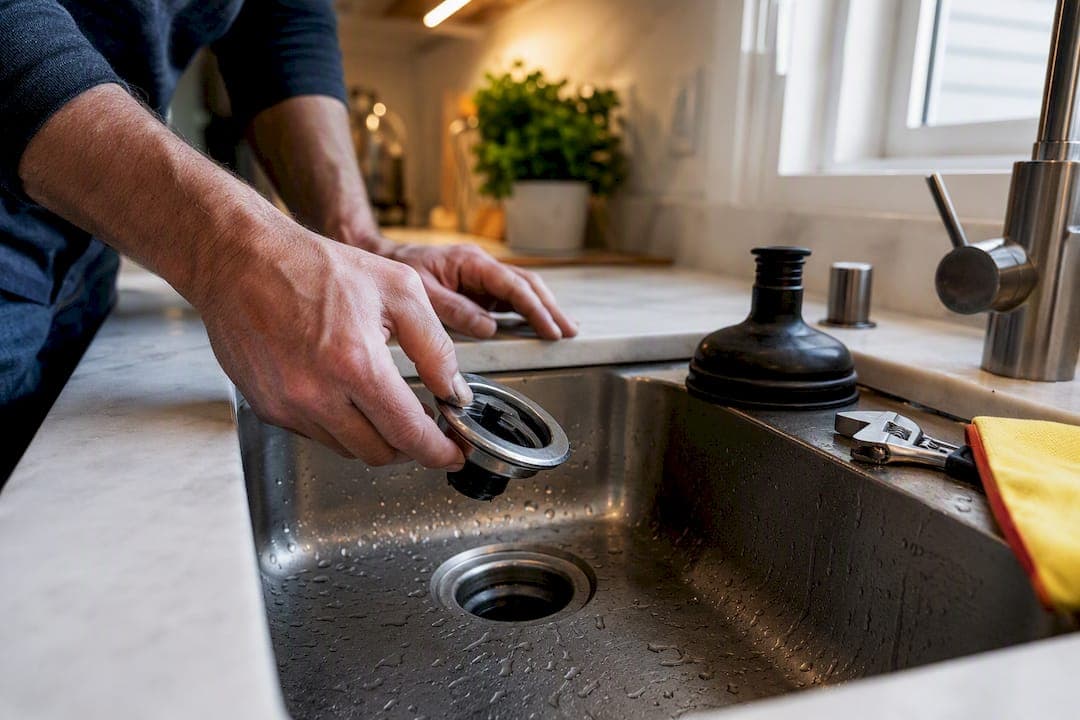
Start by pulling the strainer or stopper, clearing the visible gunk, then plunging the drain with a cup plunger. That combination clears most slow kitchen sinks in 10 to 45 minutes, no chemicals needed. If water still crawls, the next stop is the P-trap. Skip caustic drain cleaners entirely, and keep a bucket under the trap before you loosen anything.
TL;DR:
- Most slow kitchen drains respond to DIY methods like plunging and cleaning the strainer, with 70% of clogs resolving without professional help.
- Grease buildup is the primary cause of clogs, forming a waxy layer that narrows pipe passage and can often be cleared by simple maintenance.
- Chemical drain cleaners are discouraged because they often fail to dissolve grease effectively and can damage plumbing components over time.
- Routine maintenance, including regular flushing with hot water and using enzyme cleaners, helps prevent recurring clogs in older or heavily used kitchens.
- If multiple fixtures are slow, or odors and gurgling appear, professional intervention with camera inspection or hydro-jetting is recommended.
Table of Contents
- What's Causing Your Slow Kitchen Sink Drain?
- How Do You Unclog a Kitchen Sink Step by Step?
- Garbage Disposals, Dishwashers, and Grease: The Kitchen-Specific Traps
- When Should You Call a Plumber Instead of DIY?
- How Do You Stop Kitchen Drains From Clogging Again?
- Why This DIY Ladder Actually Works
- What To Expect When You Book Drain Cleaning With Mystic Valley Home Services
- Sources
- FAQ
What's Causing Your Slow Kitchen Sink Drain?
A slow kitchen sink almost always comes down to grease, food scraps, soap scum, or disposal sludge coating the inside of the pipe until water can barely squeeze past. Grease is the biggest offender because it goes down warm and liquid, then hardens against cooler pipe walls like a wax candle setting inside a straw. Roughly 70% of kitchen sink clogs respond to DIY methods without a plumber, which is good news if you're standing over a sink full of gray water right now.
Before you touch a wrench, run a quick diagnostic. One slow fixture points to a local problem near the stopper or trap. Multiple slow fixtures, gurgling noises, or a sewage smell point somewhere deeper in the plumbing system, and that changes your whole approach.
| Symptom | Likely cause | First fix |
|---|---|---|
| One sink slow, no odor | Stopper or P-trap buildup | Clean strainer, then plunge |
| Slow drain plus gurgling | Partial blockage or venting issue | Plunge, then check P-trap |
| Multiple fixtures slow | Main line or branch clog | Snake the branch; consider a pro |
| Sewage smell anywhere | Vent or main line problem | Stop DIY, call a plumber |
| Recently used chemical cleaner | Residue plus original clog | Flush with water, tell your plumber before service |
If you already poured in a chemical cleaner and it didn't work, don't mix another product on top of it. That combination can produce dangerous fumes, and it leaves caustic residue that becomes a hazard the moment someone starts pulling the trap apart by hand.
How Do You Unclog a Kitchen Sink Step by Step?
Work through these in order. Each one is a little more invasive than the last, and most homeowners never make it past step three or four.
- Clear the surface gunk (5 minutes, $0). Pull the basket strainer or pop-up stopper and scrape off the buildup with needle-nose pliers or a plastic drain pick. This alone fixes surprisingly stubborn slow drains.
- Plunge it (5 to 10 minutes, $0 to $10). Use a flat-bottomed cup plunger, not the flanged toilet kind. Fill the bowl with an inch or two of water, seal the overflow hole with a wet rag, and give it 10 to 15 firm, steady strokes. For double-bowl sinks, plug the second drain completely, or you're just pushing air through the wrong side. Blocking the overflow for a tighter seal is standard plunging technique that a lot of people skip.
- Baking soda, vinegar, and hot tap water (15 minutes, under $5). Pour half a cup of baking soda down the drain, follow with half a cup of vinegar, let it fizz for 10 minutes, then flush with hot tap water. This works on biofilm and light grease film, but it rarely budges a real solid clog. Use hot tap water rather than boiling water if you have PVC pipes, since near-boiling water can warp the plastic.
- Remove and clean the P-trap (20 to 30 minutes, $0 to $15). Slide a bucket underneath, loosen the slip nuts by hand or with pliers, and pull the trap free. Check both the trap itself and the trap arm leading into the wall for gunk. Rinse everything, reassemble, then run water and watch the joints for drips.
- Snake it (20 to 40 minutes, $15 to $25 for a hand auger). A 5 to 10 foot cable handles most under-sink clogs, though a 25 foot auger gives you room to work if the blockage sits farther down the branch line. Most kitchen clogs tend to sit relatively close to the fixture, usually within a short range of pipe.(https://plumbingresource.com/fixing-a-slow-draining-sink/). Feed the cable in slowly, rotate the handle when you hit resistance, and pull back gently once it breaks through. Clean the cable in a bucket of hot soapy water when you're done, not in the sink you just cleared.
- Wet/dry vacuum extraction (optional, 10 minutes). Seal the hose against the drain opening with a rag, set the vacuum to liquid mode, and pulse it a few times. It's a decent alternative to try before you commit to pulling the trap apart.
Pro Tip: Skip chemical drain cleaners for kitchen sinks altogether. Plumbers see the aftermath constantly: the caustic ingredients that are supposed to dissolve grease often just sit on top of it, and repeated use eats away at PVC joints and rubber seals over time. That warning about hidden pipe damage is one plumbers repeat for good reason.
Garbage Disposals, Dishwashers, and Grease: The Kitchen-Specific Traps
Kitchen sinks have plumbing quirks that bathroom sinks don't, and they trip up a lot of DIY attempts.
- If you have a disposal, never plunge that side of a double bowl unless it's completely sealed off. You risk forcing water and debris back up through the seal and making a mess.
- Run cold water while the disposal is on, not hot. Cold water keeps grease solid enough to chop cleanly instead of smearing it down the pipe, a detail covered in this guide on disposal habits that cause damage.
- To snake around a disposal, work from the non-disposal bowl or pull the trap first so the cable doesn't get tangled in the disposal housing.
- If your dishwasher backs up into the sink, check the dishwasher's knockout plug and drain hose connection before assuming the sink itself is clogged.
- For grease-heavy clogs, follow mechanical clearing with hot water and a squirt of dish soap to emulsify the residue, then use an enzyme treatment weekly to keep biofilm from rebuilding.
- If both bowls drain slowly at the same time, the blockage is probably past the tee where the lines join. That calls for snaking the branch line or bringing in a professional.
When Should You Call a Plumber Instead of DIY?
Some signs mean stop right there and pick up the phone, because continuing DIY risks a bigger mess or actual pipe damage.
- Multiple fixtures are slow at once, not just the kitchen sink.
- You smell sewage anywhere in the house.
- The clog keeps coming back within days or weeks of clearing it.
- You hear gurgling from other drains when the kitchen sink runs.
- You already tried a chemical drain cleaner and it didn't work. Tell the plumber this upfront; residual chemicals can burn skin during manual trap work if they aren't neutralized first.
A licensed plumber has tools that go beyond a home auger: camera inspection to actually see the blockage, motorized augers with much longer reach, and hydro-jetting that blasts grease and scale off the pipe walls with high-pressure water. Hydro-jetting typically runs several hundred dollars, often in the $400 to $800 range, but it's frequently the fix that finally stops repeat clogs in older homes with decades of grease buildup.
How Do You Stop Kitchen Drains From Clogging Again?
A little routine maintenance beats another Saturday morning under the sink.
- Every use: Wipe grease into the trash instead of the sink, keep coffee grounds and starchy or fibrous scraps out of the disposal, and run cold water while the disposal is on.
- Weekly: Flush the drain with hot water for 30 seconds after doing dishes to keep grease from settling.
- Monthly: Pull the strainer and stopper for a quick clean, and run an enzyme drain treatment overnight. Enzyme cleaners digest organic buildup gradually rather than trying to dissolve it instantly, which makes them a better long-term tool than vinegar.
- Annually: If you're in an older home or you've fought the same clog more than once, ask about hydro-jetting as preventative maintenance rather than waiting for a full backup.
Pro Tip: A $12 mesh strainer sitting in your basket does more preventative work than any bottle on the shelf. It's the cheapest insurance against a slow kitchen sink drain you'll ever buy.
Why This DIY Ladder Actually Works
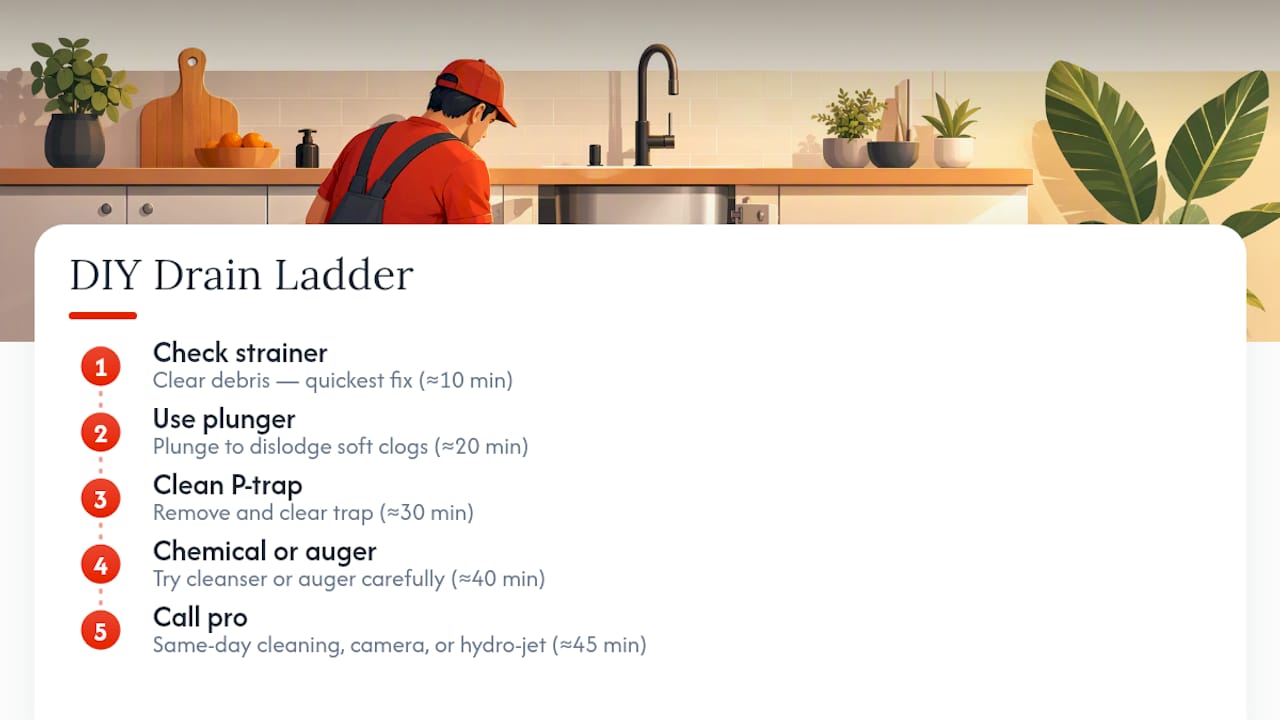
Kitchen clog calls commonly follow a pattern: the strainer, plunge, and trap-cleaning sequence resolves the overwhelming majority of them before a technician ever needs to touch a snake. The failures cluster in the same spots every time, grease-choked branch lines in older homes and disposals that got fed the wrong things for years.
That's why the order in this guide matters more than any single trick. Jumping straight to a chemical cleaner or an auger before trying the simple stuff wastes time and sometimes creates a second problem on top of the first. When a slow drain turns into a recurring one, that's usually a sign of a structural issue further down the line, and that's exactly when same-day drain cleaning, camera inspection, or hydro-jetting stops being overkill and starts being the right call.
— Matt
What To Expect When You Book Drain Cleaning With Mystic Valley Home Services
A licensed, insured technician can provide same-day or next-day service with professional camera equipment and motorized augers beyond the reach of standard home augers, backed by upfront pricing before any work starts.

Experienced technicians familiar with older homes and typical grease buildup diagnose repeat clogs instead of just clearing them again. When you call, have a few details ready: which fixtures are slow, what DIY steps you already tried, and whether you used any chemical drain cleaner, since that changes how a technician approaches the trap. Our drain cleaning and clog removal service covers everything from a stubborn P-trap to full hydro-jetting for a line that keeps backing up. If your kitchen sink has been slow for weeks instead of days, book a visit through our plumbing services page and get it looked at properly.
Sources
- The right way to clear a slow drain is to start with the gentlest method
- Fixing a Slow-Draining Sink: A Complete Step-By-Step Guide - Plumbing Resource
- How to unclog a kitchen sink
- Slow Draining Sink: How to Fix & Prevent Future Clogs
FAQ
Why Is My Sink Draining Slow but There's No Clog?
A drain can run slow without an obvious blockage when grease or soap scum coats the pipe walls just enough to narrow the passage, rather than sealing it shut. Gurgling with no visible clog can also signal a venting problem further down the line, which is worth checking if the slowness keeps returning.
What Do Plumbers Recommend for Slow Drains?
Plumbers consistently recommend starting with the gentlest method, manual cleaning and plunging, then moving to snaking before anything more invasive, and skipping chemical cleaners for kitchen drains entirely. If the clog returns repeatedly or affects multiple fixtures, they'll usually suggest a camera inspection before guessing further.
Do Baking Soda and Vinegar Work Better Than Drano?
Baking soda and vinegar handle light biofilm and mild odors reasonably well, but they rarely dissolve a full solid clog. Chemical cleaners like Drano aren't necessarily more effective on grease, and they carry real risk of damaging PVC pipes and rubber seals with repeated use.
Does Dawn Dish Soap Really Help Unclog a Drain?
Dish soap combined with hot water helps emulsify grease so it flows through the pipe instead of clinging to the walls, which makes it a useful follow-up after mechanical clearing. It won't break apart a solid clog on its own, but it's a smart, cheap step in the routine described in the step-by-step ladder above.