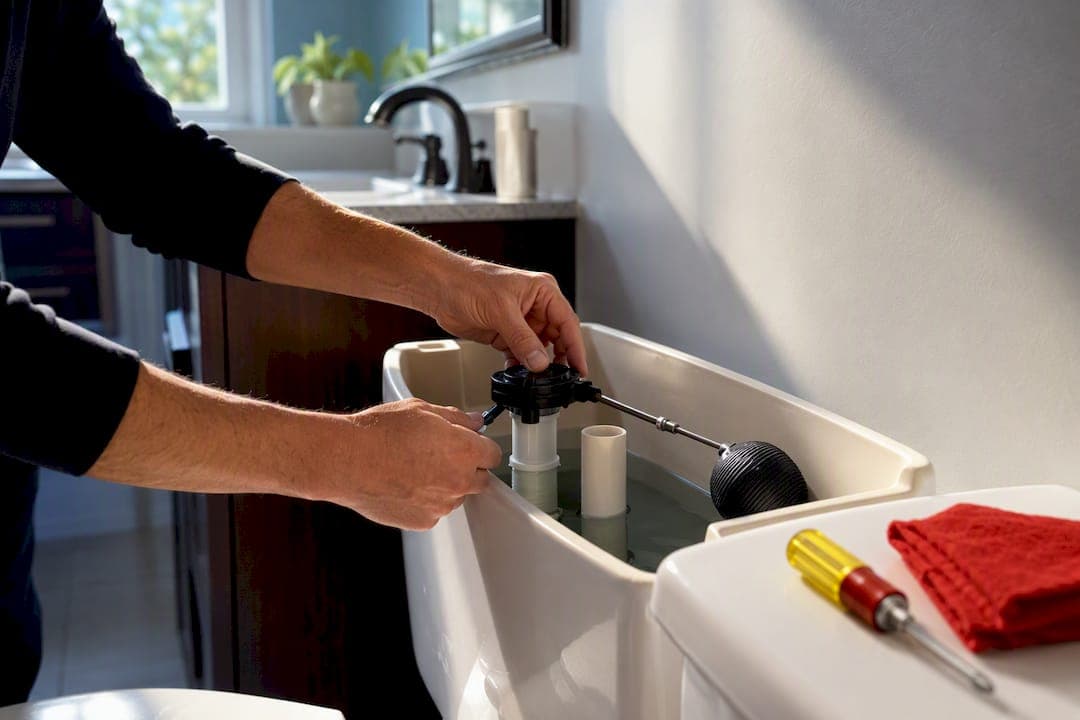
Start with the tank lid off: check the water level, check the flapper and chain, and check the shutoff valve behind the toilet. Those three spots cause most flush failures. If the water's low, the fill valve needs adjusting; if the chain's tangled or too loose, the flapper isn't opening fully; if the valve got bumped shut, that's your whole answer. Rule out a clogged jet, a partial drain clog, or a blocked vent next. If more than one fixture in the house is acting up or you smell sewage, skip the DIY and call a plumber.
TL;DR:
- A weak flush is most often caused by low water levels, a faulty fill valve, or a flapper that does not seal properly.
- Conducting a bucket test quickly distinguishes between tank issues and downstream clogs or vent problems before fiddling with plungers.
- Adjusting the fill valve or replacing the flapper takes under 15 minutes and resolves most common tank-side causes of poor flushing.
- Persistent slow drains, gurgling, or sewer smells indicate vent stack blockages or drain line issues that require professional inspection.
- Routine maintenance like cleaning rim jets and checking internal components can prevent most issues from developing in the first place.
Table of Contents
- Why Won't My Toilet Flush? The Most Common Culprits
- How Do You Diagnose a Toilet That Won't Flush?
- Fixing the Problem: Tools, Steps, and Difficulty
- When Should You Call a Plumber?
- Preventing Flush Problems Before They Start
- Field-Tested DIY Guides From Mystic Valley Home Services
- A Plumber's Honest Take on Weak Flushes
- If DIY Doesn't Fix It: Book a Diagnostic
- Sources
- FAQ
Why Won't My Toilet Flush? The Most Common Culprits
A weak or dead flush almost always traces back to one of five things, and each one leaves its own fingerprint.
Low water level or a faulty fill valve. If the tank isn't refilling to the right height, you'll notice a weak swirl in the bowl or a flush that starts strong and just fizzles out halfway. This is the single most common cause of a poor flush, and the fix is usually a five-minute adjustment to the fill valve or float.
A worn or misaligned flapper, or bad chain slack. If the flush handle feels loose, or you have to hold it down to get anything to happen, the flapper is closing too early or not sealing right between flushes.
Clogged rim jets or a blocked siphon jet. Mineral buildup clogs the small holes under the bowl's rim, so water dribbles down one side instead of swirling around the whole bowl. You'll see a weak, uneven rinse even when the tank is full.
A partial clog in the trap or drain line. This is the toilet that gurgles, drains slowly, or half flushes no matter how much you adjust in the tank. Plunging usually helps at least a little; the bucket test below will confirm it.
A blocked plumbing vent or vent stack. This one's sneakier. Listen for gurgling in other drains, slow draining in a nearby sink or tub, or a sewer smell that shows up out of nowhere. Vent problems affect more than one fixture because the whole branch of pipe loses its air balance.
- Weak swirl, tank refills slowly → check the fill valve
- Handle feels mushy or has to be held → check flapper and chain
- Bowl rinses unevenly on one side → check rim jets
- Gurgling, slow drains elsewhere, sewer smell → check the vent stack
- Plunging helps a little but doesn't fully clear it → partial trap or drain clog
How Do You Diagnose a Toilet That Won't Flush?
Work in this order. It moves from the fastest checks to the ones that actually require tools, so you're not wasting time on a snake when the fix was a $12 fill valve.
- Confirm water is reaching the toilet. Check the shutoff valve behind the base of the bowl and make sure it's fully open. If there's no water at all, or the sink in the same bathroom is also dry, this is a water supply issue, not a flush mechanism problem.
- Lift the tank lid. Look at the water level against the overflow tube. It should sit about half an inch below the top of the tube. If it's noticeably lower, that's your answer.
- Inspect the flapper and chain. Flush once with the lid off and watch the flapper lift. It should rise fully, hang open for the whole flush, then drop and seal. Check the chain has a little slack, not so much that it tangles under the flapper.
- Run the bucket test. Pour about 2 gallons of water into the bowl quickly, in one steady stream, without touching the handle. If it drains well, the tank side is likely your problem. If it drains slowly or backs up, the clog is downstream in the trap or drain line.
- Plunge if the bucket test shows a slow drain. Use a flange plunger, seal it fully over the drain hole, and push and pull with steady pressure rather than one hard slam. If plunging makes zero difference after several tries, a toilet auger (also called a closet auger) is the next step.
- Listen and smell. Gurgling from another drain when you flush, or any hint of sewer gas, points to a vent stack issue rather than anything inside the toilet itself.
Pro Tip: Do the bucket test before you touch a plunger. It takes thirty seconds and tells you immediately whether you're dealing with a tank problem or a drain problem, so you don't spend twenty minutes plunging a toilet that just needed more water in the tank.
Most flush complaints get solved in steps one through three. If you're still stuck after the bucket test and a few honest plunge attempts, you're looking at either a real clog further down or a vent problem, and the next section covers both.
Fixing the Problem: Tools, Steps, and Difficulty
Here's what each fix actually involves, so you know what you're signing up for before you start.
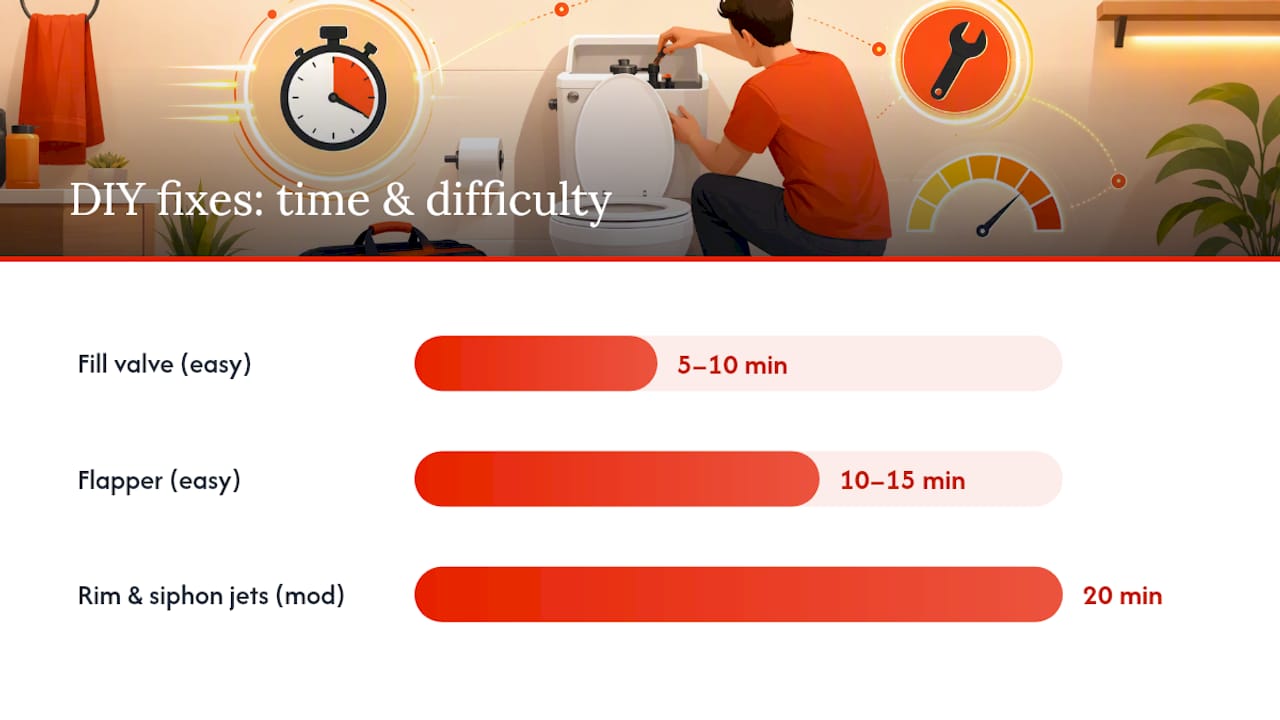
Adjusting the fill valve (5 to 10 minutes, easy). Turn the adjustment screw or slide the float clip up until the tank fills to about half an inch below the overflow tube, or to whatever line the manufacturer marks inside the tank. Fluidmaster and other fill valve makers print this line right on the part. No tools needed beyond your hands in most cases.
Replacing or adjusting the flapper (10 to 15 minutes, easy). Flappers wear out and warp after a few years, especially with chlorine tablets in the tank, which is one of the more common causes of a slow leak into the bowl and a weak flush. Unhook the old one, clip a universal replacement onto the overflow tube, and set the chain so there's roughly half an inch of slack when the flapper sits closed. If it's an adjustable model, expect to test a few settings, since setting it too aggressive closes the flapper before a full siphon forms.
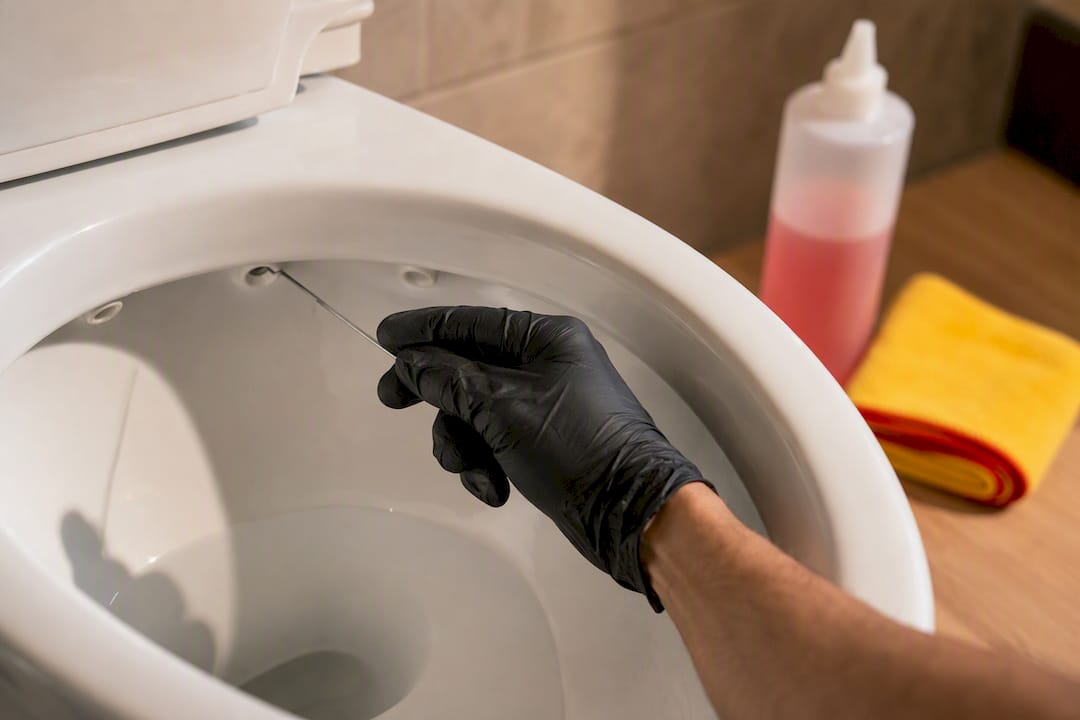
Cleaning rim jets and the siphon jet (20 minutes, moderate). Bend a wire coat hanger into a small hook and work it into each rim hole to break up mineral scale, then follow with a descaling cleaner made for hard water buildup. Wear gloves and skip mixing cleaners, since combining certain toilet bowl products releases fumes you don't want to breathe in an enclosed bathroom.
Plunging correctly (5 minutes per attempt, easy). Use a flange plunger, not the flat cup style meant for sinks. Get a full seal, and push down slowly before pulling up fast. That withdrawal is what actually breaks the clog loose.
Using a toilet auger (10 to 15 minutes, moderate). Feed the cable in slowly and crank the handle instead of forcing it forward. Pushing hard against solid resistance risks cracking the porcelain or damaging the trap seal, so if you hit a wall that won't give after a couple of tries, stop there.
- Fill valve adjustment: easy, under 10 minutes, no special tools
- Flapper swap: easy, under 15 minutes, universal flapper kit
- Rim jet cleaning: moderate, 20 minutes, wire hook plus descaler
- Auger work: moderate, stop if you meet solid resistance
Pro Tip: After any tank-side fix, do one test flush with the lid off before you put it back. Watching the flapper move confirms the repair actually worked, instead of finding out at 11 p.m. that it didn't.
If you've cleaned the jets, replaced the flapper, and the flush is still weak or the bowl still drains slowly, you're likely dealing with a cracked trap, a damaged flush valve, or a drain line that doesn't slope correctly. Those aren't DIY repairs.
When Should You Call a Plumber?
Call a plumber when tank-side fixes don't change anything, when more than one fixture gurgles or drains slowly at the same time, or when you smell sewer gas anywhere in the house. Those symptoms point to a blocked vent stack or a drain line without enough slope, and both require tools most homeowners don't own. Repeated clogs in the same toilet, even after cleaning and adjusting everything inside the tank, are another sign something structural is going on.
A plumber diagnosing a persistent flush problem will typically run a camera inspection down the line, check the vent stack for blockages, and verify the drain pipe's slope, since gurgling and slow drains across multiple fixtures are the clearest signs of a vent or line issue rather than a simple clog.
Cost varies a lot depending on what's actually wrong. A straightforward clog clearing is on the lower end of the scale, while vent stack access, camera diagnostics, or any excavation to fix drain slope pushes costs higher because of the labor and equipment involved. Age of the plumbing, whether the vent runs through a finished wall or ceiling, and how far the blockage sits from an access point all factor into the final number. Getting an actual quote from a licensed plumber for your specific situation beats guessing based on a general range.
Preventing Flush Problems Before They Start
A little routine maintenance keeps most of these problems from happening in the first place.
- Clean rim jets with a descaling product every few months in hard water areas, since mineral buildup is gradual and easy to catch early
- Never flush wipes, paper towels, or "flushable" wipes, none of which break down the way toilet paper does
- Switch to a lower-ply toilet paper if your household has an older toilet with a narrow trap
- Check the flapper and fill valve once a year, since both are wear parts with a limited lifespan
- Confirm the shutoff valve behind the toilet still turns freely so you're not fighting a stuck valve during an actual emergency
For rental properties, multi-unit buildings, or older homes with plumbing that's due for attention, a preventive maintenance checklist run on a schedule catches small issues like a worn flapper before they turn into a midnight service call.
Field-Tested DIY Guides From Mystic Valley Home Services
Mystic Valley Home Services has put together a detailed step-by-step guide to fixing a running or weak-flushing toilet that walks through the same tank components covered here, with more photos and part numbers for common flapper and fill valve replacements.
When the problem turns out to be bigger than a tank adjustment, our licensed plumbers run camera inspections to see exactly what's happening inside the drain line, check vent stacks for blockages, and assess drain slope on older plumbing systems where settling has become an issue over the years. If your situation touches on local plumbing code, particularly around venting requirements in older homes, our guide to plumbing code compliance covers what property owners need to know before any permitted repair work.
A Plumber's Honest Take on Weak Flushes
Most weak flushes get blamed on the toilet itself, but the tank almost always tells the real story first. Pull the lid off before you touch anything else. A flapper that doesn't lift fully or a water level that's crept low explains the majority of the "my toilet suddenly won't flush right" calls that turn out to need a $10 part.
The one thing I'd tell every homeowner: don't force an auger past real resistance. If it stops hard and stays stopped after a couple of gentle attempts, that's your body telling you to quit before you crack a trap. A cracked trap turns a plumbing visit into a toilet replacement, and that's a mistake that costs a lot more than the service call would have.
— Matt
If DIY Doesn't Fix It: Book a Diagnostic
You can hire a licensed plumber who runs an actual camera inspection instead of guessing, which matters once you've ruled out the easy tank fixes and you're still stuck. Persistent flush problems tied to vent stacks or drain slope aren't a fair fight for a plunger and a Saturday afternoon, and every hour you spend troubleshooting blind is an hour the underlying issue keeps sitting there.

Our plumbing services cover exactly this kind of diagnostic work, from vent clearing to flush valve replacement, and we serve homeowners and property owners across our coverage area. If your household deals with recurring clogs or you manage an older building where this keeps coming up, look into our preventive plumbing maintenance contracts, which catch worn flappers and fill valves before they turn into a Saturday emergency call. If you're dealing with a septic system rather than municipal sewer, a failing septic installation can produce the exact same gurgling and slow-drain symptoms, so it's worth ruling out. Schedule a professional inspection today and get a straight answer instead of another afternoon of guessing.
Sources
- Toilet Won't Flush? Our 9 Best Troubleshooting Tips - Bob Vila
- Fix a Weak-Flushing Toilet - Lowe's
- Toilet Not Flushing | Weak toilet flush - Fluidmaster
- Why is my toilet flush weak? 5 common culprits - Benner Plumbing & Heating LTD.
FAQ
Why is my toilet not clogged but still won't flush?
Usually the tank, not the drain, is the culprit. Low water level, a flapper that closes too soon, or clogged rim jets can all cause a weak or absent flush even with a completely clear drain line.
How do you force a toilet to flush without a plunger?
Pour about 2 gallons of water into the bowl quickly and steadily, which mimics a full flush and can push a minor clog through, though it won't clear anything serious.
What causes a toilet to stop flushing properly over time?
Mineral buildup in the rim jets, a worn flapper that no longer seals, and a fill valve that's drifted out of adjustment are the most common gradual causes, and all three tend to develop slowly over months.
Why won't my toilet flush even though there's nothing visibly clogging it?
If the bucket test drains fine, the issue is almost always inside the tank, most often the water level or the flapper and chain, rather than anything blocking the bowl or trap.
Is a weak flush ever a sign of a bigger plumbing problem?
Yes, if it's paired with gurgling in other drains or a sewer smell, which points to a blocked vent stack or a drain slope issue that needs a professional camera inspection rather than a tank adjustment.