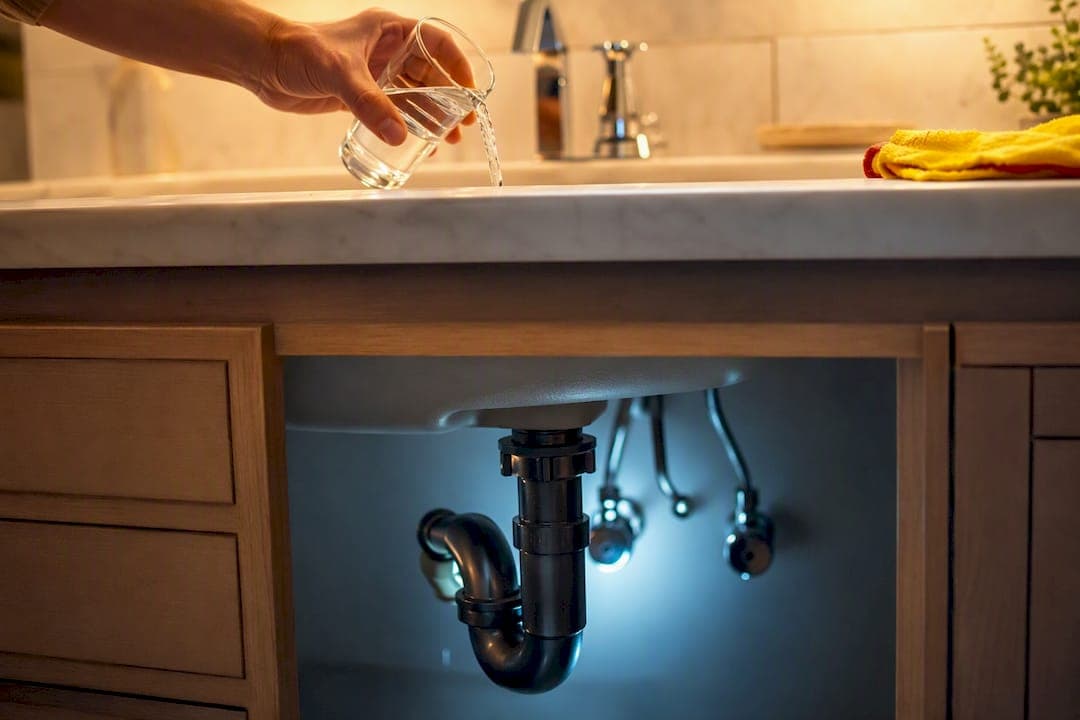
Most sewer smell inside a house comes from a dry P-trap. Water evaporates from an unused sink or floor drain and stops blocking gas from the pipes below, so run water in every seldom-used drain and flush every toilet right now. If the smell persists or spreads to multiple rooms, suspect a failed toilet seal, a blocked vent stack, or a sewer line problem and start escalating. Stop everything and call a professional immediately if you see actual sewage backup or anyone in the house feels dizzy or nauseous.
TL;DR:
- Most sewer smells originate from dry P-traps in seldom-used drains, which should be refilled regularly to prevent gas escape.
- Gurgling drains, slow flow, or odors after rain suggest vent stack blockages or main line issues requiring professional inspection.
- A damaged toilet seal, cracked cleanout caps, or biofilm buildup inside drains are common local causes that can often be fixed without extensive work.
- Persistent or system-wide odors, especially combined with health symptoms or backups, demand immediate professional testing and repairs.
- Routine maintenance like weekly water runs, annual drain cleaning, and vent checks can effectively prevent sewer odors from recurring.
Table of Contents
- How Do I Find the Source of Sewer Smell in My House?
- What Causes Sewer Smell in a Bathroom or House?
- What Are the Fastest DIY Fixes for Sewer Smell?
- When Should You Call a Plumber for Sewer Smell?
- How Do You Prevent Sewer Smell From Coming Back?
- What Do Plumbers Actually Check for Sewer Odor?
- What's the Right Order to Handle Sewer Smell?
- Get a Professional Sewer Smell Diagnosis From Mystic Valley Home Services
- Sources
- FAQ
How Do I Find the Source of Sewer Smell in My House?
Start by walking every room with your nose, not your eyes. Note exactly where the smell peaks and whether it shows up after a specific trigger, like flushing a toilet, running the washing machine, or a heavy rainstorm. A smell that spikes after rain often points toward the main line rather than a single fixture, since heavy wastewater volume can expose weaknesses in a failing system.
Once you've narrowed the general area, work through this sequence:
- Run water for 30 seconds in every sink, tub, and shower on the floor where the odor is strongest.
- Pour a bucket of water into any floor drains, including basement and laundry room drains, which dry out faster than you'd think.
- Flush every toilet and listen closely for gurgling, which usually means air isn't venting properly somewhere in the system.
- Check drain speed. A slow drain paired with odor suggests a partial clog rather than a simple dry trap.
- Inspect the base of each toilet for movement, moisture, or a stain on the flooring, and check that cleanout caps are seated tightly with no gaps.
A practical homeowner checklist built around this exact order, dry trap first, toilet base second, vents and clean outs third, resolves the majority of cases before you ever need a professional. Single-fixture odors point to a local trap or seal issue, while multiple affected drains or system-wide gurgling signals a drain-line or vent problem that needs a broader fix.
Pro Tip: Keep a running note of exactly when the smell shows up, after a flush, after laundry, after rain. That pattern alone often tells a plumber more than the smell itself.
What Causes Sewer Smell in a Bathroom or House?
A handful of culprits account for nearly every sewer odor complaint, and each one leaves a slightly different clue.
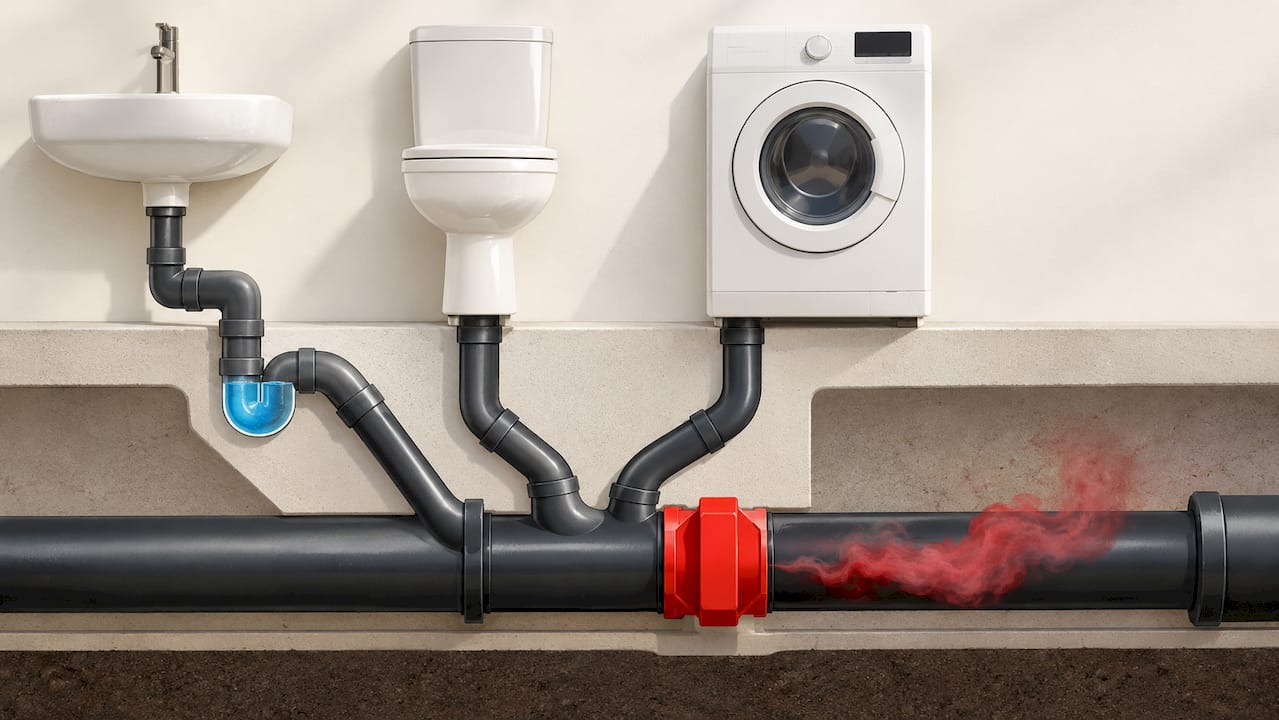
- Dry P-traps. The curved pipe under every sink, tub, and floor drain holds a small amount of water that blocks gas from rising back up. Guest bathrooms, basement floor drains, and rarely used laundry sinks dry out fastest and are the number one cause of intermittent sewer smell.
- A failed toilet seal or loose toilet. If a toilet rocks slightly or the smell appears mainly after flushing, the wax ring underneath may have failed, letting gas escape around the base instead of venting through the bowl.
- A blocked or damaged vent stack. Plumbing vents equalize pressure so water can drain properly. When a vent gets clogged with debris, ice, or even a bird's nest, you'll notice gurgling drains and slow drainage in more than one fixture at once. Our guide to how plumbing vents work breaks down exactly how a blocked stack causes odor to back up indoors.
- Biofilm and drain buildup. Hair, soap scum, and organic debris coat the inside of drainpipes and produce a rotten-egg smell that has nothing to do with the sewer line at all. Homeowners frequently mistake this decomposing gunk for sewer gas, when a flashlight aimed down the drain throat would reveal the real cause.
- Sewer line blockages or cracks. Tree roots, pipe corrosion, or a collapsed section of the main line cause slow drains across the whole house, gurgling in multiple fixtures, and smells that intensify after rain.
Sewer gas itself is a mix of gases, including hydrogen sulfide and methane. Small residential leaks rarely reach dangerous concentrations, but repeated exposure can cause headaches or nausea, which is exactly why a persistent smell deserves real attention instead of a scented candle.
What Are the Fastest DIY Fixes for Sewer Smell?
Most sewer odor problems clear up with fixes you can do in an afternoon, in this order:
- Refill every trap. Run water for 30 to 60 seconds in each sink, tub, and shower, and pour a full bucket into floor drains. This alone solves the majority of intermittent sewer smell complaints.
- Protect drains you rarely use. Add a thin layer of mineral oil on top of the trap water in a guest bathroom or basement drain. Oil evaporates far slower than water, so the seal lasts weeks longer between uses.
- Break up drain biofilm. Pour half a cup of baking soda followed by half a cup of vinegar down the drain, let it fizz for 10 minutes, then flush with hot water. For an actual hair clog, a hand auger clears it far more reliably than chemical drain cleaners. A structured approach to biofilm removal can help if the smell keeps returning even after cleaning.
- Check the hardware. Hand-tighten any loose cleanout caps and inspect toilet bolts at the base. Give the toilet a gentle wiggle. If it rocks even slightly, or the bowl doesn't hold water at its normal level, the wax ring underneath has likely failed.
- Leave the roof alone. Never climb up to inspect or clear a vent stack yourself. That job calls for a qualified technician with the right equipment for smoke testing or camera work.
Pro Tip: A gurgling drain that only happens in one sink is usually local. A gurgling toilet paired with a gurgling tub down the hall almost always means air is trapped somewhere in the shared vent system, and that's a job for a plumber, not a plunger.
Stop the DIY approach and call a professional the moment you notice actual sewage backing up into a tub or floor drain, anyone in the house reports feeling ill, more than one fixture is clearly affected, or you've worked through every step above and the smell hasn't budged.
When Should You Call a Plumber for Sewer Smell?
Call immediately if you see visible sewage backup anywhere in the house, if anyone develops dizziness, headaches, or nausea that seems tied to the odor, or if the smell keeps returning across multiple fixtures after you've already tried refilling traps and checking the toilet base. A master plumber's take on persistent sewage odor is blunt on this point: don't keep masking a smell that keeps coming back, because that usually means the underlying cause hasn't been addressed.
Professionals rely on three main diagnostic tools once DIY steps run out:
- Sewer camera inspection feeds a waterproof camera through the main line to spot root intrusion, cracks, or a collapsed section without any guesswork.
- Smoke testing pumps a harmless smoke into the vent system, and any smoke that escapes through a wall, roofline, or unexpected joint pinpoints exactly where a vent or hidden pipe leak is letting gas into the house.
- Hydro-jetting blasts high-pressure water through the line to clear root intrusion and years of buildup that a snake alone won't touch.
From there, the actual repair is usually one of a few things: replacing a failed wax ring and reseating the toilet, repairing or replacing a damaged cleanout cap, or, for a genuinely cracked or root-invaded line, a trenchless sewer repair that avoids tearing up the yard. When you call, have the specifics ready: where the smell is strongest, which tests you already ran, and photos or video of anything visible, like water pooling near a toilet base or a cracked cleanout cap.
How Do You Prevent Sewer Smell From Coming Back?
A little routine maintenance keeps sewer odor from becoming a recurring headache.
- Run water through every drain weekly, including guest bathrooms, laundry sinks, and any fixture that doesn't see daily use.
- Pour water into floor drains monthly, especially basement drains, which evaporate faster than most homeowners expect.
- Install trap primers on floor drains that consistently dry out between uses, and add strainers to catch hair and debris before it builds into biofilm.
- Schedule a professional inspection and drain cleaning every one to two years, particularly in older homes where pipe corrosion and root intrusion are more common.
- Check roof vents seasonally and after major storms, and confirm cleanout caps are tight and free of cracks.
A short seasonal walkthrough, five minutes per fixture, catches most problems while they're still cheap to fix.
Our home plumbing maintenance checklist lays out a full year-round schedule if you want something more structured than a mental note.
What Do Plumbers Actually Check for Sewer Odor?
The diagnostic order that professionals follow isn't complicated, and it's worth understanding before you book a service call.
- Trap check first. Every visit starts by confirming which traps are dry and which are holding water, since this rules out the simplest cause immediately.
- Gurgling-drain diagnosis. A technician runs water in one fixture while listening at another to figure out whether air is trapped in a shared vent line.
- Vent inspection basics. Before climbing to the roof, a plumber checks for obvious blockages like leaves, ice, or nesting material, then moves to smoke testing if the cause still isn't clear.
- Sewer camera footage shows the actual condition of the main line, from root intrusion to a hairline crack that wouldn't show up any other way.
- Smoke machine testing reveals exactly where a vent or hidden pipe is leaking gas into living space, which saves homeowners from tearing open walls on a guess.
- Hydro-jetting clears buildup and roots that a standard snake can't fully remove, restoring full flow through the line.
This is the same checklist Mystic Valley Home Services uses when a homeowner calls about a sewer smell that won't go away on its own.
What's the Right Order to Handle Sewer Smell?
Refill the traps and check the toilet base before you do anything else. Those two checks solve most sewer smell complaints, and they cost nothing but a few minutes and a bucket of water. If the odor is coming from more than one fixture, or if it's accompanied by headaches, dizziness, or actual backup, that's not a DIY weekend project anymore.
Write down what you tried and when the smell showed up. That single habit turns a vague "it smells bad sometimes" into useful information a plumber can act on immediately, instead of starting the diagnosis from zero. And if you're ever unsure whether what you're smelling is dangerous, open a window, get some airflow going, and call someone qualified. Masking the smell with an air freshener doesn't fix a cracked vent or a failing seal, it just buys the problem more time to get worse.
— Matt
Get a Professional Sewer Smell Diagnosis From Mystic Valley Home Services
If you've run through the traps, checked the toilet base, and the smell is still there, it's time for someone with a camera and a smoke machine, not another bottle of drain cleaner. Mystic Valley Home Services is a licensed and insured Massachusetts plumbing and heating service provider offering experienced technicians, transparent pricing, and direct owner oversight on every job, with expertise in servicing older homes with aging vent stacks and cast-iron lines.

Before you call, jot down where the smell is strongest, which of the DIY steps above you've already tried, and snap a few photos of anything visible, like a wobbly toilet base or a damaged cleanout cap. That information lets a technician arrive ready to diagnose instead of starting from scratch. Mystic Valley Home Services handles everything from camera inspections and drain cleaning to wax ring replacement and sewer line repair. Book a visit through the plumbing services page and get the smell sourced and fixed, not just covered up.
Sources
For deeper detail on sewer gas causes and inspection methods, see the Oatey guide to sewer gas odor, SERVPRO's breakdown of sewage smell causes, and InspectAPedia's guide to separating fixture problems from system-wide drain issues, which covers how professionals use smoke testing and camera inspection to pinpoint hidden leaks.
- What Causes Sewage Smell in Your House? (SERVPRO)
- Separate Plumbing Fixtures from Plumbing Drain System as the Source of Sewage or Septic Odors
- Sewer smell in the bathroom? A master plumber explains what to do (Yahoo / Master plumber interview)
- Why Does My Bathroom Smell Like Sewage? (HowStuffWorks)
FAQ
How Do I Fix Sewer Smell in My House?
Start by running water in every sink, tub, and floor drain to refill dry P-traps, then check the toilet base for looseness and inspect cleanout caps. If the smell persists after these steps or affects multiple fixtures, call a plumber for camera or smoke testing.
How Do I Find the Source of Sewer Smell in My House?
Walk the house to find where the odor peaks, then run water and flush toilets to see which fixtures reveal a dry trap. Gurgling in multiple drains points toward a vent or main-line issue rather than a single fixture.
Is Sewage Smell in a House Harmful?
Sewer gas can contain hydrogen sulfide and methane, and while small residential leaks rarely reach dangerous levels, ongoing exposure can cause headaches or nausea. Any smell paired with those symptoms warrants an immediate professional inspection.
Why Does Sewer Smell Come and Go?
Intermittent sewer smell usually points to a P-trap that dries out between uses in a rarely used sink or floor drain, or a vent that only backs up under certain airflow conditions. Smells that spike after rain often signal a main sewer line issue rather than a simple trap problem.
What Does It Cost to Have a Plumber Diagnose Sewer Smell?
Pricing depends on the diagnostic work needed, from a basic inspection to camera or smoke testing. Current pricing is available directly through Mystic Valley Home Services' plumbing page.