
A compliant commercial sewer maintenance program in Massachusetts combines four non-negotiable actions: scheduled hydro-jetting, CCTV inspection, grease interceptor or trap cleaning, and a documented Grease Control Log. Under 310 CMR 15.230, grease removal devices must stay accessible and maintained at all times. Your local Board of Health and sewer authority enforce those standards locally, and MassDEP wastewater regulations hold property owners directly liable for improper discharges of oil, grease, or chemicals to the sewer.
Quick-reference checklist for your next work order:
- Monthly: inspect point-of-use grease traps; clean when grease layer hits 25% of effective depth
- Quarterly: pump and scrape in-ground interceptors (at minimum)
- Annually: hydro-jet main sewer laterals; run CCTV inspection; update Grease Control Log
- Every service: collect hauler manifest, log date/volume/signature, retain records for three years
- Before any repair: confirm contractor holds a Massachusetts plumbing license and licensed hauler registration
Table of Contents
- What does a preventive maintenance program actually look like?
- Massachusetts grease-management rules you cannot skip
- Why you should always hydro-jet before a CCTV inspection
- What to require in your contractor SOW and maintenance contract
- What do routine services cost and how long do they take?
- How to respond when a backup or overflow happens
- SOP template and sample checklists for your facilities team
- Key Takeaways
- The paperwork is the maintenance program
- Mystic Valley Home Services handles MA commercial sewer maintenance
- Useful sources and further reading
What does a preventive maintenance program actually look like?
The structure is simpler than most facility managers expect. You schedule recurring tasks, assign who does them, and keep the paperwork. The hard part is matching frequency to your building's actual load.
| Facility type | Interior trap cleaning | Interceptor pumping | Hydro-jetting | CCTV inspection |
|---|---|---|---|---|
| Full-service restaurant | Monthly | Quarterly | Every 6 months | Annually |
| Bakery / café | Monthly | Quarterly | Annually | Annually |
| Convenience store with deli | Monthly | Every 6 months | Annually | Every 2 years |
| Office with small kitchen | Quarterly | Annually | Annually | Every 2–3 years |
| Multi-tenant retail with food | Monthly | Quarterly | Every 6 months | Annually |
Every service event needs three documents: a completed inspection or cleaning form, the hauler's disposal manifest, and (for CCTV visits) the time-stamped video file plus a written defect report. Keep all three together in a single maintenance folder per system.
Required documentation per event:
- Inspection or cleaning form signed by the contractor
- Hauler manifest showing volume removed and disposal site
- CCTV video file with time/date stamp and written defect log
- Updated Grease Control Log entry
Pro Tip: When budgets force you to prioritize, clean the interceptor or trap closest to the highest-volume cooking station first. A blocked point-of-use trap backs up faster and triggers Board of Health violations sooner than a partially loaded in-ground interceptor.
Massachusetts grease-management rules you cannot skip
Massachusetts requires grease traps to be inspected regularly and cleaned whenever grease accumulates significantly, with point-of-use units cleaned at least monthly and in-ground interceptors pumped periodically. Those are minimums; your local Board of Health may require more frequent service.
The Boston Water and Sewer Commission Grease Control Log standard defines exactly what each log entry must contain:
| Log field | What to record |
|---|---|
| Date of service | Exact date cleaning or inspection occurred |
| Volume removed | Gallons pumped or weight of material hauled |
| Contractor/hauler name | Licensed company performing the work |
| Signature | Contractor or hauler certification of service |
| System ID | Trap or interceptor location identifier |
Record retention runs three years in most Massachusetts jurisdictions. Only a licensed septage hauler may perform pumping, and many municipalities require that hauler to submit a System Pumping Record to local authorities within 14 days of service.
One more rule that catches operators off guard: BWSC explicitly bans bleach, emulsifiers, and enzyme additives in grease traps. Only biological bacteria additives are permitted. Using prohibited chemicals can damage trap performance and expose you to enforcement action.
Why you should always hydro-jet before a CCTV inspection
The correct sequence is: pre-clean with hydro-jetting, then run the camera. BWSC's CCTV inspection specification requires pre-cleaning precisely because a debris-coated pipe produces a useless video. The camera cannot identify root intrusion, cracks, or offset joints when the pipe wall is covered in hardened grease or sediment.
Step-by-step contractor workflow for a combined cleaning and inspection visit:
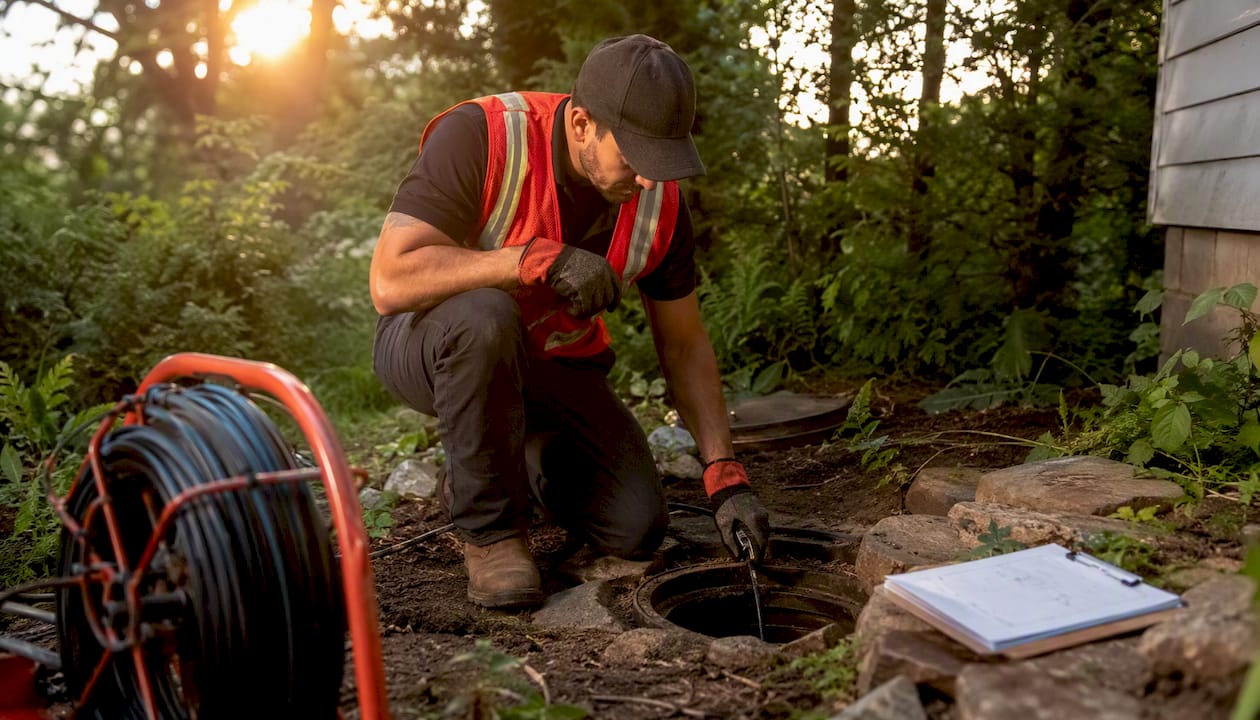
- Review as-built drawings and locate all cleanouts, laterals, and interceptor access points before starting.
- Hydro-jet the target line segment from downstream to upstream at appropriate pressure for pipe diameter and material.
- Collect and dispose of flushed debris; do not discharge raw grease back to the sewer.
- Run CCTV camera from downstream to upstream; record continuously with time/date overlay.
- Log every defect by pipe station, defect type (root, crack, offset, grease deposit), and severity.
- Photograph any defect rated as requiring immediate remediation.
- Deliver video file, written defect log, and recommended next steps to the facility manager within five business days.
Expected deliverables from every CCTV visit: time-stamped video file, written defect log with pipe-station references, pass/fail acceptance notation, defect photos, and a recommended-action list with urgency ratings.
Pro Tip: When the crew leaves, pull up the video on your phone and fast-forward to the first 10% of the run. If the pipe wall still shows heavy grease coating, the pre-clean was inadequate. Send the crew back before accepting the report.
What to require in your contractor SOW and maintenance contract
Non-negotiable contractor qualifications:
- Active Massachusetts plumbing license (verify at the state licensing board)
- Licensed septage or grease hauler registration
- General liability insurance of at least $1 million per occurrence; workers' compensation coverage
- Three verifiable commercial references from similar facility types
Scope items to write into every purchase order:
- Pre-cleaning (hydro-jetting) before any CCTV run
- Full trap or interceptor scrape, not pump-only service
- Disposal manifest provided same day as service
- Grease Control Log entry completed and signed on-site
- Video file and written report delivered within five business days
Sample SLA clause: "Contractor shall respond to emergency sewer backup calls within four hours of notification, 24 hours a day, seven days a week. After-hours emergency response shall be billed at the agreed after-hours rate stated in Exhibit A. Contractor shall notify the facility manager within one hour of any condition requiring a municipal permit or sewer authority inspection."
For repairs, any modification to a private building sewer may trigger a municipal permit and a local Water and Sewer inspector sign-off, as the Needham sewer connection requirements illustrate. Build permit coordination into the contractor's scope, not yours.
Pro Tip: Ask for a sample CCTV report from a past job before signing a contract. A contractor who cannot produce one on request has likely never delivered a complete report.
A well-structured plumbing maintenance contract specifies response windows, deliverable timelines, and permit responsibilities so there is no ambiguity when something goes wrong.
What do routine services cost and how long do they take?
| Service | Typical cost range | On-site duration |
|---|---|---|
| Point-of-use trap pump and clean | — | 1–2 hours |
| In-ground interceptor pump and scrape | — | 2–4 hours |
| Hydro-jetting | — | 1–3 hours |
| CCTV inspection | — | 1–2 hours |
| Emergency sewer unblock (after-hours) | — | 1–4 hours |
Costs shift based on access difficulty, grease volume, solids content, disposal fees, and whether traffic control or permits are required. Schedule routine cleaning during off-peak hours, typically early morning before kitchen prep, to minimize business disruption. Emergency repairs carry a premium; a maintained system rarely needs them.
How to respond when a backup or overflow happens
- Stop all fixtures draining to the affected line immediately.
- Isolate the flow at the nearest shutoff or cleanout cap.
- Call your licensed plumbing contractor; confirm they can respond within your SLA window.
- Photograph standing water, overflow location, and any visible grease or solids with time-stamped photos.
- Record the time of discovery, time of contractor notification, and all actions taken.
- Contain any discharge from reaching floor drains that connect to the sewer per MassDEP containment requirements.
- Notify your local Board of Health or sewer authority if discharge reached the public sewer or a surface drain.
Common causes to check quickly: blocked point-of-use trap from missed cleaning, hardened grease in a branch line downstream of the trap, root intrusion in an older lateral, or an illegal discharge from a tenant.
On regulatory notification: Timely, documented notification to the local sewer authority reduces enforcement risk significantly. A facility that self-reports with a cleanup plan in hand is treated very differently from one that is discovered after the fact.
Pro Tip: Keep a one-page emergency contact sheet posted near every floor drain cleanout: contractor name, phone, SLA window, and the local Board of Health number. Thirty seconds of prep saves an hour of scrambling at 2 AM.
SOP template and sample checklists for your facilities team
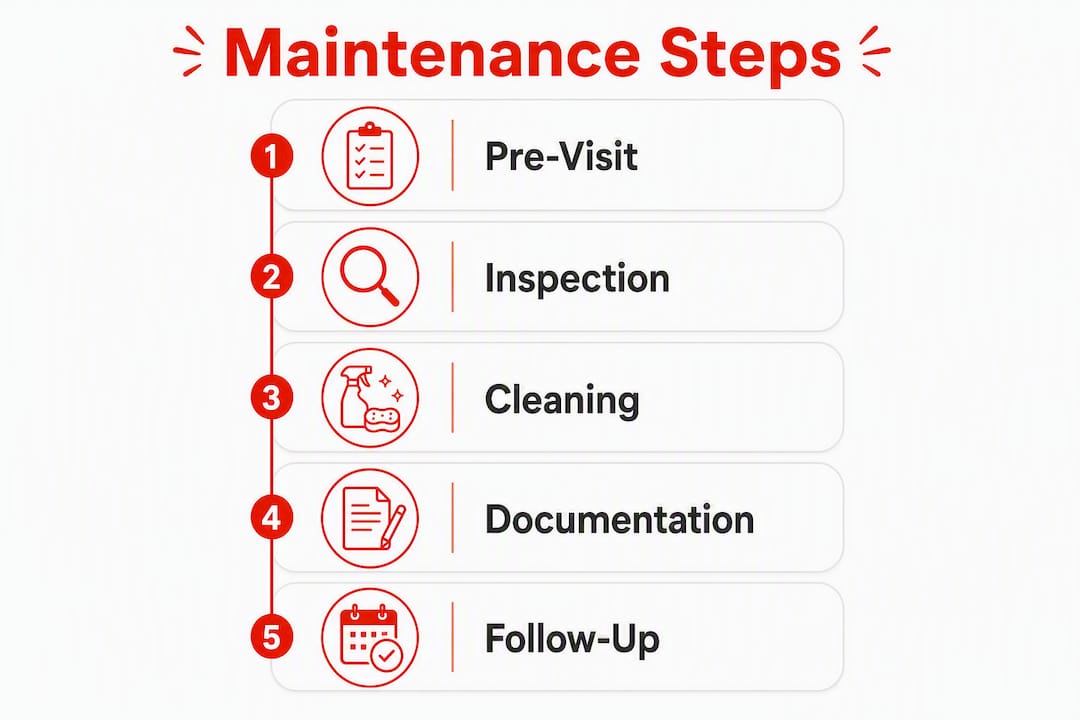
Routine cleaning visit SOP (condensed):
| Step | Action | Responsible party |
|---|---|---|
| Pre-visit | Confirm access to all cleanouts and interceptor lids | Facility manager |
| Safety | Verify confined-space entry protocol if interceptor is below grade | Contractor |
| Pre-clean | Hydro-jet target lines; collect and dispose of debris | Contractor |
| Inspection | Run CCTV; log defects by station and type | Contractor |
| Grease trap | Ladle grease, scrape baffles and sidewalls, remove bottom solids | Contractor |
| Documentation | Complete Grease Control Log entry on-site; issue disposal manifest | Contractor |
| Reporting | Deliver video file and written report within 5 business days | Contractor |
| Record filing | Attach manifest and report to maintenance folder; update log | Facility manager |
Grease Control Log sample fields: service date, trap or interceptor ID, volume removed (gallons or weight), contractor or hauler name, signature or certification of service, and next scheduled service date.
CCTV acceptance checklist: time/date stamp present on video, pipe station references match as-built drawings, all defects rated by severity, photos attached for any defect rated "immediate," and recommended next steps listed with urgency.
Retain all records, including hauler manifests and CCTV files, for a minimum of three years. Store digital copies in a cloud folder organized by system ID and service date.
Pro Tip: Attach a copy of your commercial plumbing inspection checklist to every contractor work order. It sets expectations before the crew arrives and gives you a basis for rejecting incomplete work.
Key Takeaways
A compliant commercial sewer maintenance program requires scheduled cleaning, documented Grease Control Logs, licensed haulers, and CCTV inspections preceded by hydro-jetting.
| Point | Details |
|---|---|
| Grease trap cleaning frequency | Clean point-of-use traps monthly; pump in-ground interceptors at least quarterly or when grease hits 25% of effective depth. |
| Grease Control Log requirements | Record date, volume removed, hauler name, and a signed certification; retain all records for three years. |
| Hydro-jet before CCTV | Always pre-clean lines before running the camera; debris masks structural defects and produces an unusable report. |
| Contractor contract must-haves | Require Massachusetts plumbing license, hauler registration, liability insurance, and a four-hour emergency response SLA. |
| Mystic Valley Home Services | Provides hydro-jetting, CCTV inspections, grease trap cleaning, maintenance contracts, and emergency response across Massachusetts. |
The paperwork is the maintenance program
Most facility managers treat the Grease Control Log as a formality. It is not. The log is the only evidence you have that maintenance happened on schedule, and it is the first thing a Board of Health inspector asks for. A clean trap with no log entry is, from an enforcement standpoint, an uncleaned trap.
The same logic applies to CCTV reports. A video file sitting on a contractor's laptop does nothing for you. The deliverable that matters is a written defect log with pipe-station references, severity ratings, and a recommended-action list you can hand to the next contractor or use to justify a capital repair budget. Without that document, you are paying for an inspection you cannot prove or act on.
One more thing worth saying plainly: the 25% grease rule is a trigger, not a target. Running a trap to 24% before cleaning is not good management; it is one busy weekend away from a backup. The facilities that avoid emergency calls are the ones that clean on a fixed calendar, not on condition.
Mystic Valley Home Services handles MA commercial sewer maintenance
Mystic Valley Home Services gives Massachusetts commercial property owners a single contractor for every step of this program: hydro-jetting, CCTV inspections with written defect reports and video delivery, grease trap and interceptor cleaning with same-day hauler manifests, annual maintenance contracts with defined SLAs, and 24/7 emergency response.

The difference from a generic plumbing call is documentation. Every Mystic Valley Home Services service visit produces the Grease Control Log entry, disposal manifest, and CCTV deliverables your Board of Health expects. Licensing, insurance, and hauler registration are current and verifiable.
To schedule a commercial sewer inspection or get a maintenance proposal, visit the Mystic Valley Home Services services page or call directly. Coverage spans Massachusetts, and service area details are listed on the site.
Useful sources and further reading
- MassDEP wastewater regulations and best practices — owner liability for oil, grease, and chemical discharges; containment requirements
- 310 CMR 15.230 — Pretreatment Units: Grease Traps (LII) — accessibility, maintenance, and sizing standards for grease removal devices
- 314 CMR 12.04 — Maintenance of Treatment Works and Sewer Systems (LII) — O&M manual requirements for wastewater facilities
- Boston Water and Sewer Commission: Commercial Kitchen Grease Trap Guidelines — Grease Control Log format, prohibited additives, and cleaning standards
- BWSC CCTV Inspection and Pre-Cleaning Specification (TV-01) — pre-cleaning requirements before camera inspection
- Grease Trap Regulations in Massachusetts — 25% rule, cleaning frequencies, hauler licensing, and record retention
- Town of Needham Sewer Service Connection Requirements — permit process and inspector requirements for private sewer repairs
For local enforcement questions, variances, or permit requirements, contact your municipal Board of Health or local Water and Sewer Commission directly. State regulations set the floor; local authorities often impose stricter intervals, additional log fields, or shorter submission windows for hauler manifests.