If you run a commercial kitchen in Massachusetts, you almost certainly need a grease interceptor. The state plumbing code requires one wherever food is prepared or grease can reach the sanitary drain. Ordinary homes do not need one. How big it must be, where it goes and how often it is cleaned depends on the code, your sewer authority and your town's Board of Health. This guide walks through each layer so you know what to ask before you install, upgrade or service a trap.
TL;DR
- The state plumbing code, 248 CMR 10.09, requires interceptors for fixtures and equipment that may produce grease-laden waste. Private residences are exempt, unless the building has commercial cooking.
- Size is set by flow: at least two pounds of grease capacity for every gallon per minute (GPM) of flow. Water-cooled interceptors are prohibited.
- Cleaning rules are local. Towns and sewer authorities set the schedule, logs and reporting, so check with yours before you set a service interval.
- Boards of Health can adopt stricter rules than the state and can fine violators. A backed-up sewer line is the most common way owners get noticed.
- Plumbing work on an interceptor must be done by licensed professionals under 248 CMR 10.00.
Table of Contents
- Who needs a grease trap or interceptor in Massachusetts
- Three layers of rules: state, sewer authority, town
- Sizing, type and what the code says about the device
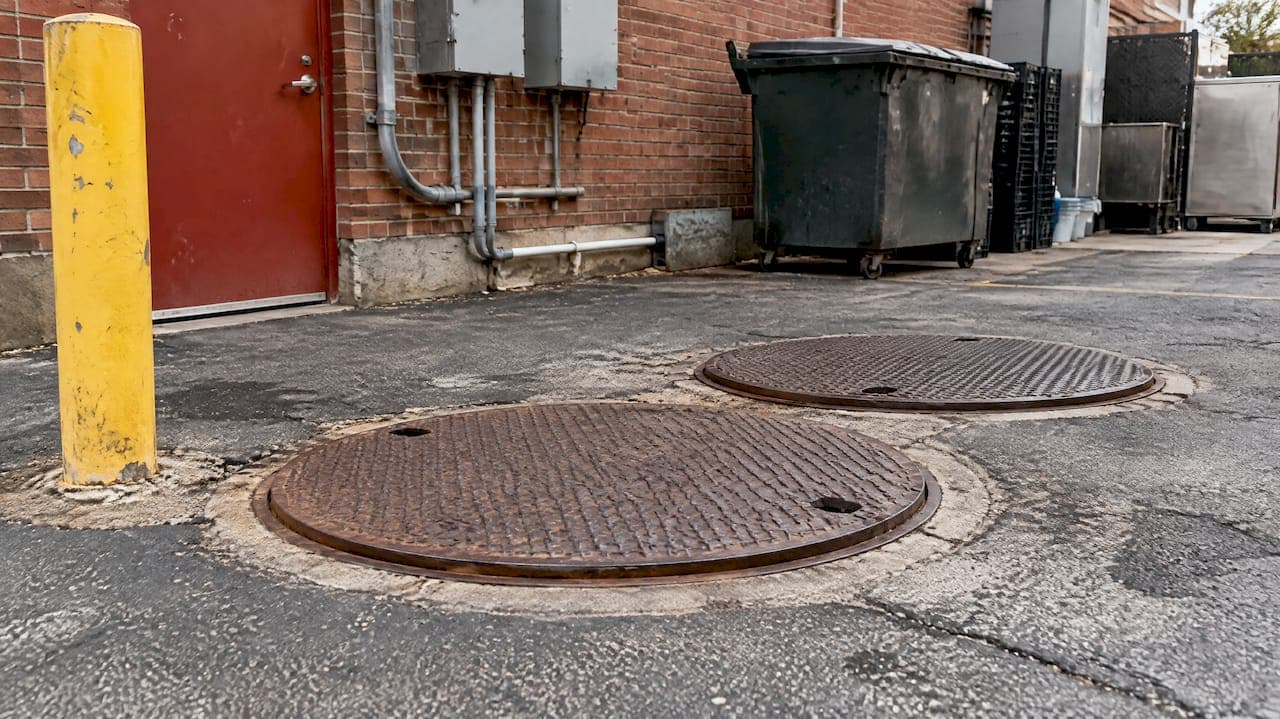
- Can a grease interceptor go outside?
- Cleaning, maintenance and recordkeeping
- Who is allowed to clean it, and who is responsible
- Permits, inspections and penalties
- Perspective: what we see in kitchens and old buildings
- Where we can help
- FAQ
- Sources
Who needs a grease trap or interceptor in Massachusetts
The rule that matters most is 248 CMR 10.09. It requires interceptors for fixtures and equipment that may produce grease-laden waste wherever food is prepared or grease may enter the sanitary drainage system, as summarized in the Massachusetts plumbing code text. The official regulation is also published as 248 CMR 10.09.
In practice that covers:
- Restaurants, cafés and diners
- Institutional kitchens in schools, nursing homes and hospitals
- Caterers, commissaries and prep kitchens
- Food courts, grocery prep areas and bakeries with grease-producing equipment
- Any fixture, such as a pot sink, dishwasher, floor drain or prep sink, that receives fats, oils and grease (FOG)
The code also says an interceptor should receive waste only from fixtures that actually allow fats, oils or grease to be discharged. Do not pipe restrooms or mop sinks into it. That wastes capacity and can upset the separation the device depends on.
What about homes?
Homes, dwellings and private residences are explicitly exempt under 248 CMR 10.09, with one exception: a residential building that includes commercial cooking accommodations, according to the code text. A single-family house in Arlington or Worcester does not need a trap. A mixed-use building with a restaurant on the ground floor does, for that kitchen.
Homeowners still have a stake. Woburn says FOG buildup is one of its most common causes of sewer backups, and that hot water may melt grease but it can reform in the sewer main. Pouring grease down a home drain is the same problem at a smaller scale.

Three layers of rules: state, sewer authority, town
Most confusion comes from assuming one rulebook. There are at least three.
| Layer | What it controls | Example |
|---|---|---|
| State plumbing code (248 CMR 10.00) | Which fixtures need an interceptor, sizing basics, materials, installation by licensed plumbers | 248 CMR 10.09 |
| Sewer authority | What may enter the sewer, cleaning and maintenance duties, discharge permits | MWRA, 360 CMR 10.00 |
| Town or city Board of Health and sewer commission | Cleaning frequency, logs, reporting, inspections, fines | Lunenburg's grease trap rules |
The Massachusetts Department of Environmental Protection notes that local Boards of Health have the authority to adopt regulations stricter than the State Environmental Code (310 CMR 11.02). So "the state minimum" is a floor, not a promise of what your town will accept.
Sizing, type and what the code says about the device
Plumbing installations must follow the board-approved materials and standards under 248 CMR 10.00 and be performed by licensed professionals. The Board of State Examiners of Plumbers and Gas Fitters frames the goal in the same document: public health, sanitation and safety come from plumbing that is properly designed, installed and maintained.
For the device itself, 248 CMR 10.09 sets two clear points, per the code text:
- Water-cooled interceptors are prohibited.
- Interceptors must have a capacity of at least two pounds of grease for every gallon per minute of flow.
A worked sizing example
Suppose a kitchen has a three-compartment sink and a dishwasher, and your plumber calculates a combined peak drainage flow of 40 GPM. Two pounds per GPM means the interceptor must hold at least 80 pounds of grease. The flow figure comes from the fixtures actually connected, which is why a plumber counts fixture units and pipe sizes before choosing a model. If you want to understand that math, our explainer on plumbing fixture units covers the basics.

Also check that the unit has a flow-control device. The code requires interceptors to be equipped with devices that keep water flow from exceeding the rated flow, which means an oversized pipe feeding an undersized trap is a design error, not a maintenance issue.
Indoor traps versus outdoor interceptors
Small under-sink or floor units are "grease traps" in everyday speech. Large in-ground tanks are "interceptors." Some towns and sewer districts ask for exterior interceptors when space allows, and some, like Somerville's pretreatment guidelines, describe what interior traps must incorporate to qualify. If you are shopping for a unit, ask your town's sewer or health office what it accepts before you buy.
Can a grease interceptor go outside?
Yes. Outside interceptors are common in Massachusetts, and the code addresses them directly. An outside installation must comply with 248 CMR 10.03 for dedicated systems, including a chamber vent piped inside the building with a minimum four-inch diameter, per the code summary.
Where there is no public sewer, different rules apply. For facilities in unsewered areas, 310 CMR 15.230 (Title 5) requires grease traps for kitchen flows at restaurants, nursing homes, schools, hospitals and other facilities where grease is expected. The trap must have a minimum four-foot depth and 1,000-gallon capacity. Other outside grease-removal devices in those areas require MassDEP's prior written approval. MassDEP's 2023 fee schedule lists a $1,140 fee for approval of effluent tee filters or grease removal devices, so budget for that and for the lead time if you are on septic.
If you are planning a new kitchen or moving a line, build the trap location into the layout early. Digging a tank into a parking lot after the fact is expensive. Our guide to planning a commercial plumbing renovation shows where this fits in the schedule.
Cleaning, maintenance and recordkeeping
This is where local rules diverge most, and where inspectors look first.
The MWRA's sewer-use regulations, 360 CMR 10.017, require grease traps and interceptors to be cleaned and maintained so they operate efficiently and effectively. They also prohibit discharging the fats, wax, oil or grease contents to the sewer. In plain terms: the pumped-out material cannot go down another drain.
Town rules get much more specific. Lunenburg's published regulations are a useful example of how detailed one can be. According to its grease trap rules:
- Internal traps get weekly inspections.
- Cleaning is monthly, unless the town has approved a 25% rule for that trap.
- Maintenance logs must be visible on site.
- Internal records go to the Sewer Commission monthly.
- External interceptors are cleaned at least every six months, with service reports due within 30 days.
Your town may differ, so use this as a model of what to ask for, not as the rule for your address.
The 25% rule
Many programs let you clean based on fill rather than the calendar: once grease and solids reach a set fraction of the trap's liquid depth, usually a quarter, it must be pumped. It rewards good kitchen habits and punishes neglect. We break down how to measure it in our guide to grease trap maintenance schedules and 25% fill checks.
A practical routine
- Ask your sewer commission or Board of Health for the written FOG rules that apply to your address.
- Set an inspection day each week and log it, even if nothing needs doing.
- Measure fill, not just the date. Record the depth and who checked.
- Keep manifests and service reports from every pump-out in one folder.
- Flag any trap that fills faster than expected. That points to a kitchen practice problem or an undersized unit.
A written upkeep plan helps here. A commercial preventive maintenance plan that turns checklists into recurring tasks is a good model for traps, hoods and drains alike.
Who is allowed to clean it, and who is responsible
Two questions come up constantly: do you need a license to clean grease traps, and whose problem is a violation?
For facilities discharging into the MWRA system, the individual responsible for operating a pretreatment system must hold the operator's license required by law, including under 257 CMR 2.00, per the MWRA regulations. The same regulations say pretreatment equipment, including grease traps, must be operated at the expense of the discharging person (360 CMR 10.006).
That last point settles responsibility: the business that discharges pays and answers for compliance, even when a contractor does the pumping. Hire a hauler that gives you a manifest, and keep it. Tenants should also check their lease, since some leases push trap upkeep to the tenant and others keep it with the landlord.
Replacing or repiping the interceptor itself is plumbing work. Under 248 CMR 10.00 that must be performed by licensed professionals, and pulling a permit matters. Our overview of 248 CMR 10.00 and permits explains why unpermitted repairs cause trouble at resale or inspection.
Permits, inspections and penalties
Massachusetts enforcement is mostly local and mostly practical.
- Fines and orders. Under 310 CMR 11.04, local Boards of Health may enforce 310 CMR by fine or otherwise at law or in equity. Under 310 CMR 11.05, they may issue emergency orders without notice or hearing when protecting public health or the environment requires skipping ordinary procedure.
- Discharge permits. The MWRA requires a Sewer Use Discharge Permit for certain industrial wastewater discharges, unless an exemption applies. Most restaurants fall under the local grease program rather than an industrial permit, but ask.
- Device approvals. In unsewered areas, other grease-removal devices need MassDEP approval, as noted above.
The cheapest penalty is the one you never get. A line that backs up into the street brings the sewer department, then the Board of Health, and the paper trail they ask for is your logs.
Perspective: what we see in kitchens and old buildings
We work in older Massachusetts buildings every week, and grease problems rarely start at the trap. They start with cast iron drain lines that have been narrowed by years of buildup, floor drains that were tied in decades ago and a dish station that has been expanded without anyone recalculating flow. When a trap overflows, owners blame the pumping schedule. Often the real issue is that the system was never sized for the kitchen it now serves.
Our advice is simple. Before you pay for a bigger trap, have a licensed plumber trace what is connected to it and camera the line downstream. Put the weekly check on a staff member's task list, not in the owner's head. And when you open a new location or change menus toward fried food, treat it as a design change, not a repeat of the last kitchen. Direct owner oversight of every job is how we run our own work, and it is the same discipline we suggest you apply to your logs.
— Matt
Where we can help
Mystic Valley Home Services is a licensed and insured, family-owned plumbing and heating company serving Massachusetts homes and businesses. For a kitchen, we can help with the plumbing around the trap: drain cleaning and clog removal, leak detection and pipe repair, and pre-inspection walk-throughs. Our commercial plumbing inspection checklist shows what we look at, and our guide to common restaurant plumbing mistakes is a good place to start if you suspect a problem. Ready to talk? Book a visit through our plumbing page.
FAQ
Does a commercial kitchen in Massachusetts have to have a grease trap?
Generally yes. 248 CMR 10.09 requires interceptors for fixtures and equipment that may produce grease-laden waste wherever food is prepared or grease may enter the sanitary drain. Your town or sewer authority may add its own conditions on type and size, so confirm with them before installing.
Do homes need a grease trap?
No. Private residences are exempt under 248 CMR 10.09, unless the building includes commercial cooking. Homeowners should still keep grease out of drains, since FOG buildup is a leading cause of municipal sewer backups.
Can a grease trap be installed outside?
Yes. Outside interceptors must follow 248 CMR 10.03 for dedicated systems, including a four-inch minimum chamber vent piped inside the building. In unsewered areas, kitchen grease traps must meet 310 CMR 15.230, and other outside devices need MassDEP's prior written approval.
How often must a grease trap be cleaned?
It depends on where you are. Lunenburg, for example, requires monthly cleaning of internal traps unless a 25% rule is approved, and at least every six months for external interceptors. Ask your Board of Health or sewer commission for your local schedule and keep a log.
Do you need a license to clean grease traps?
For facilities discharging to the MWRA system, the person responsible for operating a pretreatment system must hold the operator's license required by law, including under 257 CMR 2.00. The discharging business still pays for and answers for compliance, so keep every service manifest.
Sources
- Grease Interceptors and Grease Removal Devices (UpCodes)
- 248 CMR 10.09, Interceptors, Separators and Holding Tanks
- 310 CMR 15.230, Pretreatment Units, Grease Traps
- 248 CMR 10.00, Uniform State Plumbing Code
- 310 CMR 11.00, State Environmental Code (Board of Health)
- 360 CMR 10.00, MWRA Sewer Use
- MassDEP Schedule of Permit Application Fees and Timelines
- Lunenburg Oil and Grease Trap Rules and Regulations
- City of Woburn, Fats, Oils and Grease
- Commercial preventive maintenance plan