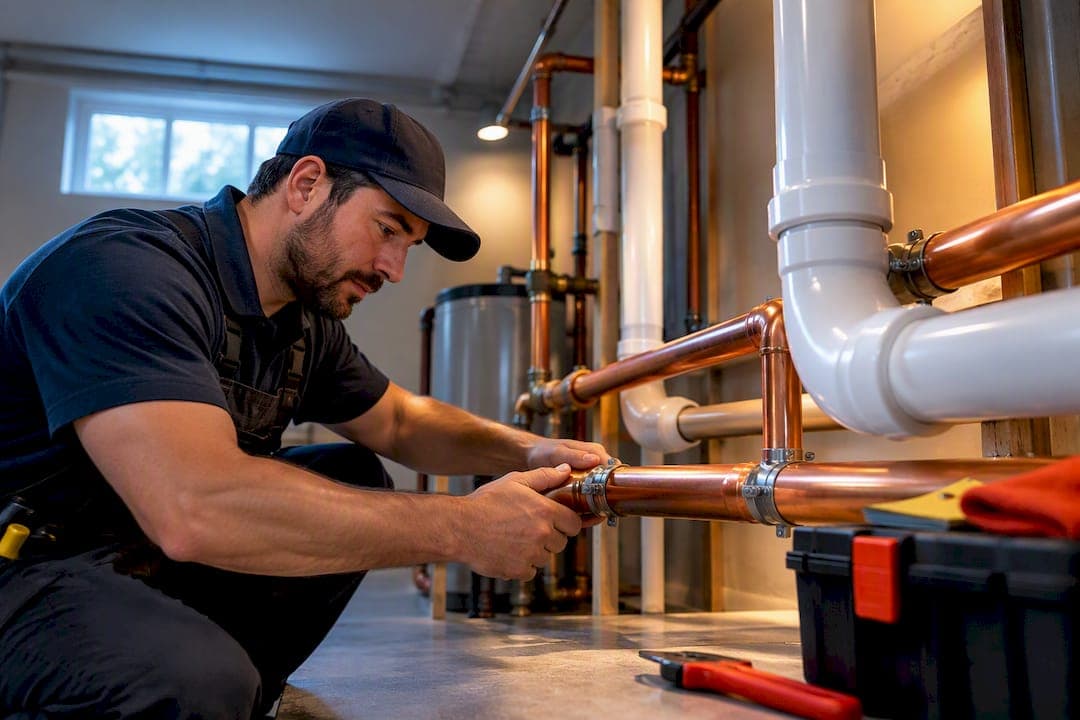
Massachusetts plumbing code is 248 CMR 10.00, the state's Uniform State Plumbing Code, adopted and administered by the Board of State Examiners of Plumbers and Gas Fitters. Local plumbing inspectors enforce it on the ground by issuing permits and signing off on inspections. The practical bottom line: any plumbing work on your property needs a permit, and that permit can only go to a licensed plumber.
TL;DR:
- Massachusetts requires permits for all plumbing work, which can only be issued to licensed plumbers, including minor repairs and fixture replacements.
- The state-specific code, 248 CMR 10.00, covers water supply, drainage, venting, and materials, and is tailored to Massachusetts housing and climate conditions.
- Inspectors focus on trap seals, unobstructed venting, proper cleanout placement, pressure testing, and fixture clearance during rough-in and final inspections.
- Verifying a plumber’s license on the eLIPSE platform and obtaining proper documentation is essential before and after work to ensure compliance and ease future property transactions.
- Using unapproved materials or skipping permits can lead to costly rework, inspection delays, or issues during property sale or insurance claims.
Table of Contents
- What Does 248 CMR 10.00 Cover?
- Who Enforces Massachusetts Plumbing Regulations?
- What Requirements Do Massachusetts Plumbing Codes Actually Enforce?
- How Do You Verify a Plumber Is Licensed in Massachusetts?
- Where Can You Read the Official Massachusetts Plumbing Code?
- Practitioner Checklist: What Inspectors Actually Flag in Massachusetts Homes
- Why Code Compliance Protects More Than Your Wallet
- Get Code-Compliant Plumbing Work Done Right the First Time
- Sources
- FAQ
What Does 248 CMR 10.00 Cover?
248 CMR 10.00 governs the installation, alteration, removal, replacement, repair, and construction of virtually every plumbing system in the state. That includes water supply lines, sanitary drainage, storm drainage, venting, fixtures, and the materials used to build all of it. If a pipe carries water, waste, or gas through a structure, this code has something to say about it.
Massachusetts didn't just adopt a national model wholesale. Instead of running an unmodified version of the International Plumbing Code or the Uniform Plumbing Code, the Commonwealth wrote and maintains its own state-specific regulation, tailored to its housing stock and climate. That matters for anyone comparing online guidance written for other states. A plumbing forum answer based on Texas or Florida rules will not match what a Massachusetts inspector actually checks.
The code's major areas break down roughly like this:
- Fixtures: sinks, toilets, tubs, and their required clearances and connections
- Venting: trap seals, vent stacks, and airflow that keeps sewer gas out of living spaces
- Water supply: pipe sizing, backflow prevention, and materials rated for potable water
- Sanitary and storm drainage: slope, cleanout placement, and separation from stormwater systems
- Materials and testing: what pipe, fitting, and fixture materials are acceptable, and how systems get pressure tested before approval
Who Enforces Massachusetts Plumbing Regulations?
Enforcement runs on two levels. The Board of State Examiners of Plumbers and Gas Fitters sets policy at the state level: it adopts and amends the code, grants variances, and approves new products or materials for use statewide. Local plumbing inspectors handle the day-to-day work: issuing permits, showing up for rough-in and final inspections, and rejecting anything that doesn't meet code.
Licensure works on a tiered system, and it directly determines who can legally do what:
- Apprentice: works under direct supervision while logging hours toward journeyman eligibility.
- Journeyman plumber: requires three years of apprenticeship, 300 hours of approved classroom theory, and passing the state exam. A journeyman can perform installations and repairs but generally works under a master's oversight.
- Master plumber: needs at least one additional year of journeyman experience, further coursework, and a separate exam. Only a master plumber can operate a plumbing business, pull permits for a firm, and supervise apprentices and journeymen on a job site.
That distinction between journeyman and master isn't a formality. If you're hiring for a renovation, the person pulling your permit and taking legal responsibility for the job needs to be a licensed master, or working for one.
What Requirements Do Massachusetts Plumbing Codes Actually Enforce?
Every installation, alteration, removal, replacement, or repair on your property line requires a permit before work starts. That covers everything from swapping a water heater to running new supply lines during a bathroom remodel. Skipping the permit step doesn't just risk a fine. It can leave you with plumbing an inspector never verified, which becomes a real problem when you sell the property or file an insurance claim.
Materials matter just as much as the work itself. Under 248 CMR 3.04 and 10.06, products used in a plumbing system generally need product acceptance from the Board before installation. A fitting or fixture that looks fine on a hardware store shelf isn't automatically approved for use in Massachusetts. Confirming a product's acceptance number before installation saves you from tearing out work an inspector later rejects.
Inspectors focus on a handful of recurring items during rough-in and final walkthroughs:
- Correct trap seals on every fixture to block sewer gas
- Continuous, unobstructed venting with no dead-end runs
- Cleanouts placed where code requires them for future access
- Pressure and leak testing documentation for new supply and drain lines
- Fixture spacing and clearances that meet accessibility and safety minimums
Pro Tip: Keep the manufacturer's product-acceptance documentation for anything unusual you install, like a tankless water heater or a specialty fixture. Inspectors ask for it more often than most homeowners expect, and not having it on hand can delay a final sign-off by weeks.
How Do You Verify a Plumber Is Licensed in Massachusetts?
Checking a plumber's credentials before signing a contract takes about five minutes, and it's the single best protection you have against unlicensed work.
- Search eLIPSE. The state's eLIPSE licensing platform lets you look up license status, type (journeyman or master), and expiration date in real time.
- Ask who pulls the permit. If the contractor won't commit to pulling a permit before starting, that's a red flag, not a negotiating point.
- Request documentation after the job. Get copies of the permit, the final inspection sticker or certificate, and a signed completion statement for your records.
Only licensed master or journeyman plumbers can legally obtain plumbing permits in Massachusetts, and homeowners generally cannot pull their own permits for most work. Hiring around that rule to save money on a quick job is one of the more common ways people end up with an unpermitted system that surfaces during a home sale years later.
Where Can You Read the Official Massachusetts Plumbing Code?
The full text of Mass as a downloadable PDF, along with the regulation's official landing page. Related titles worth bookmarking include:
- 248 CMR 3.00, covering general provisions and product approvals
- 248 CMR 11.00, setting education and experience standards for licensure, last updated October 24, 2025
- The Board's policies and regulations index, which lists contact emails for product approvals and variance requests
Following Board meeting notices is the most reliable way to catch amendments before they show up in a home inspection you weren't expecting.
Practitioner Checklist: What Inspectors Actually Flag in Massachusetts Homes
Older Massachusetts housing stock creates recurring headaches during inspection. Galvanized supply lines corroding from the inside, trap seals that evaporated in rarely used bathrooms, and vent stacks modified decades ago without permits show up constantly in triple-deckers and pre-war single-families.
Before scheduling an inspection, gather:
- Copies of the original and any prior plumbing permits
- Product acceptance numbers for water heaters, boilers, or specialty fixtures
- Previous inspection reports if the work is a continuation of an earlier project
Our inspection process guide walks through what a Massachusetts inspector checks room by room.
Pro Tip: Always confirm a plumber's license through eLIPSE before work starts, not after. It takes two minutes and it's the cheapest insurance you'll buy on the job.
Why Code Compliance Protects More Than Your Wallet
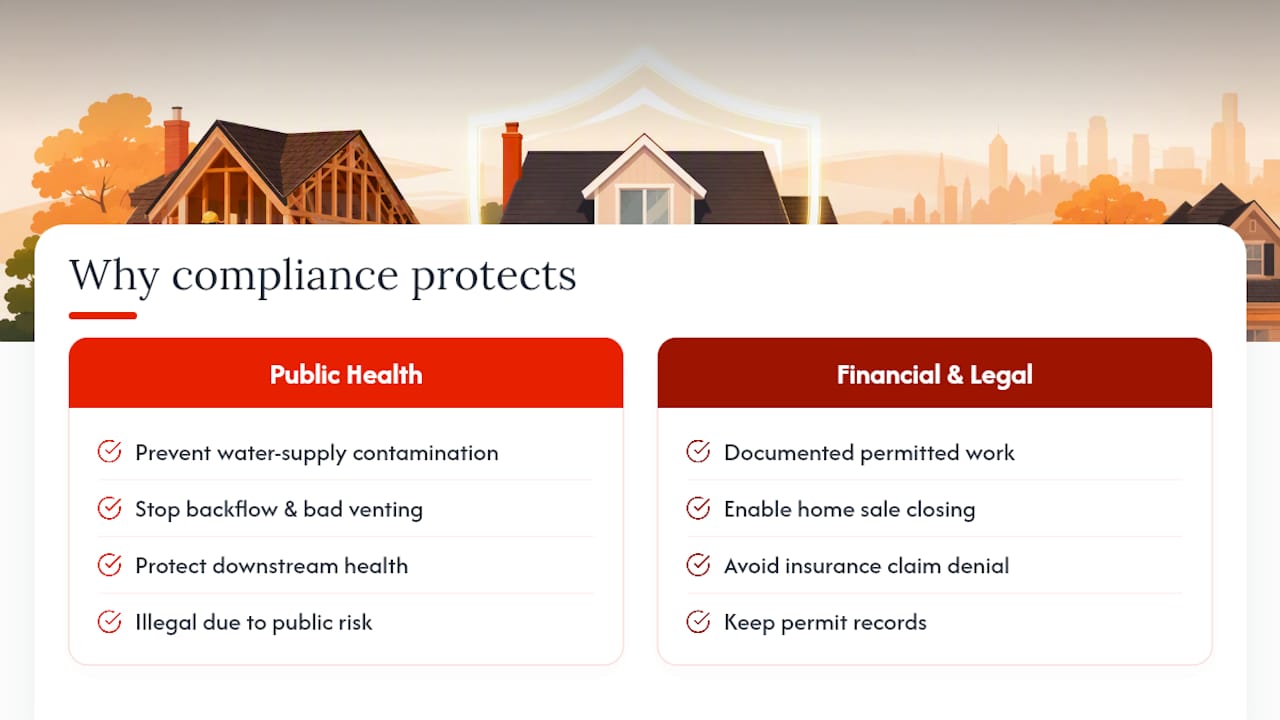
Strict enforcement exists because backflow and bad venting can contaminate a public water supply, not just annoy the homeowner downstream. That's the public health case for why unlicensed shortcuts are illegal, not just discouraged.
There's also a quieter financial argument. Documented, permitted work is what lets a home sale close on schedule and what keeps an insurance claim from getting denied over an unpermitted repair discovered after the fact.
— Matt
Get Code-Compliant Plumbing Work Done Right the First Time
Reading the code tells you what's required. Getting it done correctly, permitted, and documented is a different job, and it's the one Mystic Valley Home Services handles every day across Massachusetts. The team pulls the permits, confirms product acceptance before installation, and provides paperwork needed at resale or claim time, not just a finished fixture.

Our plumbing services cover leak detection, whole-home repipes, fixture installs, and frozen pipe repair, all handled by technicians who know what a Massachusetts inspector is going to check before they check it. If you're buying a property or just want to confirm your existing system is up to code, our pre-purchase plumbing inspections and safety checks give you a documented answer instead of a guess. Book an inspection or repair appointment today and get the compliance paperwork filed correctly the first time.
This article is general information, not a substitute for advice from a qualified lawyer. Consult a qualified legal professional about your own circumstances before acting on anything here.
Sources
FAQ
What Plumbing Code Is Used in Massachusetts?
Massachusetts uses 248 CMR 10.00, the Uniform State Plumbing Code, rather than an unmodified national model. The Board of State Examiners of Plumbers and Gas Fitters writes and maintains it specifically for Massachusetts conditions and housing stock.
Which States Use the International Plumbing Code?
Many states adopt the International Plumbing Code or the Uniform Plumbing Code directly, but Massachusetts is not one of them. It maintains its own state-specific regulation, 248 CMR 10.00, which draws on similar principles but includes Massachusetts-specific amendments and requirements.
What Are the Venting Requirements Under Massachusetts Plumbing Code?
Massachusetts plumbing code requires continuous, unobstructed venting for every fixture, with correctly sized trap seals to block sewer gas from entering living spaces. Inspectors specifically check for dead-end vent runs and improperly sized stacks, which are common issues in older Massachusetts homes with modified plumbing.
What Is the Massachusetts Bathroom Code?
There's no separate "bathroom code" in Massachusetts; bathroom fixtures fall under the same 248 CMR 10.00 requirements as the rest of the plumbing system. That includes fixture clearances, trap seal standards, venting, and permit requirements for any new installation or alteration.
Do I Need a Permit for Minor Plumbing Repairs in Massachusetts?
Yes. Permits are required for installations, alterations, removals, replacements, and repairs within the property line, with no general exception for small jobs. Permits are issued only to licensed plumbers, so even a minor repair needs to go through a licensed professional to be code-compliant.