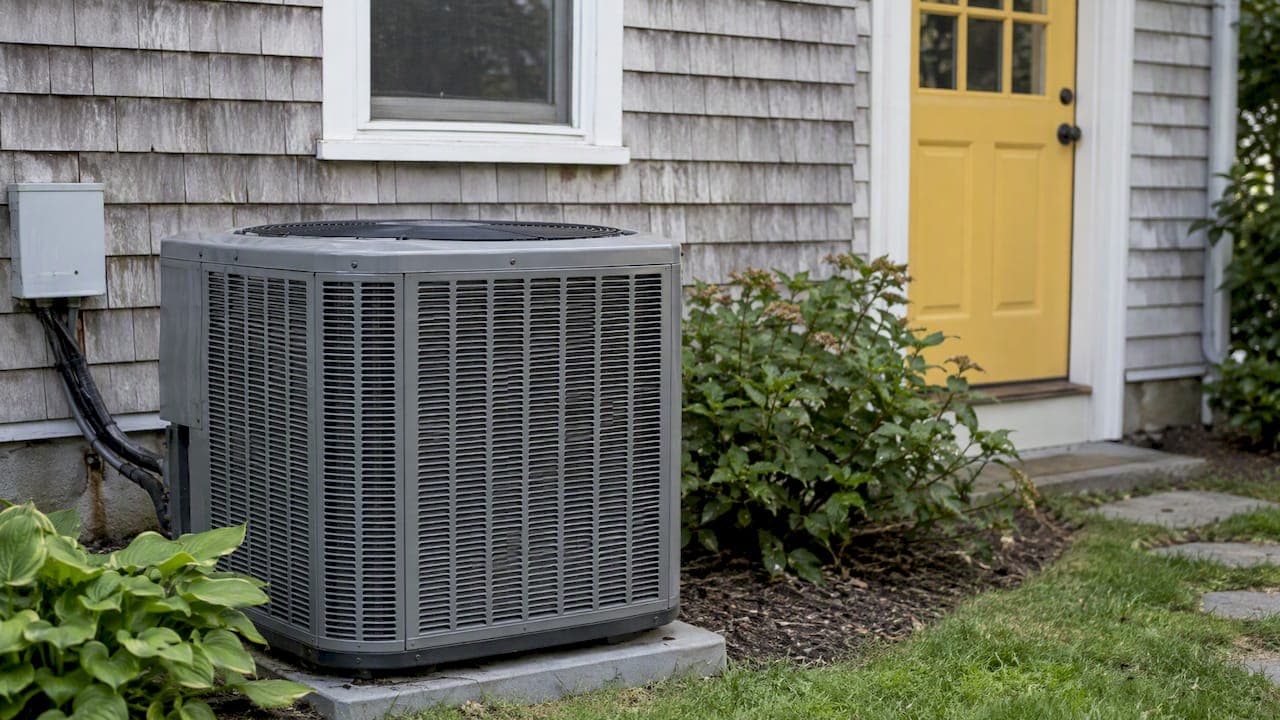
Short cycling means your air conditioner starts, runs for a few minutes, shuts off, and then starts again before it has finished cooling the house. The usual culprits are a clogged filter, a thermostat problem, an oversized system, low refrigerant or a failing electrical part. You can check the first two yourself in about ten minutes. The rest need a licensed technician.
This guide explains how to tell short cycling from normal operation, what is behind it, what you can safely try, and what a professional visit involves.
TL;DR
- Short cycling is an AC that shuts off before completing a cooling cycle, then restarts again and again. It wastes energy, leaves the house clammy and wears out parts.
- Start with the easy checks: a clean filter, open vents, and a thermostat that is set correctly and not sitting in sun or near a heat source.
- Never open electrical panels or test capacitors, contactors or compressors yourself. Repeated breaker trips need a professional.
- Oversized equipment can only be fixed by replacing it with a correctly sized system. Low refrigerant means a leak that needs a technician.
- If the filter and thermostat are not the cause, book a diagnostic visit before the compressor pays the price.
Table of Contents
- What short cycling actually is
- Why short cycling is worth fixing quickly
- The most common causes
- What you can safely check yourself
- Should you turn the AC off when it short cycles?
- Short cycling in commercial buildings
- What a professional diagnosis involves
- Perspective: what we see in the field
- Get your AC checked by licensed Massachusetts technicians
- How to keep it from coming back
- FAQ
- Sources
What short cycling actually is
An air conditioner is built to run in long, steady stretches. Trane describes short cycling as abnormal, repeated starting and stopping in which the unit shuts off before completing its cooling cycle. Carrier puts it as a malfunction where the system turns on and off frequently, when a healthy system would run longer to remove humidity and cool the space.
There is no single number of minutes that defines a normal cycle. Bryant's guidance says there is no universal minute-based definition. It treats frequent on-and-off operation as a reason to investigate, especially cycles lasting only a few minutes that repeat several times within an hour.
Normal cycling versus short cycling
An AC does turn off when the house reaches the temperature you set. On a mild spring day, it may run briefly and rest for a while. That is fine. Short cycling looks different:
- The outdoor unit starts and stops every few minutes, over and over, even on a hot afternoon.
- The house never quite cools down, or it feels cool but sticky.
- Some rooms stay warm while the room near the thermostat feels fine.
- You hear repeated clicks, humming or a hard start from the outdoor unit.
- Your electric bill climbs without any change in how you use the system.
A simple test: on a warm day, watch the system for an hour. If it keeps starting and stopping several times with only a few minutes of runtime each time, treat it as short cycling. If it runs in long stretches with decent rest between, it is probably healthy.
Why short cycling is worth fixing quickly
It is tempting to live with an AC that is merely annoying. The cost shows up in three places.
Comfort. Trane reports that short cycling can leave indoor air cold and clammy, or unevenly cooled, because the system does not run long enough to remove adequate humidity. In a humid New England July, that is the difference between a comfortable house and a muggy one.
Energy. The U.S. Department of Energy notes that excessive cycling reduces an air conditioner's overall efficiency, and that oversized systems carry higher energy costs.
Equipment life. The same DOE publication says excessive cycling accelerates wear and tear and can lead to premature failure. Compressor maker Copeland explains part of the mechanism. When a compressor's run period is very short, oil can stay trapped in the system each time it cycles off, and repeated short cycles can progressively pump oil out of the compressor. The same document notes that motor windings can flex and move, eventually scuffing insulation and causing a short.
The compressor is the most expensive part of the outdoor unit. Catching the problem early is usually the cheaper path.

The most common causes
Most short cycling comes from a handful of causes. They are listed here from the easiest to the hardest to fix.
1. A dirty air filter
A clogged filter restricts airflow across the indoor coil. Carrier lists dirty filters as a leading cause: restricted airflow can force the system to overheat and shut down as a safety precaution. When it cools off, it restarts, and the loop begins again.
2. Thermostat problems
A thermostat that is failing, set oddly, or poorly placed can end a cycle too soon. If it sits in direct sun, above a lamp, near a kitchen, or in a drafty hallway, it reads a temperature that does not match the rest of the house. Trane names thermostat problems and improper system sizing as the two principal causes.
If your thermostat is blank, unresponsive or acting strangely, our guide to safe thermostat checks walks through what to try first.
3. An oversized system
Bigger is not better with air conditioning. An oversized unit reaches the set temperature quickly and stops before it completes a proper cycle. According to Trane, an oversized system can only be corrected by replacing it with a correctly sized one.
This matters in older New England houses. Windows get replaced, attics get insulated, and rooms get added or closed off. A unit sized for the house as it was decades ago, or sized by guesswork, may be wrong for the house as it is now. Ductless systems are often a better fit for older homes with limited duct space, and a proper load calculation is the right starting point for any new installation.
4. Frozen evaporator coils
American Standard lists frozen coils alongside an oversized system, a clogged filter and thermostat issues as possible causes. Ice on the coil blocks airflow and can trip safety controls. It often follows a dirty filter or low refrigerant, so fixing the symptom without the root cause rarely holds.
5. Low refrigerant
Refrigerant does not get used up like fuel. If the level is low, there is a leak. Low refrigerant is one of the causes Carrier lists, and it needs a licensed technician to find, repair and recharge. Signs include ice on the lines, hissing sounds, and weak cooling. Our post on refrigerant leak signs covers what you can spot safely from the outside.
6. Electrical faults
Carrier also points to electrical faults such as bad capacitors or relays. A weak capacitor can make the compressor struggle to start, and the system cuts out and tries again. This is not a homeowner repair. Capacitors can hold a charge even when the power is off.
7. Safety controls doing their job
A compressor does not usually stop on its own. Something tells it to: the thermostat, an internal protector, or a low-pressure or high-pressure control. A good technician identifies which control is stopping the unit before replacing any expensive part. That is why a proper diagnosis beats guessing.
What you can safely check yourself
These steps need no tools and no opening of any panel. Do them with the system off at the thermostat.
- Check the filter. Pull it out and hold it to the light. If you cannot see through it, replace it. Use the size and rating printed on the frame.
- Open the vents. Make sure supply registers and return grilles are not blocked by furniture, rugs or closed doors.
- Look at the thermostat. Confirm the mode is set to cool, the temperature is realistic, and it is not in the sun or near a heat source. Replace the batteries if it uses them.
- Clear the outdoor unit. Remove leaves, grass clippings and debris around the condenser, and keep plants a couple of feet back so air can move freely.
- Look for ice. If you see frost on the refrigerant lines or indoor coil, turn the system off and let it thaw. Do not chip at it.
- Restart and watch. After changes, run the system for an hour and see whether it holds a longer cycle.
That sequence matches the usual guidance. Carrier recommends replacing a dirty filter and checking thermostat placement and settings first, then calling a professional for refrigerant leaks or electrical faults.
If your AC is also blowing warm air or not cooling at all, our AC not cooling troubleshooting guide lays out checks by how much time you have.
What not to do
Bryant warns homeowners not to open electrical access panels or test capacitors, contactors, compressors or other internal components. It also says repeated breaker trips need professional attention. If the breaker trips more than once, leave it off and call.
Two other things to avoid: do not add refrigerant from a DIY can (it is regulated, and it hides a leak rather than fixing it), and do not keep resetting the breaker to force the system to run.
Should you turn the AC off when it short cycles?
In most cases, yes, at least while you investigate. Running a unit that stops and restarts every few minutes puts repeated starting strain on the compressor, and each restart is the hardest moment for the motor. Switch the thermostat to off, check the filter and thermostat, and give the system a while before trying again.
Turn it off and leave it off if you see ice on the unit, smell burning, hear loud buzzing or grinding, or the breaker has tripped. Run fans in the meantime, and call a technician. If the house is hot and someone vulnerable is at home, such as an infant, an older adult or a person with a heart or respiratory condition, treat it as urgent and get the repair booked quickly. Keep them cool in the meantime, and if anyone shows signs of heat illness, seek medical care.

Short cycling in commercial buildings
For a business, short cycling can point to something bigger than one bad part. The EPA's building commissioning guidance says that in commercial buildings it can indicate broader building-wide issues, such as changed energy management settings or poorly integrated building controls, which can be corrected through systematic retro-commissioning.
For a shop, office or restaurant, that means asking whether a schedule, setpoint or controller was changed recently, not only whether a filter is dirty. Our piece on common commercial HVAC failures explains what to catch early so a small fault does not become a closed-for-the-day problem.
What a professional diagnosis involves
When the basic checks do not fix it, a technician works through the system in order, rather than swapping parts. A thorough visit typically covers:
- Airflow: filter, blower, coil condition and ductwork restrictions.
- Thermostat: wiring, placement, calibration and settings.
- Refrigerant side: pressures, signs of a leak, and the condition of the coils.
- Electrical side: capacitor, contactor, relay and control board readings, taken safely with the right equipment.
- Sizing: whether the equipment matches the actual load of the home or building.
The repair cost depends entirely on which of these is the cause. A dirty filter costs a few dollars. A leak, an electrical part, or a sizing problem is a different conversation, and an oversized unit means replacement. That is why a diagnosis comes before any quote. We would rather tell you the real cause than sell you a part you do not need.
Perspective: what we see in the field
Most short cycling calls we hear about start the same way: a homeowner has been resetting the thermostat or the breaker for a week and hoping it goes away. The filter was often the first clue, and it was ignored because it looked fine at a glance.
Our advice is plain. Do the ten-minute checks, and do them honestly. Hold the filter up to the light. Look at where the thermostat sits. If neither is the cause, stop there and call. The compressor is the part that suffers when a system keeps restarting, and a repair caught early is nearly always smaller than one caught after a breakdown.
We also see a lot of older Massachusetts houses where the equipment no longer matches the building. Arlington's older homes are a good example: added insulation, new windows and renovated floor plans change how much cooling a house needs. A diagnostic should include a look at whether the system suits the house today. When the answer is that it does not, we tell you, and we show you the options, including right-sized ductless and multi-zone systems.
And a yearly tune-up catches the dull causes before summer: dirty coils, a tired capacitor, a loose connection. If you want a reference for timing, our guide to HVAC tune-up frequency covers how often to service your system.
— Matt
Get your AC checked by licensed Massachusetts technicians
If your AC is still turning on and off after the filter and thermostat checks, our team can find the cause and fix it. We are a family-owned, licensed and insured Massachusetts company offering same-day or next-day service, upfront pricing and direct owner oversight. Our AC diagnostics and repair cover short cycling, frozen coils, airflow problems, and right-sizing for ductless and multi-zone systems. We also offer seasonal AC tune-ups.

If you manage a commercial property, tell us when you book so we can look at controls and schedules as well as the equipment. For the details of what we do, see our cooling services page.
How to keep it from coming back
- Change filters on a schedule. Check monthly in cooling season and replace when dirty. Homes with pets or dust may need it more often.
- Keep the outdoor unit clear. Trim back plants and clear debris each spring.
- Book a seasonal tune-up before the hot weather starts, so a weak part is found in April instead of during a July heat wave.
- Size new equipment properly. If you replace a system or add a ductless unit, insist on a load calculation rather than matching the old unit's size.
- Fix small signs early. Ice, odd sounds, rising bills or a breaker that trips once are all worth a call.
FAQ
Why does my AC keep turning on and off?
The most common reasons are a dirty filter, a thermostat that is misplaced or failing, an oversized unit, frozen coils, low refrigerant, or an electrical fault. Start with the filter and the thermostat. If both are fine, have a technician diagnose it.
How do I stop my AC from short cycling?
Replace a dirty filter, open blocked vents, clear the outdoor unit, and check the thermostat's location and settings. If it keeps happening, the cause is likely refrigerant, electrical, or sizing, and needs a professional. Do not open electrical panels yourself.
What causes an AC compressor to short cycle?
The compressor stops when a control tells it to: the thermostat, an internal protector, or a pressure control. Those controls react to airflow problems, low refrigerant, or electrical faults such as a bad capacitor. A technician should identify which one is acting before any compressor is replaced.
Is short cycling bad for my air conditioner?
Yes. Excessive cycling lowers efficiency and speeds up wear, and it can lead to early failure, according to the U.S. Department of Energy. It also leaves the house less comfortable because humidity is not removed properly.
How much does it cost to fix a short cycling AC?
It depends on the cause. A clean filter costs very little, while refrigerant leaks, electrical parts and sizing problems cost more, and an oversized system can only be corrected by replacement. We diagnose first and give you upfront pricing before work begins.
Sources
- AC Short Cycling? Learn Why and What to Do, Trane
- AC Short Cycling: Causes, Fixes & How to Prevent It, Bryant
- How to Repair and Troubleshoot Your AC, Bryant
- What Is AC Short Cycling? Causes & Troubleshooting, Carrier
- What Does Cycling Mean for HVAC Systems? American Standard
- Right-Size Heating and Cooling Equipment, U.S. Department of Energy
- Compressor Short Cycling: An Unrecognized Problem, Copeland
- EPA Building Commissioning Guidelines