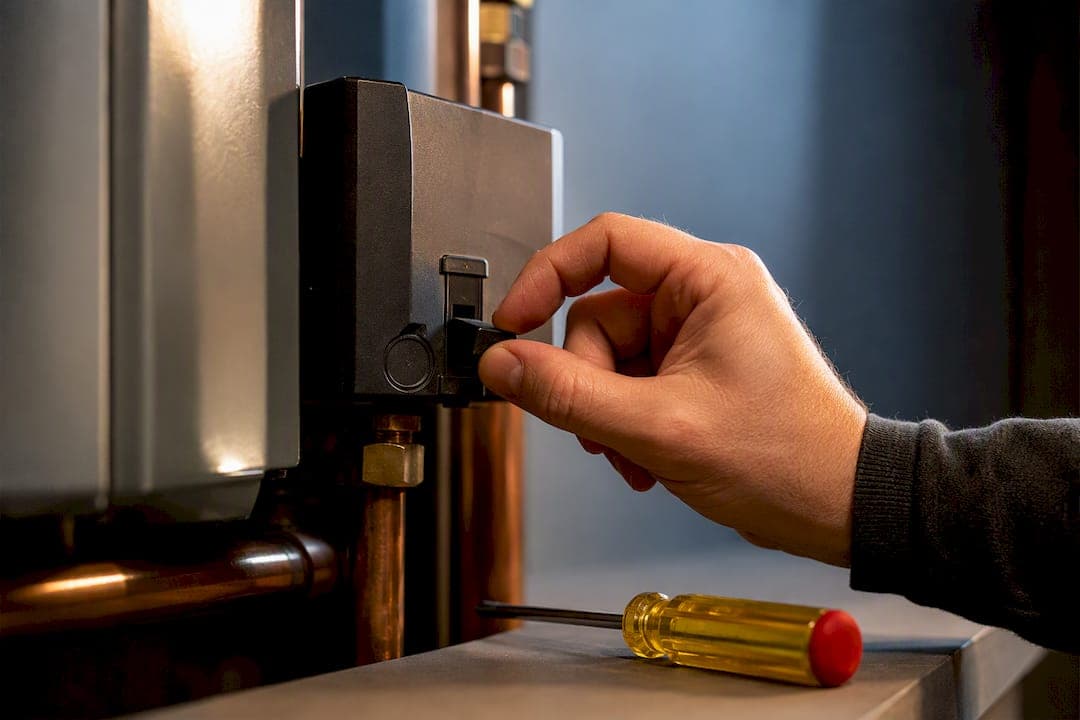
If one zone is cold while the boiler runs, raise that zone's thermostat and watch the zone valve. No hum and no movement usually means the actuator isn't getting power or has failed. A hum with no valve movement points to a seized gear or jammed valve body. Shut off power before touching any wiring, and try the manual lever first since it tells you the most in the least time.
TL;DR:
- Confirm the zone valve's actuator receives power by measuring close to 24 volts with a multimeter; no voltage indicates wiring or transformer issues.
- Use the manual lever to check if heat returns; if it does, the actuator likely failed, but if not, the valve body may be seized or downstream components are faulty.
- Trapped air or a failed circulator can mimic zone valve problems, so bleeding radiators or inspecting the pump is crucial if the valve opens but the zone remains cold.
- Replacing the actuator is a straightforward weekend project, while full valve replacement involves draining the system and is more costly; professional help is advised for complex issues.
- Always turn off power at the breaker and verify with a meter before working on zone valves, and avoid jumper wire testing to prevent damage or safety hazards.
Table of Contents
- A 5-minute checklist to isolate the fault
- Step-by-step tests to confirm electrical vs mechanical failure
- Common symptoms and their likely causes
- Repairing the actuator versus replacing the whole valve
- Safety steps and mistakes that cause bigger problems
- A tradesman's take on where homeowners get stuck
- Why the manual lever test matters more than people think
- When it's time to call in a heating pro
- Sources
- FAQ
A 5-minute checklist to isolate the fault
Before opening anything up, run through this sequence. It takes less time than a coffee break and tells you whether you're dealing with controls, an actuator, the valve body, or the circulator.
- Raise the thermostat for the cold zone about 5 degrees above room temperature and confirm it clicks on.
- Watch the boiler: does it fire, and does the circulator pump run?
- Listen and feel at the zone valve body: a soft hum and slight warmth mean the actuator is energized.
- Find the manual opener lever on the valve and move it by hand to see if heat returns to that zone.
- Check the electrical panel for a tripped breaker and confirm the transformer powering the zone board is intact.
If you smell burning, see water at the valve, or find scorched wiring at any point, stop and call a professional rather than continuing the checklist.
Step-by-step tests to confirm electrical vs mechanical failure
Start with the thermostat itself. Pull the cover and check that the subbase contacts close when you raise the setpoint, since a worn or corroded R to W connection can mimic a dead zone valve entirely. Weak batteries or a thermostat stuck in the wrong mode are common culprits worth ruling out before you touch the valve. If you're unsure the thermostat is even calling, a basic thermostat check can save you a trip to the basement.
Next, test for voltage at the actuator terminals with a multimeter set to AC volts. With the thermostat calling for heat, you should read close to 24 volts at the two coil terminals. This kind of systematic testing lets you isolate whether the problem is electrical or mechanical, since no voltage points to a wiring, transformer, or thermostat issue, while a present voltage with no valve movement points to the actuator or a jammed valve body.

Pro Tip: Write down each reading as you go. If you need to call a technician later, exact voltage numbers save a repeat visit.
With power confirmed, use the manual override lever, described in Resideo's V4043/V8043 technical literature, which also covers checkout procedures for observing valve open and close behavior. If heat returns when you move the lever by hand, the actuator itself has failed and the valve body is fine. If heat still doesn't return, the valve body is likely seized, or the problem lies downstream at the circulator.
- Confirm the thermostat contacts close on a call for heat before testing anything downstream.
- Measure close to 24 VAC at the actuator terminals to separate electrical faults from mechanical ones.
- Move the manual lever to see whether heat returns without touching any wiring.
- Check the end switch for continuity once the valve is fully open.
- Bleed the zone and check the circulator if the valve opens but the zone stays cool.
Many valves include an end switch that closes once the actuator reaches full open, and this signal is what tells the circulator or boiler to start. Manufacturer documentation details how to verify this open and closed behavior during a checkout. If the valve opens but the end switch never closes, the circulator or boiler may never get the signal to run, leaving you with a warm valve and a cold radiator.
One in a small number of persistent "zone valve" complaints turns out to be trapped air or a failed circulator rather than the valve itself, according to Heating System Answers, which notes that air binding or a dead pump can prevent heat even after the valve opens correctly. If you suspect air, a radiator bleeding guide walks through the process, and the partner guide on failed circulators covers pump-specific symptoms in more depth.
Test in this order: thermostat, then voltage, then manual override, then end switch. This sequence limits how many times you cycle power and keeps you from jumping straight to disassembly when the fix might be a simple wiring connection.
Common symptoms and their likely causes
Matching what you're seeing to a probable cause narrows your next step considerably.
- No heat in one zone while the boiler runs: usually a valve that isn't opening, though trapped air or a weak circulator can produce the same symptom, so check both before replacing parts.
- A zone that's always hot, even with the thermostat satisfied: often a valve stuck open or a constant electrical signal, confirmed by cutting power to the actuator and watching whether the valve closes.
- A humming sound with no valve movement: typically a failing motor or jammed gear train, which the manual override test will confirm quickly.
- Visible leaking or corrosion at the valve body: almost always means the valve itself needs replacement rather than the actuator alone.
Repairing the actuator versus replacing the whole valve
Most single-zone failures come down to the powerhead, the small motorized actuator on top of the valve, and these are generally designed to be replaced without draining the system or breaking pipe connections. Before you buy a replacement, note the exact model number stamped on the old powerhead so the new one matches.
Valve body problems are a different story. Leaks, heavy corrosion, or an internal seized mechanism usually mean replacing the entire valve, which typically involves draining that section of the system and sweating or threading in a new body.
- A powerhead swap is a modest weekend project for someone comfortable with basic electrical work and hand tools.
- Full valve replacement takes longer, requires drain-down and possibly soldering, and costs more in parts and labor.
- Multiple failing zones, active leaks, or wiring you can't confidently trace are all reasons to bring in a professional.
Pro Tip: Take a photo of the wiring before disconnecting anything. It's the fastest way to reassemble correctly if you get interrupted.
Safety steps and mistakes that cause bigger problems
Turn off power to the zone valve circuit at the breaker before touching any wiring, and verify it's off with a meter rather than trusting the panel label. Never jumper the 24VAC coil terminals to test a valve, since manufacturer literature warns this can burn out the thermostat's heat anticipator and cause further control problems down the line.
- Confirm power is off with a meter, not just by flipping the breaker.
- Never bridge or jumper the coil terminals, even briefly, to force a valve open.
- Don't force a stuck valve lever past resistance, since that can crack the gear train or the valve body.
- Match the exact replacement powerhead model number and follow the manufacturer's installation steps.
A tradesman's take on where homeowners get stuck
Most of the single-zone calls I see come down to either a dead actuator or a wiring fault, and swapping the powerhead solves it more often than not. The manual lever test tells you almost everything in thirty seconds, so start there before assuming the worst.
Call in a professional when you see a leak, when more than one zone is acting up at once, or when you're not confident tracing 24VAC wiring yourself. Those situations usually point to something bigger than a bad powerhead, and poking around without the right test equipment risks turning a small fix into a drained system and a bigger bill.
— Matt
Why the manual lever test matters more than people think
Most troubleshooting guides bury the manual override test halfway down a long list, but it's the single most useful five seconds you can spend on a dead zone. It separates electrical problems from mechanical ones without a meter, without opening a panel, and without any real risk. Homeowners tend to skip straight to buying a new valve or a new thermostat when the actual fault is a fifteen dollar actuator.
The other thing conventional advice underplays is trapped air and circulator health. People assume a cold zone always means a bad valve, but a valve that opens correctly still won't heat a room if the loop is airbound or the pump has quit. Test the valve first, but don't stop there if the radiator stays cold after the valve confirms open. And resist the urge to force anything mechanical. A stuck lever or a jammed gear train is a sign to replace a part, not a sign to push harder.

When it's time to call in a heating pro
Some zone valve problems are a fifteen minute fix. Others involve corrosion, multiple failed zones, or wiring you'd rather not guess at, and that's when it makes sense to bring in a professional rather than risk a drained system or a damaged thermostat.

Professional heating service providers often handle zone valve and thermostat replacement, boiler and circulator checks, no-heat emergency diagnostics, and annual heating tune-ups. A typical visit includes a full diagnosis, an upfront quote before any work starts, and flexible scheduling options.
- Zone valve and thermostat replacement for actuators or full valve bodies.
- Boiler and circulator checks when a valve tests fine but heat still isn't reaching a zone.
- No-heat emergency diagnostics for cold zones you can't isolate yourself.
- Annual heating tune-ups to catch a failing valve before it leaves you without heat.
Book a visit through our heating services page and get a technician out to diagnose the problem instead of guessing.
Sources
- How to Troubleshoot a Zone Control Valve — BCST Valve
- Zone valve not opening? Symptoms, causes, and how to fix it — Heating System Answers
- How to change a zone valve powerhead — Tameson product/guide
FAQ
How can you tell if a zone valve is bad?
Raise the thermostat and check for a hum and slight warmth at the valve body, then try the manual lever. If the lever restores heat, the actuator has failed; if nothing changes, the valve body or circulator may be at fault.
Can I manually turn off a zone valve?
Most zone valves have a manual lever meant for testing and temporary override, not for regular shutoff. Use it briefly to diagnose a stuck valve, then return it to automatic operation or replace the failed part.
What is the typical lifespan of a Honeywell zone valve?
Published sources don't list a specific lifespan figure for Honeywell zone valves. Powerheads tend to fail before the valve body itself, and many are designed to be swapped without draining the system, which extends the working life of the valve as a whole.
What are the common symptoms of a failed pressure relief valve?
A pressure relief valve is a different component from a zone valve, and common signs of failure include water dripping from the discharge pipe or the valve failing to release pressure when it should. If you notice either, have it checked separately from any zone valve issue, since it affects boiler safety directly.