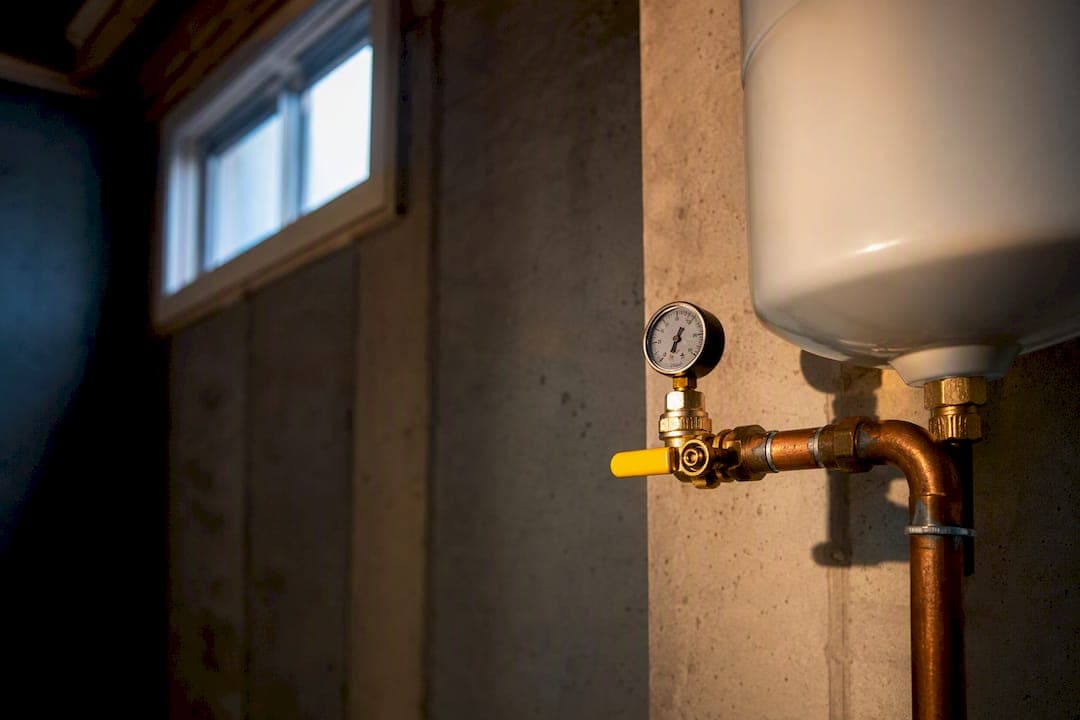
You need a water heater expansion tank if your home has a closed plumbing system, meaning a check valve, backflow preventer, or pressure-reducing valve sits somewhere on your main line. That single detail settles the debate. Skip it, and heated water with nowhere to expand will stress your pipes and quietly void your warranty. Check your main water line or ask a plumber today.
TL;DR:
- A water heater expansion tank is required in homes with a closed plumbing system that includes a check valve, backflow preventer, or pressure-reducing valve to prevent pressure spikes and pipe stress.
- Proper sizing depends on your water heater capacity, static water pressure, and temperature rise, with most 40- to 50-gallon tanks needing only 2 gallons of capacity at normal pressure levels.
- Installing an expansion tank involves correctly precharging it to match your home's static pressure, mounting it near the heater, and verifying system pressure to ensure effective operation.
- Regular maintenance includes annual visual inspections and pressure tests; a dull or waterlogged tank indicates failure and warrants replacement to prevent damage.
- In high-pressure or complex systems, professional sizing, installation, and code compliance verification are advisable to avoid warranty voids and future costly repairs.
Table of Contents
- Do I Need an Expansion Tank? Code Triggers and Warranty Risk
- How Does a Water Heater Expansion Tank Work?
- How to Size a Water Heater Expansion Tank Correctly
- Installing and Precharging an Expansion Tank Safely
- Expansion Tank Maintenance: Testing and Failure Signs
- What Does an Expansion Tank Cost to Install or Replace?
- Field Notes From Mystic Valley Home Services
- A Small Cost Now Beats a Bigger Repair Later
- Get Your Water Heater Sized and Installed Right the First Time
- Where to Check Sizing Charts and Installation Steps
- Sources
- FAQ
Do I Need an Expansion Tank? Code Triggers and Warranty Risk
A "closed system" simply means water can flow in but can't flow back out toward the street. Once a check valve, backflow preventer, or pressure-reducing valve (PRV) is installed, your plumbing traps heated water instead of letting it push backward through the meter. Heated water expands by volume, and with nowhere to go, pressure spikes inside the tank and pipes.
Plumbing codes reflect that reality directly. Under both the Uniform Plumbing Code and International Plumbing Code, thermal expansion control is required once a system is closed. If you're building new or doing a major renovation, your inspector will check for this specifically.
Skipping the tank in a closed system carries real cost. Manufacturers warn that unmanaged thermal expansion stresses pipe joints and can void your water heater's warranty, since repeated pressure spikes are exactly what warranties exclude. The telltale symptom:
- Your temperature and pressure (T&P) relief valve drips periodically, even with no leak elsewhere
- Water pressure at your fixtures fluctuates through the day
- A plumbing inspection flags a PRV or backflow device but no expansion tank
Replacing a dripping T&P valve without fixing the underlying pressure problem just delays the next failure.
How Does a Water Heater Expansion Tank Work?
Inside every expansion tank sits a rubber bladder, pressurized with air on one side and connected to your water line on the other. When your water heater fires up, the water inside expands. That extra volume pushes into the tank and compresses the air cushion behind the bladder.
As the water cools, the compressed air pushes it back into your plumbing, keeping system pressure steady instead of letting it spike every time the heater cycles on. It's the same principle as a shock absorber, just for water pressure instead of road bumps.
A few mechanics worth knowing:
- The bladder never touches the tank's air chamber directly; a rubber diaphragm keeps water and air separated permanently.
- Precharge air pressure should roughly match your home's static water pressure, typically within a common residential range of water pressure.
- The T&P relief valve on your water heater still acts as the final safety backstop if pressure ever exceeds safe limits.
How to Size a Water Heater Expansion Tank Correctly
Undersizing is the most common mistake DIYers make, and it defeats the entire purpose of installing one. Getting it right takes three numbers: your water heater's gallon capacity, your home's static incoming pressure, and how much the temperature rises during heating.
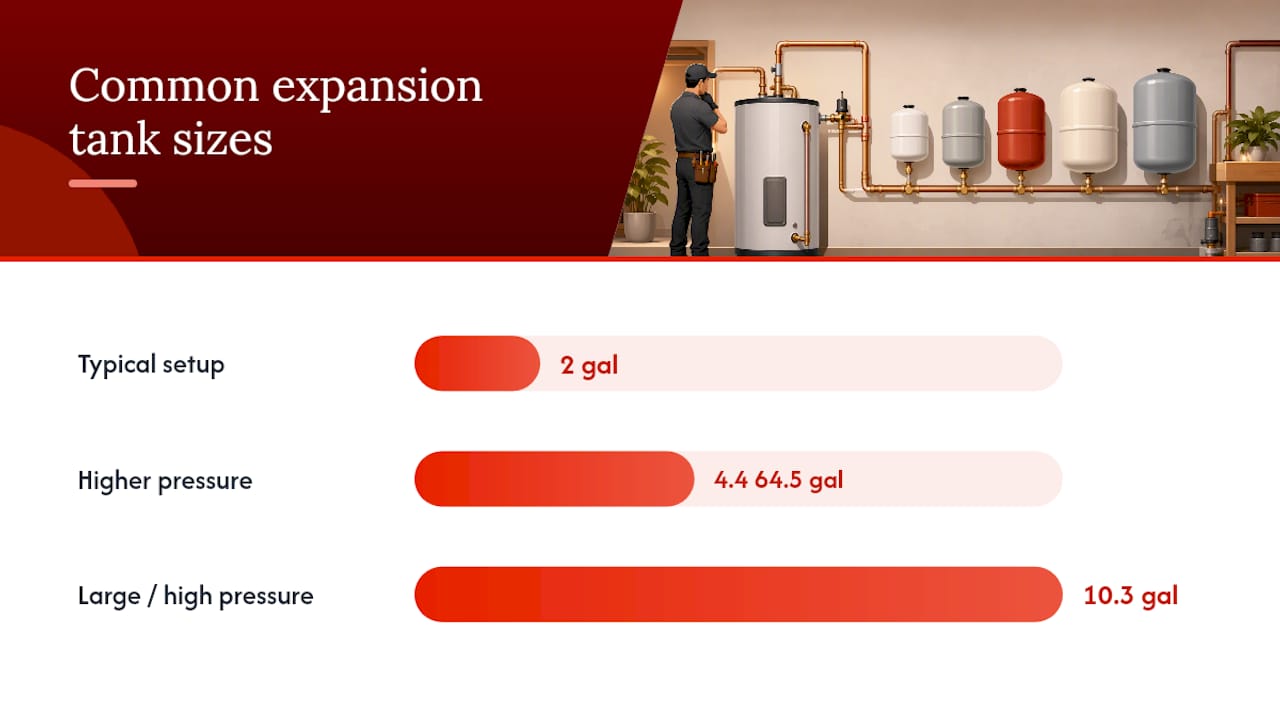
For most residential setups, sizing follows familiar patterns. A 2-gallon tank typically handles 40 to 50-gallon water heaters at normal pressures (40 to 60 psi). Homes with higher static pressure or larger tanks often need a 4.4 to 4.5-gallon unit, and some large or high-pressure setups call for a 10.3-gallon tank. When your numbers fall between sizes, size up. An oversized tank wastes a little space; an undersized one fails to do its job.
Here's the process:
- Measure static pressure. Attach a pressure gauge to an outdoor spigot or washing machine valve when no water is running.
- Read your heater's capacity off the manufacturer sticker, usually on the side near the top.
- Cross-reference a sizing chart. Amtrol's installation and sizing manual matches tank size to pressure and heater capacity in a simple table, or run your numbers through the Hot Water University sizing calculator for a quick answer.
- Flag high-pressure homes. If static pressure tests above 80 psi, you likely need a pressure-reducing valve installed before or alongside the expansion tank.
Pro Tip: Test your static pressure twice, once in the morning and once at night. Municipal pressure can shift by 10 psi or more depending on neighborhood demand, and that swing matters when you're picking a precharge setting.
Installing and Precharging an Expansion Tank Safely
Placement matters as much as sizing. The tank mounts on the cold-water line, between the water heater and any backflow device or PRV, usually via a tee fitting close to the heater. If you're mounting it horizontally or on a bracket, make sure the support can handle the tank's weight when full, since a waterlogged tank is heavier than it looks.
Precharge adjustment is the step most DIYers skip, and it's the one that determines whether the tank actually works. Before installation, use a hand pump and a pressure gauge (never a shop compressor) to set the tank's air side to match your home's static pressure.
- Shut off the main water supply and drain pressure at a nearby faucet.
- Confirm the tank is empty of water, then check and adjust precharge through the Schrader valve on top.
- Thread the tank onto the tee fitting or saddle valve you've installed on the cold line.
- Turn the water back on slowly, check every joint for leaks, and purge trapped air at a fixture.
Pro Tip: Never cap or bypass the T&P relief valve to "fix" a drip. If it's still weeping after the expansion tank is installed and precharged correctly, call a licensed plumber. That's usually a sign of excess system pressure, not a bad valve. Amtrol's installation guide covers mounting orientation and torque specs in more detail than any general guide can.
Expansion Tank Maintenance: Testing and Failure Signs
An annual check takes five minutes and catches most problems before they cause damage. Start with a visual scan for corrosion or moisture around the fittings, then move to two quick physical tests.
- Tapping test: Knock on the tank's side near the bottom. A hollow sound means air is present; a dull, heavy thud usually means the bladder has failed and the tank is waterlogged.
- Schrader valve check: Press the valve stem briefly. Air hissing out is normal; water spitting out means the bladder has ruptured.
- Precharge check: Isolate the tank, drain it, and verify air pressure with a gauge, matching it back to your current static line pressure.
Watch for a T&P valve that drips again after months of being dry, pressure that swings noticeably through the day, or that dull tank sound. These are the classic signs cited by The Spruce's practical breakdown of expansion tank failure. Most tanks last several years, with ruptured bladders and lost precharge as the two most common failure modes.
What Does an Expansion Tank Cost to Install or Replace?
Parts run cheap relative to the protection they offer. A typical 2 to 5-gallon expansion tank costs a moderate amount depending on brand and capacity, with labor for a straightforward swap adding a modest amount on top for most licensed plumbers.
Costs climb when the job gets complicated:
- Hard-to-reach heaters (attics, crawlspaces, tight utility closets) add labor time.
- Adding a PRV alongside the expansion tank increases both parts and labor.
- Rerouting old or corroded fittings to accept a new tee adds unexpected cost.
Quick decision guide: if the tank taps hollow and holds precharge, leave it alone. If it's waterlogged or leaking, replace it. If pressure keeps fluctuating even after replacement, call a plumber, since that usually points to a bigger issue than the tank itself.
Field Notes From Mystic Valley Home Services
The pitfalls we see most often on service calls: tanks mounted without adequate support, precharge set by guesswork instead of a gauge, and homeowners missing a hidden PRV that quietly turned their system closed years ago.
We recommend calling a licensed plumber when code compliance is in question, when static pressure runs above 80 psi, or when the heater sits somewhere awkward to access safely. For cost planning or a leaking heater emergency, our emergency leak response guide covers immediate steps to limit damage.
A Small Cost Now Beats a Bigger Repair Later
An expansion tank costs less than a service call for a burst fitting. In a closed system, skipping it isn't saving money, it's deferring a bigger bill. If your system is genuinely open, with no PRV or backflow device anywhere on the line, you can reasonably skip it, but confirm that before you decide.
— Matt
Get Your Water Heater Sized and Installed Right the First Time
Sizing charts and precharge gauges only get you so far when your water heater sits behind a finished wall or your street pressure runs unusually high. Mystic Valley Home Services inspects your plumbing, confirms whether your system is closed, sizes the expansion tank against manufacturer charts, and installs it correctly the first time, including precharge set to your home's actual static pressure.

We also handle the related work that often surfaces during an inspection: PRV installation for high-pressure homes, rough-in plumbing questions for remodels, and building maintenance and inspection practices to ensure your system passes inspection the first time. If you're unsure whether your home has a closed system or just want the job done without troubleshooting valves in a crawlspace, schedule an inspection through our services page and we'll size and install the right tank for your setup.
Where to Check Sizing Charts and Installation Steps
For exact sizing, use Amtrol's manual or A. O. Smith's guidance. Always follow your specific manufacturer's instructions for product-specific torque and mounting steps.
Sources
- Thermal Expansion Tanks — A. O. Smith (Lowes)
- Amtrol thermal expansion tank installation & sizing manual
- Does the Plumbing Code Require an Expansion Tank on a Water Heater? - Plumbing Tips Today
FAQ
Do I Really Need an Expansion Tank on My Water Heater?
You need one if your system is closed, meaning it has a check valve, backflow preventer, or PRV installed anywhere on the main line. If the system is open, an expansion tank is optional, though many plumbers still recommend it for pressure stability.
What Size Expansion Tank Do I Need for a 50-Gallon Gas Water Heater?
A 2-gallon tank typically covers a 50-gallon heater at normal static pressure (40 to 60 psi). If your static pressure runs higher or your temperature setting is elevated, Amtrol's sizing chart may call for a 4.4 to 4.5-gallon tank instead.
How Often Should I Replace a Water Heater Expansion Tank?
Most expansion tanks last 5 to 10 years before the bladder ruptures or the precharge drifts too far to correct. A tank that taps dull and heavy or leaks water from the Schrader valve needs replacing right away.
How Does an Expansion Tank Work on a Water Heater?
A rubber bladder inside the tank separates pressurized air from your water line. Heated water expands into the tank and compresses that air cushion, then the air pushes the water back into your plumbing as it cools, keeping pressure steady instead of spiking.
Can Mystic Valley Home Services Help Size and Install My Expansion Tank?
Yes. Mystic Valley Home Services inspects your system to confirm whether it's closed, sizes the tank against manufacturer charts, and handles installation and precharge adjustment as part of standard plumbing services.