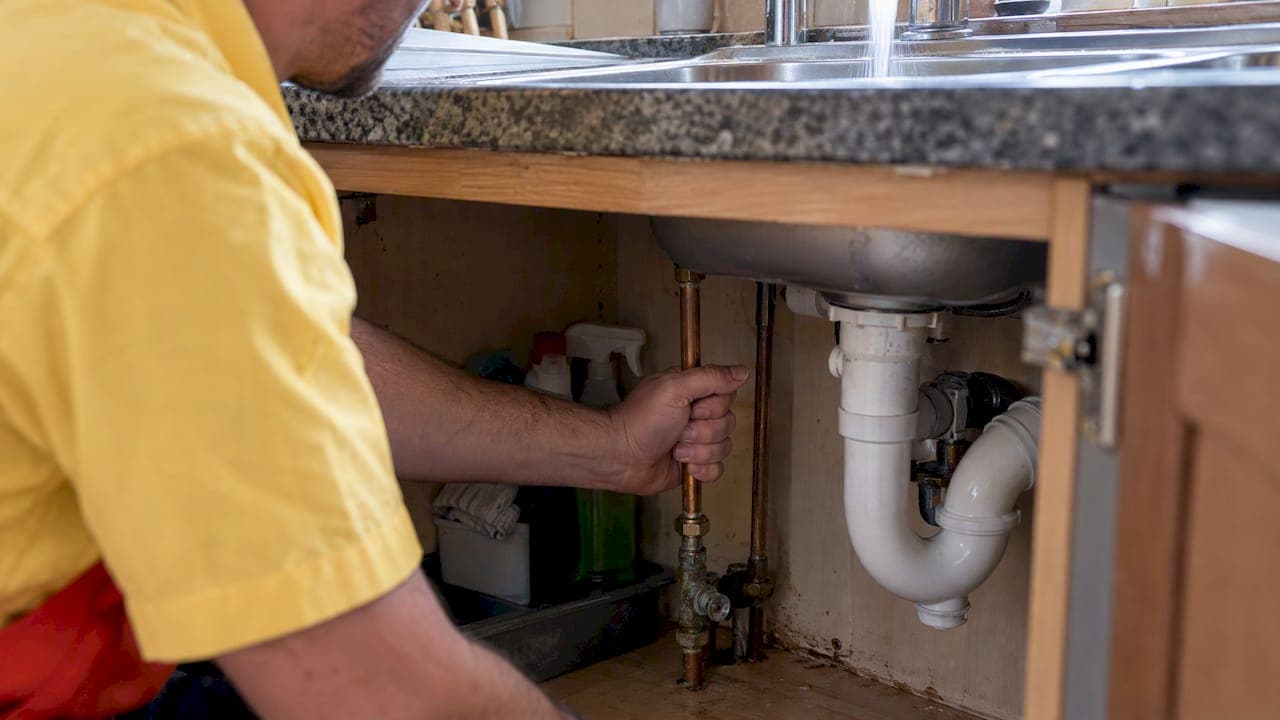
Water hammer is a pressure surge that happens when moving water is stopped or reversed suddenly. The usual household triggers are fast-closing valves, pump stops, check valves that slam, trapped air, and loose pipes. The bang you hear is real stress on your plumbing, so we'll show how the surge forms, how to find the source, and what actually stops it.
TL;DR:
- Run fixtures one at a time, then close branch shutoff valves; the fixture or branch that silences the bang points to the source.
- Install an arrestor only beside a confirmed source; blanket installation can miss the cause, while loose pipe supports and worn valves may need separate repairs.
- For pump related banging, ask a plumber to check reverse flow, fit a check valve that resists slamming, and adjust soft start and stop controls.
- Call a plumber promptly for worsening bangs, moving pipes, nearby leaks, pump electrical trouble, or low pressure; bring notes on triggers and recent plumbing work.
Table of Contents
- How does water hammer happen inside your pipes?
- Which household triggers cause water hammer most often?
- How can you find where the banging comes from?
- What stops water hammer for good?
- When should you call a plumber?
- Fix the source, not the sound
- How our team can help with banging pipes
- FAQ
- Sources
How does water hammer happen inside your pipes?
Moving water carries momentum. When a valve slams shut or a pump stops, that momentum has nowhere to go, so it turns into a pressure wave that travels through the pipe and rattles anything loose. Engineers describe the size of the surge with the Joukowski relationship, and valve closure time compared with wave travel time decides whether a large surge develops at all.
Four things control how bad it gets:
- Closure time: the faster a valve shuts, the sharper the surge.
- Water velocity: faster flow carries more momentum to stop.
- Pipe length: longer runs hold more moving water behind the stopped point.
- Pipe stiffness and support: an experimental study found that pipe material and stiffness change how strongly pressure waves travel, with stiffer materials generally transmitting them more intensely.
That last point explains why two houses with the same appliance can sound completely different. A rigid run with a loose strap rings like a bell, while a well-supported run may only thump.
Which household triggers cause water hammer most often?
Engineering guidance lists valves, pumps, and turbines as the most common ways a transient starts. In a house, that translates into a short list of repeat offenders:
- Fast-closing devices: dishwasher and washing machine inlet valves, toilet fill valves, and quarter-turn faucets all cut flow very quickly.
- Worn stop valves and check valves: a tired check valve can let water reverse and then slam shut.
- Pumps starting and stopping: sump, well, and booster pumps create sudden flow changes. Pump stoppage can create reverse flow and large pressure swings.
- Trapped air: air pockets, undersized air valves, or open high points can make surges worse, since poorly sized air valves may exhaust too quickly.
- Loose pipework: straps that no longer grip let pipes knock against framing and amplify every surge into noise.
How can you find where the banging comes from?
Work through these steps in order, and write down what you find.
- Note when it happens. Is it tied to one fixture or appliance, or does it follow any tap being shut off?
- Run each fixture and appliance on its own. If the bang follows the dishwasher or washer, you have your suspect.
- Close shutoff valves on individual branches and repeat the test to see which closure silences it.
- Listen along exposed runs, at high points, and near any pump. Note whether you hear a single bang or a repeating series.
- Look at visible pipe supports for movement, and check appliance hoses and inlet valves for wear.
- Record any link to electrical events, such as a pump kicking on or a power flicker.
Pro Tip: A phone video with sound, started before you open or close the fixture, gives a plumber more useful information than a verbal description.
If your pressure also seems off, our low water pressure gauge tests help you separate the two problems.

What stops water hammer for good?
Some fixes cost nothing and some need a professional, so start small.
- Secure loose pipes: add or replace straps where runs can move, and check that appliance inlet hoses are snug without overtightening them.
- Slow the closing: avoid slamming valves, and replace worn fast-closing stop valves with slower-closing models where possible.
- Add arrestors: a water hammer arrestor absorbs the surge near the device causing it, typically beside a dishwasher, washing machine, or toilet. This explainer on how a water hammer arrestor works shows what the device does. In homes, arrestors belong only where hammer has actually been identified, not as a blanket fix.
- Use air and vacuum valves correctly: systems with high points may need properly sized air-release and vacuum-relief valves. Random air pockets are not reliable protection.
- Choose non-slam check valves: on pump discharges, a spring-assisted or dashpot style check valve reduces slam.
- Soften pump behavior: soft-start and soft-stop controls and correctly selected check valves are the manufacturer-recommended way to reduce hammer in well pumps. Larger systems may add surge tanks, which a pro should size.
Pro Tip: Fix the closest cause first. Hammer prevented at the source, by controlling valve closure and pump behavior, beats treating symptoms downstream, because untreated hammer causes cumulative damage to pipes and fittings.
Banging in a heating system is a different problem, and our guide to stopping radiator banging covers it.
When should you call a plumber?
Call right away if you see any of these:
- Loud bangs that repeat or keep getting worse
- Pipes that visibly jump or shift
- Leaks at joints or fittings, especially near where the banging occurs
- A pump with electrical trouble or odd cycling
- Low pressure that comes with the noise
Pipe movement that has already caused a leak is urgent, and our emergency steps for ceiling pipe leaks explain what to do while you wait.
Expect a plumber to isolate and reproduce the surge, check pressure, inspect and support the pipe runs, then install arrestors or air valves, swap valves, or adjust pump controls. Bring your notes: which fixtures bang, when it started, and any recent plumbing work or power events. If a pump zone valve might be involved, our zone valve troubleshooting steps are a useful first check.
Fix the source, not the sound
Most hammer calls follow the same pattern: someone installs a "cure" before anyone knows which valve or pump is responsible, and the noise returns. A careful diagnosis usually beats a blanket fix, and catching the problem early can keep a nuisance from turning into a leaking joint.
— Matt
How our team can help with banging pipes
If your pipes keep banging or you've seen movement or leaks, we can trace the source, install arrestors or valves, repair damaged pipe, and service pumps. Our technicians inspect first, explain the options, then fix what the diagnosis points to. Book a visit through our plumbing services page.

FAQ
How do you stop water hammering?
Find the fixture or valve causing it, then secure loose pipes and slow or cushion the sudden stop. Arrestors, slower-closing valves, and non-slam check valves handle most cases. Prevention at the source works best, as hydraulic engineers recommend.
Can a water hammer go away on its own?
Rarely. It may quiet down briefly if a loose strap settles or an air pocket clears, but the surge source is usually still there. Left alone, it can wear pipes and fittings over time.
Is a water hammer expensive to fix?
It depends on the cause. Tightening supports or adding a single arrestor is a small job, while pump surge protection or repiping costs more. We don't list set prices for this work, so ask us for an estimate after a diagnosis.
How do you know where the water hammer is coming from?
Run one fixture at a time, then close branch shutoffs to see which one silences the bang. Listen along exposed pipes and near pumps, and note whether the noise repeats. The fixture that triggers it every time is your starting point.
Sources
- Unveiling the impact of pipe materials on water hammer in pressure pipelines: an experimental and numerical study
- Causes of Transient Initiation