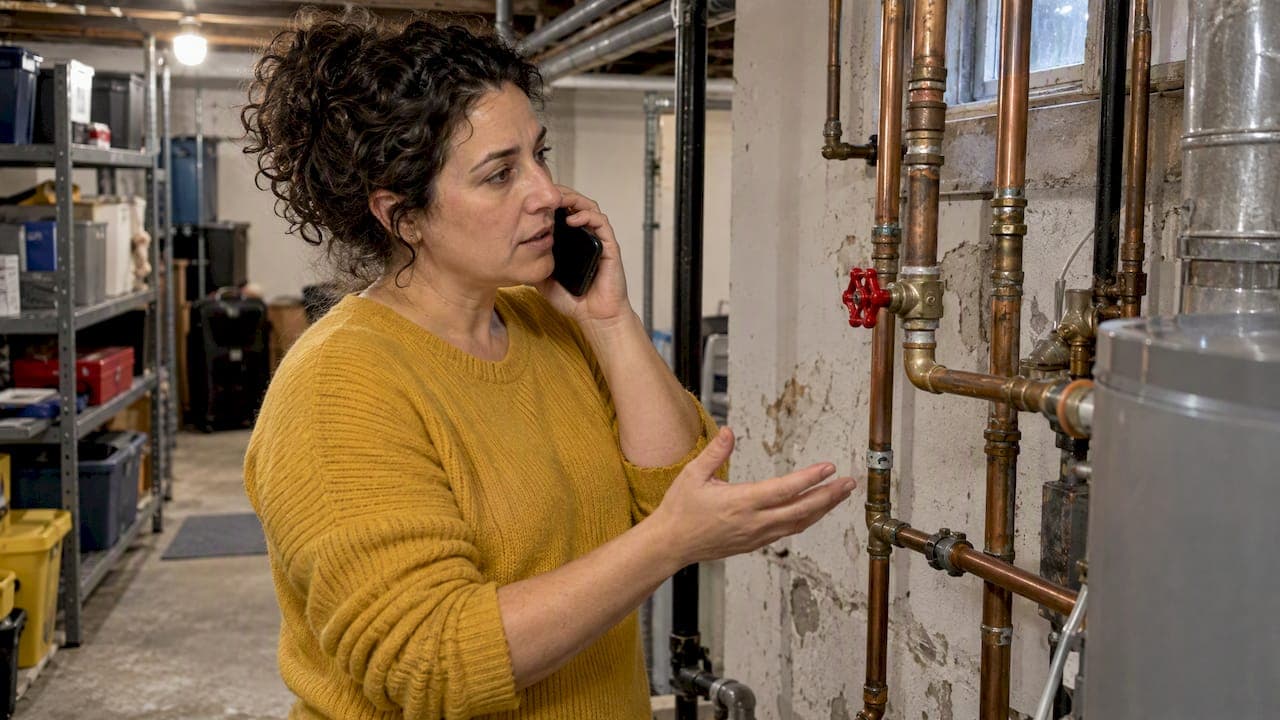
The best move is to hire a licensed, insured plumber who gives you a written, itemized estimate and a written contract tied to payment milestones. Before you agree to anything, run two quick checks: confirm the license number and ask for proof of insurance. Avoid any plumber who asks for a significant upfront cash deposit.
TL;DR:
- Verify the license with the issuing agency, match its class to the job, and request current liability and workers’ compensation certificates.
- Get two or three written estimates that separate labor, parts, and permit fees; compare scope and materials, not just the lowest total.
- Put the scope, schedule, total cost, and permit responsibility in writing; approve any added work and its cost before the plumber proceeds.
- For repipes, water heaters, or urgent repairs, choose experience and certifications suited to the job, and confirm the emergency response window.
Table of Contents
- What to look for when evaluating plumbers
- Five essential questions to ask every plumber before hiring
- Pricing and estimates: how to compare bids and avoid low-bid traps
- Contracts, timelines, and protecting yourself during the job
- Publisher experience: how we vet jobs and protect homeowners
- Assess communication skills and professionalism during initial contact
- Confirm the plumber's approach to cleanup and job site maintenance
- Author perspective: a local pro's quick workflow
- How Mystic Valley Services can help
- FAQ
- Sources
What to look for when evaluating plumbers
A license number is the starting point, not the whole story. Most states issue different license classes (journeyman, master plumber, apprentice), and the class should match the complexity of your job: a master plumber's stamp matters more for a full repipe than for a clogged drain. Ask the plumber to read you the license number over the phone, then verify it independently rather than trusting a photo or a business card.
Insurance matters just as much. You want to see proof of general liability coverage and worker's compensation, since a worker injured on your property without compensation coverage can become your liability. A legitimate plumber provides a current certificate of insurance without hesitation.
Match experience to the job:
- A drain cleaning specialist may not be the right call for a whole-home repipe.
- Water heater installation and boiler work often require different certifications than general plumbing repairs.
- Emergency availability varies widely, so ask directly how fast they can respond to a burst pipe or no-heat call.
Watch for red flags: high-pressure sales tactics, insistence on cash only, or vague answers when you ask about permits.
Pro Tip: Ask the plumber to text or email their license number and insurance certificate before the visit, not after. A legitimate business sends this without pushback.
Five essential questions to ask every plumber before hiring
Use this sequence on your first call or visit. It takes five minutes and filters out most of the risk.
- Who will actually do the work? Ask whether a licensed technician handles the job or whether it gets passed to a subcontractor, and confirm that person's license status.
- Can you get a written, itemized estimate with a timeline? A verbal quote with no paper trail gives you nothing to hold the plumber to later.
- What is the payment schedule? Ask directly whether a deposit is required and whether payments are tied to job milestones rather than paid in full upfront.
- Can you provide references and photos from similar jobs? A plumber who has done repipes or water heater swaps before should have examples ready.
- Will this job need permits or inspections, and who handles them? A straight answer here tells you a lot about how the business operates.
Write the answers down. Comparing notes across two or three plumbers is far easier when you have them side by side instead of in memory.
Pricing and estimates: how to compare bids and avoid low-bid traps
Ask every plumber for a written, itemized estimate that separates labor, parts, and permit fees. Side-by-side comparison only works when the numbers are broken out the same way.
Understand how billing works before you compare totals:
- Flat-rate pricing covers a defined job regardless of how long it takes; hourly billing shifts the risk to you if the job runs long.
- Ask about extra charges for emergency calls, after-hours visits, or parts markup, since these can swing a bid significantly.
- A bid that looks low sometimes just skips permits or quality materials rather than being genuinely cheaper, which FTC guidance on home improvement scams flags as a common pattern.
The FTC also advises against paying the full price upfront. A written contract that ties payments to progress protects you if a plumber stalls or walks off the job midway through.
Get two or three estimates, favor the one that explains scope and materials clearly over the one that's simply cheapest, and confirm what warranty covers the parts and labor before signing anything.
Contracts, timelines, and protecting yourself during the job
A solid contract spells out who is doing the work, what exactly is included, where and when it happens, total cost, and the plumber's license number and insurance details. The FTC's contractor-hiring guide lists these as the baseline elements every homeowner should insist on in writing.
- Set milestone payments. Pay in stages tied to completed work, and hold back final payment until the job and cleanup are done.
- Document any change orders. If the plumber finds an unexpected issue, like corroded pipe behind a wall, get the added cost and scope change in writing before work continues.
- Keep records as you go. Save the signed estimate, before-and-after photos, receipts, and a final sign-off sheet once the job wraps up.
Pro Tip: Take photos of the work area before the plumber arrives. It settles any later dispute about pre-existing damage.
Our guide to documenting plumbing repairs covers what records to keep for property files or insurance claims.
Publisher experience: how we vet jobs and protect homeowners
We structure every job around the same checklist this article describes. Our standard job packet includes:
- A licensed technician's name and license number, confirmed before dispatch.
- A written, itemized estimate before any work begins.
- Current proof of insurance available on request.
- Permit handling for jobs that require it, with inspection documentation kept on file.
- A completion receipt the homeowner signs off on once the job and cleanup are done.
That packet mirrors the verification steps covered above: license, insurance, written estimate, and documented completion, in that order.
Assess communication skills and professionalism during initial contact
The first phone call or email tells you more than most homeowners realize. A plumber who answers your questions directly, gives a real timeframe instead of a vague "soon," and doesn't dodge questions about permits or pricing is usually the same plumber who shows up on time and does clean work.
Pay attention to specifics. Does the person on the phone ask about your actual problem, or just push to book a visit? Do they explain what the visit will cost before they arrive, or deflect until they're on-site? A plumber who takes five extra minutes to answer your questions clearly is signaling how they'll handle the job itself.
Professionalism also shows in small things: showing up during the window they promised, calling ahead if they're running late, and wearing some form of company identification or driving a marked vehicle. None of these guarantee quality work, but their absence is a warning sign worth weighing alongside the license and insurance checks.
If you're vetting a plumber for a time-sensitive issue, like a burst pipe or no heat in winter, how they communicate about availability matters even more. Our breakdown of how emergency plumbing response works explains what a reasonable response window looks like and what questions to ask when you call.

Confirm the plumber's approach to cleanup and job site maintenance
Ask how the plumber handles cleanup before the job starts, not after. A clear answer here, like whether they lay down floor protection, bag and remove old fixtures, or vacuum debris from cutting pipe, tells you whether cleanup is part of their standard process or an afterthought.

This matters most for jobs that open walls, floors, or ceilings: repipes, water heater swaps, and bathroom remodels generate real debris and dust. Ask specifically whether cleanup and disposal are included in the estimate or billed separately, since this is a common place for surprise charges to show up.
A good practice is to walk the job site together once the work is finished, before signing off on final payment. This gives you a chance to flag anything left behind, from stray fittings to drywall dust, while the plumber is still there to address it. Tying your final payment to a completed cleanup, not just completed plumbing work, keeps that incentive aligned.
If the plumber hesitates to answer how they handle site cleanup, or gives a vague "we'll take care of it," treat that the same way you'd treat a vague answer about permits: as a reason to ask more questions before signing a contract.
Author perspective: a local pro's quick workflow
My own process, after years of fielding homeowner questions, comes down to five steps: build a shortlist of two or three plumbers, verify license and insurance independently, get a written estimate from each, sign a contract with milestone payments, and document the job with photos and receipts as it happens. Skip a step and you're negotiating from a weaker position if something goes wrong.
— Matt
How Mystic Valley Services can help
If you're ready to move past research and into hiring, we offer a process that includes licensed technicians, written itemized estimates, and permit handling when a job calls for it.

Our plumbing services cover leak detection and pipe repair, drain cleaning, fixture installs, and whole-home repipes. If you're buying a property or just want peace of mind before a big purchase, our pre-purchase inspections and safety checks give you documented proof of a system's condition. For water heater replacement or tankless installation, our water heater services page outlines what's involved.
Request a written estimate or schedule an inspection through our plumbing services page to get started.
FAQ
How do I choose a good plumber?
Confirm the plumber's license number and insurance before anything else, then get a written, itemized estimate and a contract with milestone-based payments. Checking references and recent photos of similar work adds a second layer of confidence beyond the paperwork.
How much should I pay for a plumber?
Pricing varies by job type, region, and whether the work is billed hourly or flat-rate, so there's no single number that applies everywhere. Get two or three written estimates and compare the itemized breakdown of labor, parts, and permit fees rather than just the bottom-line total.
What is the 135 rule in plumbing?
This isn't a recognized industry or regulatory standard, and definitions of it vary by source. If you've seen it referenced somewhere specific, treat it as informal advice rather than a code requirement, and verify any plumbing code question with your local building department.
What won't plumbers tell you upfront?
Plumbers don't always volunteer that the lowest bid may be skipping permits, using lower-grade materials, or leaving out parts of the scope, which is a pattern the FTC warns about in home improvement work generally. Asking for an itemized estimate and comparing scope, not just price, helps surface this before you sign anything.
Sources
Online reviews are useful, but read them for patterns rather than isolated complaints. Check the Better Business Bureau for a business profile and complaint history, since a pattern of unresolved complaints tells you more than a single bad review.
When you call references, ask specific questions:
A written contract with a milestone payment schedule is the single strongest protection the FTC recommends against home improvement scams, since it keeps leverage on your side until the work is actually finished.
To verify licensing and insurance, call the issuing agency or insurer listed on the certificate directly rather than relying on a screenshot. For any job that needs a permit, ask to see the permit number and confirm it with your local building department; our guide to how plumbing inspections work walks through what that documentation should look like.