
For a master bathroom upgrade, prioritize these five fixture categories in order: a complete shower system with thermostatic valve control, a lavatory faucet matched to your sink's hole pattern and spout reach, a tub filler suited to your tub type, a comfort-height toilet with WaterSense certification, and high-quality ceramic-disc or thermostatic valves at every rough-in. Brands like Kohler, Moen, and Dornbracht cover the full range from accessible to luxury.
- Shower system: thermostatic valve, rainhead, and handheld at minimum
- Lavatory faucet: match hole pattern (single-hole, centerset, or widespread) before shopping
- Tub filler: deck, wall, or floor-mount depends on tub type
- Toilet: comfort height, WaterSense-certified flush volume but exact gallons per flush not specified
- Valves/rough-ins: ceramic-disc cartridges for daily-use durability
Measure your hole spacing and drain position first, check your local water hardness, then book a site visit with a licensed plumber before you buy anything.
Table of Contents
- What do the top plumbing fixtures in a master bathroom actually deliver?
- What specs should you check before buying any fixture?
- Which brands fit which budget, and what should you expect?
- How do materials and finishes hold up in Massachusetts conditions?
- What does installation actually cost and take in Massachusetts?
- What should you ask your installer before signing anything?
- Key Takeaways
- The part most renovation guides skip
- Ready to upgrade your master bath? Mystic Valley Home Services can help.
- Sources and further reading
What do the top plumbing fixtures in a master bathroom actually deliver?
Each fixture category solves a different problem. Getting clear on that before you shop saves money and avoids retrofits.
Shower systems are where most homeowners spend the most and regret the least. A thermostatic valve holds water temperature within a degree or two regardless of pressure fluctuations elsewhere in the house. Pair it with a ceiling-mount rainhead, a handheld on a slide bar, and optional body sprays for a genuinely spa-like experience. Dornbracht frames the modern master bath as a restorative space, not just a functional one, and their multi-function shower systems reflect that. HGTV notes that shower platforms range from simple wall-mount heads to full combo packs with body sprays, and recommends trying drill-less body spray options before committing to in-wall installation.
Lavatory faucets and sinks are more technical than they look. A high-arc faucet in a shallow basin will splash every time. Spout reach has to align with the drain position, and the faucet's hole configuration must match what's already in your countertop. Centerset and widespread faucets have commonly accepted hole spacing patterns with separately mounted handles.

Tub fillers depend entirely on tub type. A freestanding soaking tub usually takes a floor-mounted filler or a wall-mounted spout at the right height. Alcove tubs work with deck-mount or wall-mount options. Getting this wrong means replumbing the supply lines.
Toilets in a master bath deserve more thought than most homeowners give them. Comfort height (roughly 17–19 inches to the seat) reduces knee strain and meets ADA guidelines. One-piece models are easier to clean; two-piece models are easier to transport and often less expensive. WaterSense-certified toilets use 1.28 gallons per flush or less, compared to older 3.5-gallon models.
Valves and rough-ins are the part nobody sees and the part that determines how long everything else lasts. Ceramic-disc valves are significantly more durable and less leak-prone than older compression valves. Thermostatic mixing valves add scald protection and temperature consistency. These are worth specifying by name when you talk to your plumber.
What specs should you check before buying any fixture?
A short checklist prevents the most common and expensive mistakes.
- Shower: Confirm thermostatic valve compatibility with your wall cavity depth. Separate the volume control from the temperature control for safety. Handheld reach should extend at least 60 inches from the floor.
- Lavatory faucet: Measure hole spacing before ordering. Match spout reach to drain position — mismatching spout height with sink depth is one of the most common homeowner errors. Prefer ceramic-disc valves and target a flow rate suitable for water efficiency.
- Toilet: Check the rough-in distance (typically 12 inches from wall to bolt caps). Confirm trapway size if you're upgrading for flush performance. Wall-hung toilets need a carrier frame inside the wall.
- Compatibility: Measure hole spacing, drain location, and wall cavity depth before purchasing any fixture. Switching from centerset to widespread usually requires countertop modification.
| Fixture | Target flow / flush | Valve type | Common hole pattern |
|---|---|---|---|
| Lavatory faucet | 1.2–1.5 gpm | Ceramic disc | Single-hole, centerset (4"), widespread |
| Shower system | — | Thermostatic or pressure-balance | N/A (valve in wall) |
| Toilet | 1.28 gpf (WaterSense) | N/A | 12" rough-in standard |
| Tub filler | No flow restriction standard | Thermostatic optional | Deck, wall, or floor mount |
Pro Tip: Delta's WaterSense-labeled faucets use at least 20% less water than the industry standard without a noticeable drop in pressure — a straightforward win for daily-use master baths.
Which brands fit which budget, and what should you expect?
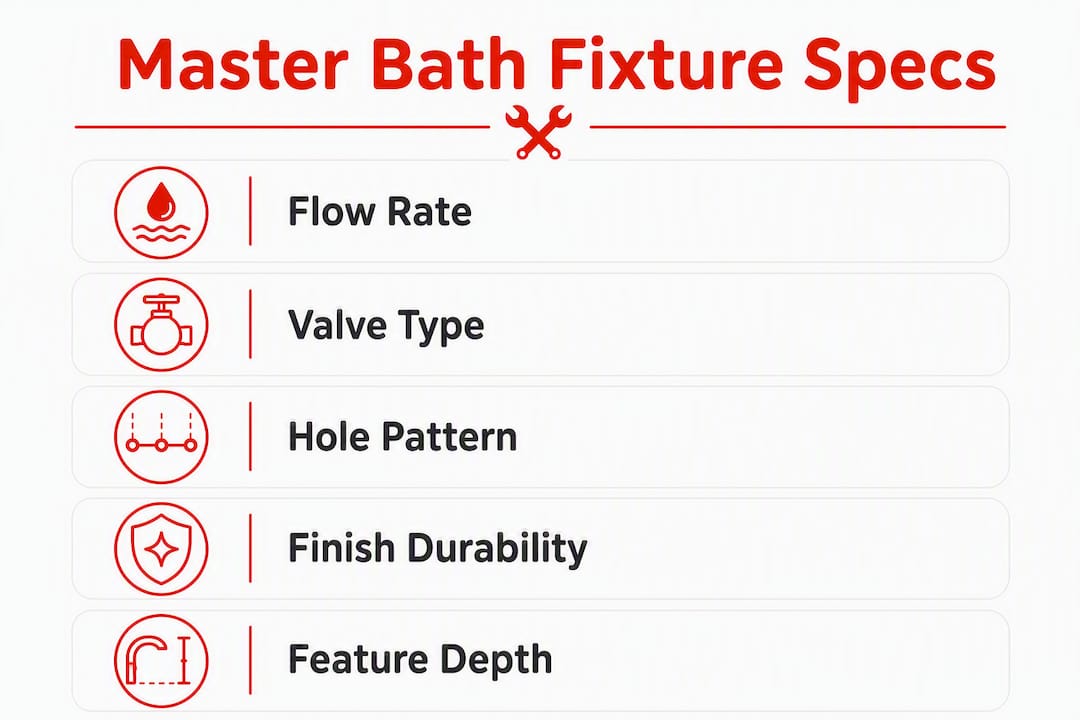
Budget tier shapes what you get in valve technology, finish durability, and feature depth.
Accessible tier covers solid ceramic-disc valves, chrome or brushed nickel finishes, and repair parts that are easy to source. Moen and Delta both play here well. Delta's Diamond Seal Technology reduces leak points and the brand claims it lasts twice as long as the industry standard. These fixtures are the most retrofit-friendly because they're designed around standard hole patterns and rough-ins.
Mid-range is where finish variety expands and internal engineering improves. Kohler and Grohe sit comfortably in this space. Kohler leans into design variety; Grohe focuses on precise engineering and consistent pressure performance. You'll find pull-down handshowers, pressure-balancing valves, and more finish options. Most mid-range fixtures still retrofit without structural changes.
Premium and luxury is Hansgrohe's Select technology, Dornbracht's wellness-focused multi-function systems, and full thermostatic shower panels with body sprays, chromatherapy, and designer finishes. These fixtures often require additional structural or plumbing work: larger supply lines, deeper wall cavities for thermostatic valve bodies, and sometimes dedicated hot-water loops for instant delivery. The payoff is a master bath that genuinely functions like a private spa.
Moen specifically performs well in hard-water regions, which matters in parts of Massachusetts where mineral buildup is a real maintenance issue.
How do materials and finishes hold up in Massachusetts conditions?
Massachusetts water hardness varies by municipality, but many communities draw from sources with moderate to high mineral content. That affects both finish longevity and internal valve performance.
- PVD (Physical Vapor Deposition) finishes bond at the molecular level and resist scratching, tarnishing, and most household cleaners far better than standard chrome plating.
- Polished chrome is durable but shows water spots immediately, which is a daily annoyance in hard-water areas.
- Matte black hides spots well but requires pH-neutral cleaners; acidic products strip the finish over time.
- Brushed nickel sits in the middle: forgiving to clean, reasonably spot-resistant, and widely available across all budget tiers.
- Solid-brass bodies outlast zinc or aluminum components significantly. Professionals recommend solid-brass construction and PVD finishes for long-term performance.
Scale buildup from hard water shortens cartridge life and clogs spray nozzles. Models with accessible, replaceable cartridges are worth prioritizing over decorative-only upgrades when your water is hard.
Pro Tip: If your municipality has hard water, choose showerheads with silicone nozzles — mineral deposits wipe off with a finger instead of requiring chemical descaling.
What does installation actually cost and take in Massachusetts?
The scope of work drives both cost and timeline more than the fixture price does.
- Like-for-like swap (same rough-in, same hole pattern): typically 1–2 hours on site per fixture. No permit required in most Massachusetts municipalities for a straight replacement.
- Full master-bath fixture set: plan for 1–3 days of installation effort, plus any tile, drywall, or countertop patching if hole patterns change.
- Permit triggers in Massachusetts: moving or altering plumbing lines, changing fixture types (e.g., adding a body spray system that requires new supply lines), or any work that opens walls. A licensed plumber handles the permit application and inspection scheduling.
- Cost drivers: labor hours, rough-in valve replacement, any countertop or drywall modification, and permit fees. Understanding plumbing repair cost factors before you get bids helps you compare estimates accurately.
- Trust signals to verify: Massachusetts plumbing license, proof of liability insurance, and whether the installer registers manufacturer warranties on your behalf.
A plumbing rough-in guide is worth reading before your estimate so you understand what the plumber is measuring and why it matters.
What should you ask your installer before signing anything?
Getting the right answers upfront prevents the two most common problems: fixtures that don't fit and bids that balloon.
- "Does this fixture work with my existing hole pattern, or will the countertop need modification?"
- "Do you recommend a thermostatic valve or a pressure-balance valve for my shower, and why?"
- "What warranty comes with installation, and do you register it with the manufacturer?"
- "Will this project need a permit, and do you handle the application and inspection?"
- "Can you show photos of a similar master-bath install you've completed?"
- "What's included in the estimate — labor, rough-in valves, demolition, patching, and permit fees?"
Pro Tip: Always ask for a site-measured estimate rather than a phone quote. Hidden rough-ins and non-standard wall cavities are the most common source of cost surprises in Massachusetts master-bath projects. A plumber who won't visit the site before quoting is a plumber who will revise the number after demo.
Visiting a showroom to test fixtures before committing is also worth the trip. Spray pattern, valve feel, and finish texture are hard to judge from a product photo.
Key Takeaways
The single most important decision in a master-bath fixture upgrade is valve technology: ceramic-disc and thermostatic valves determine longevity, safety, and daily comfort more than any finish or brand name.
| Point | Details |
|---|---|
| Valve technology first | Choose ceramic-disc or thermostatic valves before selecting any finish or brand. |
| Measure before you buy | Confirm hole pattern, drain position, and wall cavity depth to avoid costly retrofits. |
| Match faucet reach to basin | Spout height mismatched to sink depth causes splashing — measure both before ordering. |
| Choose finishes for your water | PVD and brushed nickel hold up better than polished chrome in hard-water Massachusetts areas. |
| Mystic Valley Home Services | Licensed Massachusetts plumber for fixture installs, permit handling, and maintenance contracts. |
The part most renovation guides skip
Most fixture guides spend all their energy on brand comparisons and almost none on the thing that actually determines whether a master-bath project goes well: the rough-in. Massachusetts has a lot of older housing stock, and a significant share of those homes have centerset rough-ins, non-standard wall cavities, or supply lines that haven't been touched in decades. A fixture that looks perfect in a showroom can turn a one-day swap into a three-day project the moment a plumber opens the wall.
Hard water compounds this. Scale builds up inside cartridges and spray nozzles faster than most homeowners expect, especially in communities drawing from surface water sources. The fixture brands that handle this best — Moen in particular — are worth the slight premium if you're not on a softener system.
The other thing worth saying plainly: a thermostatic valve is not a luxury. In a master bath used daily, scald protection and consistent temperature matter for everyone in the household, not just for spa aesthetics. Specifying a thermostatic valve from the start costs less than retrofitting one later.
Ready to upgrade your master bath? Mystic Valley Home Services can help.
Choosing the right fixtures is half the job. Getting them installed correctly, permitted where required, and warrantied properly is the other half. Mystic Valley Home Services handles fixture installation, rough-in replacement, permit applications, and manufacturer warranty registration for Massachusetts homeowners and property owners.

The practical next step is a site visit, not a phone quote. A Mystic Valley plumber will measure your rough-ins, confirm fixture compatibility, and give you an itemized estimate before any work begins. Mystic Valley also offers preventive maintenance contracts to keep high-use master baths performing after installation.
Book a site visit or review available services to get started. Mystic Valley Home Services covers installations across Massachusetts and handles the permit process from application through inspection.
Sources and further reading
- Inspiration for Luxury Bathroom Design | Dornbracht — supports wellness-focused fixture framing and multi-function shower systems
- Choosing Bathroom Fixtures | HGTV — shower platform options, showroom testing advice, and ceramic-disc valve guidance
- The Best Bathroom Sink Faucets of 2025 | Watersino — flow-rate targets (1.2–1.5 gpm), ceramic-disc valve durability, solid-brass and PVD recommendations
- The Ultimate Guide to Best Plumbing Fixture Brands | Aquacubic — brand strengths by use case, hard-water performance, and ceramic-disc valve longevity
- Kitchen and Bath Plumbing Fixtures: Styles and Finishes | Gomcdaniels — spout reach and sink depth compatibility guidance
- Home Plumbing Maintenance Checklist | Mystic Valley Home Services — post-install maintenance and cartridge replacement guidance
- What Is a Plumbing Rough-In? | Mystic Valley Home Services — rough-in dimensions and compatibility explained for homeowners