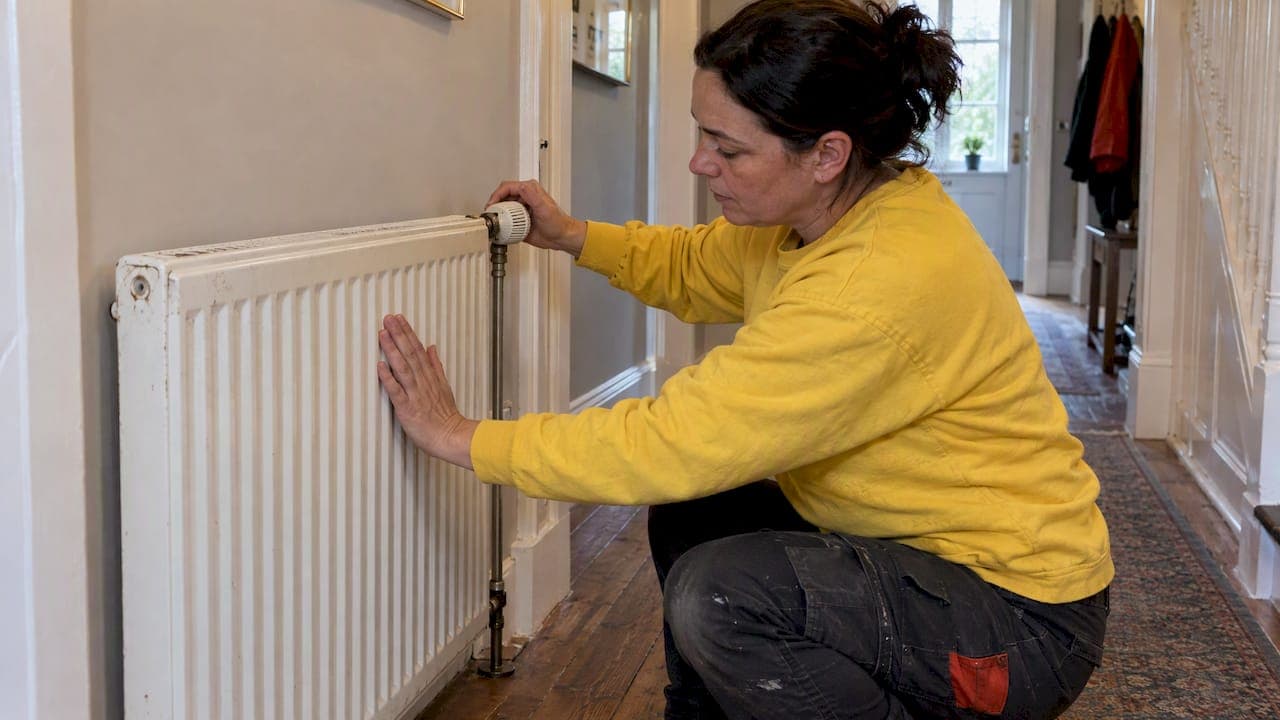
If your radiator is cold, the most likely causes are trapped air, a closed valve, or sludge buildup, and the fastest safe check is confirming the boiler is running before you bleed the radiator. Feel the pipes feeding it: if they're warm and only the radiator itself stays cold, trapped air is probably the culprit. Many single-radiator problems are simple DIY fixes, but if several radiators are cold or the boiler shows a fault, stop and call a technician.
TL;DR:
- Cold radiators with warm pipes likely have trapped air, so bleeding them is often the simplest and safest fix to try first.
- Multiple radiators staying cold usually indicate a system-wide issue like low pressure, a failing pump, or valve faults needing professional diagnosis.
- Bleeding should be done after turning off the system and waiting 20 to 30 minutes to prevent scalding and ensure pressure is stable.
- Sludge buildup inside radiators can prevent proper heating, requiring powerflushing or professional cleaning for reliable long-term results.
- Regular annual maintenance helps prevent emergencies by catching common faults like dirt buildup, leaks, or venting issues before they cause no heat.
Table of Contents
- A 5-step troubleshooting checklist you can run in 10 minutes
- Is it one cold radiator or the whole system acting up?
- How to bleed a radiator and free a stuck TRV pin
- Checking valves and pipes for a flow problem
- Sludge, flushing, and powerflushing: deeper fixes
- System-level checks: pressure, pump, valves, and balance
- Carbon monoxide safety and when to stop using your boiler
- What techs check first, and what to tell them
- Why annual maintenance beats emergency no-heat calls
- How Mystic Valley Services can help when DIY fixes run out
- FAQ
- Sources
A 5-step troubleshooting checklist you can run in 10 minutes
Before touching a valve or bleed key, walk through this sequence. It tells you whether the problem is local to one radiator or something affecting the whole heating system.
- Check the boiler. Confirm it's powered on, set to heating mode, and not flashing an error code.
- Check the thermostat and timer. Make sure the system is actually calling for heat and the schedule hasn't shifted.
- Feel the pipes. Touch the inlet and outlet pipes at the base of the radiator. Warm pipes with a cold radiator body point to trapped air; cold pipes point to a closed valve or blocked flow.
- Look for leaks or corrosion. Check the valve connections and radiator body for rust streaks, drips, or staining before you do anything else.
- Decide your next move. Warm pipes and a cold top mean it's time to bleed the radiator. Cold pipes on both sides mean you need to check the valves first.
If the boiler itself is showing a fault code, or you smell gas or feel unusually tired or dizzy indoors, skip the troubleshooting entirely and get professional help.
Is it one cold radiator or the whole system acting up?
The pattern across your radiators tells you whether you're dealing with a local fix or a system-wide one. Run your hand along the pipes of every radiator in the house and note which ones are warm, cold, or cold only at the top.
- One radiator cold, others fine: usually a closed TRV, a stuck lockshield valve, trapped air, or local sludge settled in that unit, all of which are typically DIY-friendly.
- Several or all radiators cold: points toward boiler pressure, a failing pump, a stuck zone or diverter valve, or a control fault, which usually calls for a technician.
- Radiators cold at the bottom only: often sludge sitting in the lower section, even when the top bleeds fine.
- Radiators cold throughout despite a running boiler: suggests water isn't reaching that part of the system at all, often a valve or balancing issue.
Before calling a pro, jot down which radiators are affected, your boiler's pressure gauge reading, and whether the problem started suddenly or gradually. That detail cuts diagnostic time considerably, since a tech can often narrow the cause before even opening a panel.
How to bleed a radiator and free a stuck TRV pin
Bleeding a radiator releases trapped air so water can fill the whole unit, and it's one of the few heating repairs most homeowners can safely do without tools beyond a radiator key.
Turn the heating off and let the system sit for 20 to 30 minutes so pressure settles and the water isn't scalding. Grab a radiator key, a small bowl or towel, and a cloth or glove to protect your hand from any drips.
- Place the bowl or towel under the bleed valve at the top corner of the radiator.
- Insert the key and turn it slowly counterclockwise until you hear a hiss of escaping air.
- Keep the key in place until the hiss stops and water starts to dribble out steadily, then close the valve snugly.
- Check your boiler's pressure gauge afterward. Bleeding often drops system pressure slightly, and you may need to top it up following your boiler's manual.
- Repeat on any other radiators that felt cold at the top, starting with the one closest to the boiler.
If a thermostatic radiator valve (TRV) pin has seized from disuse, pull off the valve head and look for the small pin underneath. Press it gently with a fingertip or the back of a spoon; if it's stuck, a few light taps can free it. Stop if it won't budge with gentle pressure. For step-by-step photos, see our guide to bleeding a radiator.
Pro Tip: Never bleed a radiator while the circulation pump is running. It can pull air back into the system instead of pushing it out.
Checking valves and pipes for a flow problem
Every radiator has two valves: the TRV, usually on one side, which controls temperature, and the lockshield, on the other side, which balances flow and is normally left alone once set. If a radiator is cold despite a running boiler, one of these may be the issue.
- Check the TRV position. Turn the dial and listen or feel for the valve pin moving; if it spins freely but nothing happens, the pin may be seized open or closed.
- Check the lockshield. It usually has a plastic cap you can remove to see the valve body; it should be partially open, not fully closed, unless the radiator was intentionally isolated.
- Compare pipe temperatures. Both pipes cold means water isn't reaching the radiator at all; one warm and one cold means flow is restricted somewhere between the valve and the radiator body.
- Watch for sludge at the bleed valve. Dark, gritty water instead of clear water when bleeding is a sign of internal corrosion buildup.
- Look for visible corrosion around valve unions and pipe joints, which can signal a slow leak that's also starving flow.
A valve that's stuck fully closed or won't respond to adjustment usually needs replacement rather than forcing, since cranking on a seized valve body risks snapping the stem. If you've confirmed a valve is the problem but can't free it safely, that's a job for a plumber rather than a wrench and patience. Our heating services page covers radiator valve replacement if you reach that point.
Sludge, flushing, and powerflushing: deeper fixes
Sludge is a dark, gritty mix of rust and magnetite that settles inside radiators and pipes over years of use, and it's the main reason bleeding alone sometimes doesn't fix a cold radiator. It collects at the bottom of radiators first, which is why a unit can bleed clear air at the top but still stay cold lower down.
- A basic DIY flush means isolating the radiator, draining it into a bucket, and running water through it over a sink or outdoors until it runs clear.
- It has real limits. A hand flush rarely clears sludge packed deep in pipework or multiple radiators at once.
- Powerflushing uses pumped equipment to force high-velocity water through the whole system, dislodging sludge a manual flush can't reach; professionals typically price it per radiator or as a whole-system job, and cost varies by home size and access.
- Chemical cleaners added to the system before a flush can loosen sludge, but they work best as a supplement to flushing, not a replacement for it.
- Targeted radiator replacement makes sense when one unit is heavily corroded and the rest of the system is otherwise clean.
If more than one or two radiators show sludge symptoms, a professional flush is usually the more reliable route than repeated DIY attempts.
System-level checks: pressure, pump, valves, and balance
When multiple radiators are cold, the cause usually sits upstream of the radiators themselves. Most residential boilers run safely between 1 and 2 bar on the pressure gauge; a reading that drops sharply after bleeding, or keeps falling over days, points to a leak somewhere in the system rather than just trapped air.
- Low pressure after bleeding that won't hold suggests a leak, not just air that needs releasing.
- A failing pump often shows up as radiators that stay lukewarm system-wide even with good pressure and a running boiler.
- A stuck diverter or zone valve can send hot water to the wrong part of the system, leaving some zones cold while others overheat.
- Uneven heating across a floor plan even with everything running can mean the system needs balancing, a process documented in Building America's guidance on steam system balancing, which found that insufficient venting and improper balancing are common causes of radiators that stay cold despite a working boiler.
Boiler fault codes, repeated pressure loss, or pump noise are signs a licensed technician should take over rather than a homeowner working through more trial and error.
Carbon monoxide safety and when to stop using your boiler
Cold radiators are an inconvenience. A boiler venting problem can be dangerous, so safety checks come before any further troubleshooting.
- Keep working CO alarms on every floor and outside sleeping areas, as recommended in CPSC carbon monoxide guidance.
- If you suspect CO, leave the home, ventilate if it's safe to do so on your way out, and call emergency services along with a qualified technician.
- Don't assume a working alarm or shutoff device covers every risk. A CPSC review of CO incidents found that blocked or disconnected vents were a common factor in modern furnace and boiler incidents, and that safety devices don't always catch those faults.
- Check for open recalls on your boiler model. A 2024 CPSC recall covered certain gas-fired residential boilers over a blocked vent switch hazard tied to CO risk.
If you suspect any of these conditions, cut power to the boiler at the switch and wait for a licensed technician rather than restarting it yourself.
What techs check first, and what to tell them
When you call for a no-heat issue, a technician will usually ask for your boiler's pressure reading, its make and model, which radiators are affected, and how long the problem has gone on. Having a couple of photos of the boiler panel and the cold radiator ready speeds things up considerably.

Techs often try the fast fixes first: bleeding air, checking valve positions, and confirming pressure before moving to anything invasive. Powerflushing and any work inside a gas boiler's internals aren't DIY territory, both for safety and because the equipment involved isn't something most households have on hand. If you've already run through the pipe-feel and bleed checks above, mention that too. It narrows things down before a technician even arrives. For noisy radiators alongside cold ones, see our guide to radiator banging noises.
Why annual maintenance beats emergency no-heat calls
ENERGY STAR guidance identifies dirt and general neglect as a leading cause of heating-system failure, and recommends annual pre-season tune-ups to prevent it. A typical tune-up covers a combustion check, venting and clearances, and a look at bleed valves before the cold months start. Scheduling that in early fall, then doing a quick monthly pressure and radiator check yourself, catches small issues before they become a no-heat emergency.
— Matt
How Mystic Valley Services can help when DIY fixes run out

If you've bled every radiator, checked the valves, and the problem is still there, that's usually a sign the issue sits deeper in the system, and that's where our team comes in. Our team can handle no-heat emergency diagnostics, steam and hot-water radiator service, and boiler and furnace repair, with licensed, insured technicians and transparent upfront pricing before any work starts.
When you call, having a few details ready helps us move faster:
- A photo of your boiler's pressure gauge and model plate.
- Which radiators are affected and whether the problem came on suddenly or gradually.
- Any fault codes or unusual noises you've noticed.
Same-day and next-day appointments are available for no-heat calls; the team has experience with older homes and their typical issues. Check our heating services page for radiator and boiler repair options, or reach out directly to get a technician on the way.
FAQ
How do you fix a radiator that doesn't heat up?
Start by confirming the boiler is running, then feel the radiator's pipes. If they're warm but the radiator stays cold, bleed it with a radiator key; if the pipes themselves are cold, check the TRV and lockshield valves for a closed position before assuming a deeper fault.
Is it expensive to fix a radiator?
Bleeding a radiator or freeing a stuck valve costs nothing beyond a few minutes and a radiator key. Deeper fixes like a powerflush or valve replacement carry a service charge that depends on the job. Mystic Valley Home Services provides transparent upfront pricing before any work begins.
Why is my hot water working but my radiators are cold?
This usually points to the heating side of the system rather than the domestic hot water side, often a stuck zone or diverter valve, a failing pump, or closed radiator valves preventing water from circulating. Check pipe temperatures at a few radiators to see if the pattern is local to one unit or system-wide.
What are the signs of a blocked radiator?
A radiator that's cold at the bottom but warm at the top, or that produces dark, gritty water when bled instead of clear water, usually has sludge buildup inside it. Cold spots in a pattern that doesn't match trapped air, along with a radiator that needs frequent re-bleeding, also point to a blockage rather than simple air.
Sources
- CPSC — Carbon monoxide alarms guidance
- Measure guideline: Steam system balancing and tuning for multifamily residential buildings (Building America)
- CPSC memorandum — CO incidents involving modern furnaces and boilers