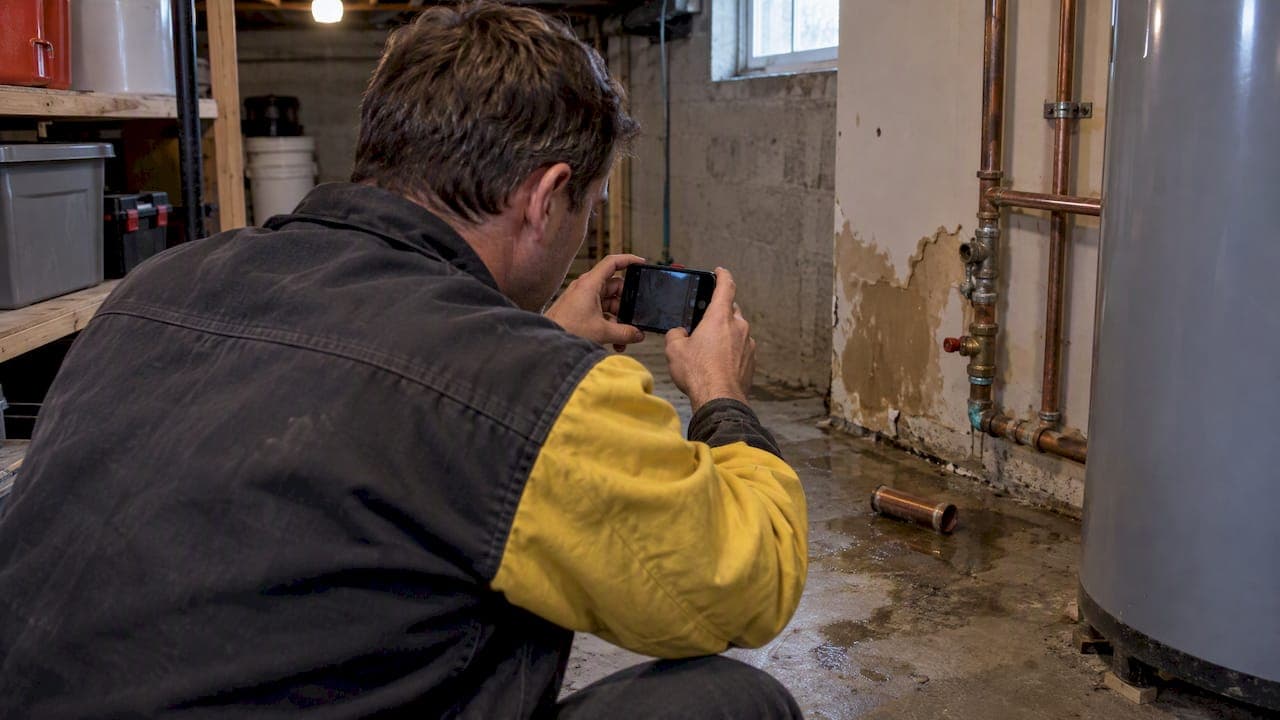
Standard homeowners insurance generally covers sudden and accidental plumbing failures, like a burst pipe, but excludes gradual leaks, wear and tear, and flooding, according to NAIC consumer guidance and FEMA. Sewer backups and sump pump overflows are usually excluded unless you add a water-backup endorsement. Here are the insurance-ready steps that protect your claim.
TL;DR:
- Dwelling, detached structures, belongings, and temporary housing may qualify, but policies generally pay for resulting damage, not replacement of the failed pipe.
- Check your declarations page for replacement cost or actual cash value; the latter subtracts depreciation when valuing older carpets and belongings.
- Choose water backup coverage for sump risks, service line protection for buried pipes, and separate flood insurance, which may have a waiting period.
- Flood damage is excluded from standard policies, and just one inch of water can cause up to $25,000 in damage.
- After a leak, shut off water, photograph damage before cleanup, get a licensed plumber’s written diagnosis, save receipts, and report the claim promptly.
Table of Contents
- What does homeowners insurance cover for plumbing leaks?
- What is usually excluded from plumbing leak claims?
- Which add-ons and separate policies close the gaps?
- How does the claims process work after a plumbing leak?
- What do plumbing leak repairs cost, and who pays?
- How can you prevent leaks and what should you do the moment you find one?
- How a local plumber supports your insurance claim
- How can Mystic Valley Home Services help after a leak?
- FAQ
- Sources
What does homeowners insurance cover for plumbing leaks?
Think of your policy as protection against surprises, not upkeep. Insurance is built for catastrophic, unexpected events rather than routine maintenance, and the phrase "sudden and accidental" decides most claim outcomes. A supply line that snaps while you sleep qualifies. So does a pipe that freezes, splits, and floods the kitchen. A faucet that has dripped for a long time does not.
When a covered leak happens, several parts of your policy may respond:
- Dwelling coverage: pays to repair the structure and attached fixtures, including plumbing and heating, per NAIC's consumer guide.
- Other structures: covers a detached garage or shed damaged by a covered leak.
- Personal property: covers furniture, electronics, and clothing ruined by the water.
- Loss of use: helps with temporary housing and extra living costs if the home is unlivable.
The key distinction is this: your policy pays to fix the damage a covered leak causes, but it generally does not pay to replace the worn-out pipe, valve, or fixture that failed. If a corroded fitting bursts and soaks the ceiling below, the ceiling repair may be covered while the fitting itself is on you.
How you are paid matters too. Your declarations page shows whether claims settle at replacement cost or actual cash value. Replacement cost pays what it takes to rebuild or replace with new materials. Actual cash value subtracts depreciation, so an old carpet pays out far less than a new one would cost. Check which one you have before a leak, not after.
What is usually excluded from plumbing leak claims?
Most denied claims fall into a few buckets. Knowing them lets you judge your odds before you call your insurer.
- Gradual leaks: pinhole leaks, slow seepage behind a wall, and a tub seal that has failed over months are treated as maintenance problems.
- Wear and tear: policies typically don't pay to repair items that simply wear out.
- Flooding: standard homeowners policies typically don't cover flood damage, so you need separate flood insurance.
- Sewer and drain backups: commonly excluded unless you add coverage.
- Water main breaks and service lines: the public main is the municipality's responsibility, while the lateral line running from the main to your house is generally yours to maintain.
Flood is the exclusion that surprises people most, and the cost of getting it wrong is steep.
Just one inch of water can cause up to $25,000 in damage, and standard homeowners policies do not cover flood damage.
Sewer backups deserve a closer look. FEMA states that sewer backup damage is covered by flood insurance only when the backup is a direct result of flooding. Otherwise, you generally need a separate water-backup endorsement added to your homeowners policy. The same logic applies to sump pump overflow. If your basement fills because the pump failed or the power went out, a standard policy will likely say no.
A FEMA home insurance matrix lists freezing of plumbing among covered perils, while flood, sewer backup, and seepage appear as commonly excluded or endorsement-only items.
Which add-ons and separate policies close the gaps?
If your basement is finished, your pipes are old, or your street has a history of sewer trouble, the gaps above are real risks. Three products fill them.
Water-backup endorsement. This add-on to your homeowners policy typically responds to sewage or drain backups and sump pump overflows. It usually carries its own limit, often lower than your main coverage, so ask what the cap is and whether your deductible differs.
Service-line coverage. Interior plumbing coverage stops where your house ends. Service-line coverage addresses the buried water, sewer, or utility lines on your property that connect to the municipal system. If a root-damaged lateral fails, this is the endorsement that matters.
Flood insurance. FEMA's flood insurance program provides NFIP information and coverage options, and private flood policies exist as well. Because standard policies exclude flooding, this is a separate purchase, and waiting periods often apply, so you cannot buy it as a storm approaches.
Here is how to decide what you actually need:
- A finished basement or a home with a sump pump makes water-backup coverage worth serious consideration.
- Galvanized, clay, or cast-iron lines point toward service-line coverage.
- Living near water, or in a low spot, makes flood insurance a smart conversation with your agent.
- Read your declarations page first. It shows what you already have, including limits and sublimits.
How does the claims process work after a plumbing leak?
Speed and paperwork decide how smoothly a claim goes. Insurers expect you to limit further damage, and they expect proof. Our water heater leak guide covers emergency steps for that common source.
- Stop the water. Shut off the main or the fixture valve right away.
- Prevent more damage. Remove standing water, move belongings, and use fans. Tarp any opening to the weather.
- Document everything. Take time-stamped photos and video of the source and every damaged area before you clean up.
- Call a licensed plumber. Ask for a written diagnosis of what failed and why.
- Keep every receipt for emergency repairs and mitigation.
- Report the claim promptly. Then expect an adjuster inspection and keep communication in writing.
Insurers commonly ask for evidence of when the loss happened, the plumber's written findings, mitigation receipts, and sometimes proof of prior maintenance. For a practical walkthrough from another contractor, see this guide on documenting plumbing damage so your insurance will pay.
Your deductible comes out of the payout first, and whether you have replacement cost or actual cash value changes the final number. If coverage is denied, ask for the reason in writing and compare it to your policy language. Your state department of insurance can help with disputes.
Pro Tip: Photograph the damaged area before you dry it out, and keep the failed pipe section if you can. It is physical proof of a sudden break.

What do plumbing leak repairs cost, and who pays?
Costs swing widely by home, region, and how fast you act, so treat any range as an estimate and ask for a written quote. The same leak can mean a modest pipe repair or a ceiling replacement, which is why our guide on avoiding a $5,000+ ceiling pipe repair stresses fast mitigation.
Who pays usually breaks down like this:
- Your insurer: typically pays interior repair and contents damage from a covered leak, up to your limits and after your deductible.
- You: pay your deductible, routine maintenance, and replacement of the worn component that failed.
- The municipality: is responsible for the public water main, not the line on your property.
- Loss of use: may cover temporary housing if the home is unlivable during repairs.
Sublimits can shrink a payout, especially for water damage or mold, so read them closely.
Water is costly even in small amounts: one inch of water can cause up to $25,000 in damage.
How can you prevent leaks and what should you do the moment you find one?
Prevention keeps claims rare and strengthens the ones you file. Start with the basics: replace aging supply hoses and fixtures, insulate and winterize exposed pipes, service your sump pump, and keep dated records. Our home plumbing maintenance checklist walks through each task, and annual plumbing inspections create the paper trail that shows a failure was sudden, not neglected.
Devices help as well. Water alarms, automatic shutoff valves, and backflow preventers can limit damage, and some insurers reward them, so keep the receipts and ask your agent.
When you find a leak right now, work through this order:
- Shut off the water at the fixture or the main.
- Document the damage with photos and video.
- Call a licensed plumber.
- Mitigate by removing water and drying the area.
- Save every receipt.
- Notify your insurer.
When in doubt about hidden moisture, schedule a professional inspection. A written report supports your claim.
How a local plumber supports your insurance claim
When a leak hits, the plumber is often the most useful witness your claim has. We diagnose the cause, photograph the failure, use camera inspections where needed, and write a scope of work that adjusters can follow. That documentation helps separate a sudden failure from long-term wear, which is the question insurers care about most.
Before we arrive, gather your policy details, your photos, and any maintenance records. We can coordinate with your adjuster on what was found and what repair is needed. My view: the claims that go smoothly are the ones where the homeowner called a pro early and kept everything in writing.
— Matt
How can Mystic Valley Home Services help after a leak?
When water is spreading, you need a licensed technician and a paper trail. We offer leak detection and pipe repair, pre-purchase plumbing inspections, and boiler and water heater safety checks across Massachusetts. Our team provides prompt service, documented diagnostics you can hand to your insurer, and transparent upfront pricing. Visit our plumbing services page or call us for emergency service. Our emergency response overview explains what to expect.

This article is general information, not a substitute for advice from a qualified financial advisor. Consult a qualified financial professional about your own circumstances before acting on anything here.
FAQ
Are plumbing leaks covered by homeowners insurance?
Sudden and accidental leaks, such as a burst pipe, are generally covered, along with the resulting damage. Gradual leaks and wear and tear are typically excluded. Check your declarations page for limits and exclusions.
Does homeowners insurance cover sewer backup?
Usually not. FEMA explains that sewer backups generally require a separate water-backup endorsement unless the backup results directly from flooding. Ask your agent about the endorsement and its limit.
Who pays for a leaking water pipe?
You or your insurer pays for pipes on your property, depending on whether the leak was sudden. The municipality handles the public main. Your policy generally covers damage from a covered leak but not replacement of the worn pipe itself.
What is not covered by homeowners insurance?
Flood damage, routine maintenance and wear and tear, and sewer backups without an endorsement are commonly excluded. NAIC guidance also notes that water main breaks are often excluded unless added.