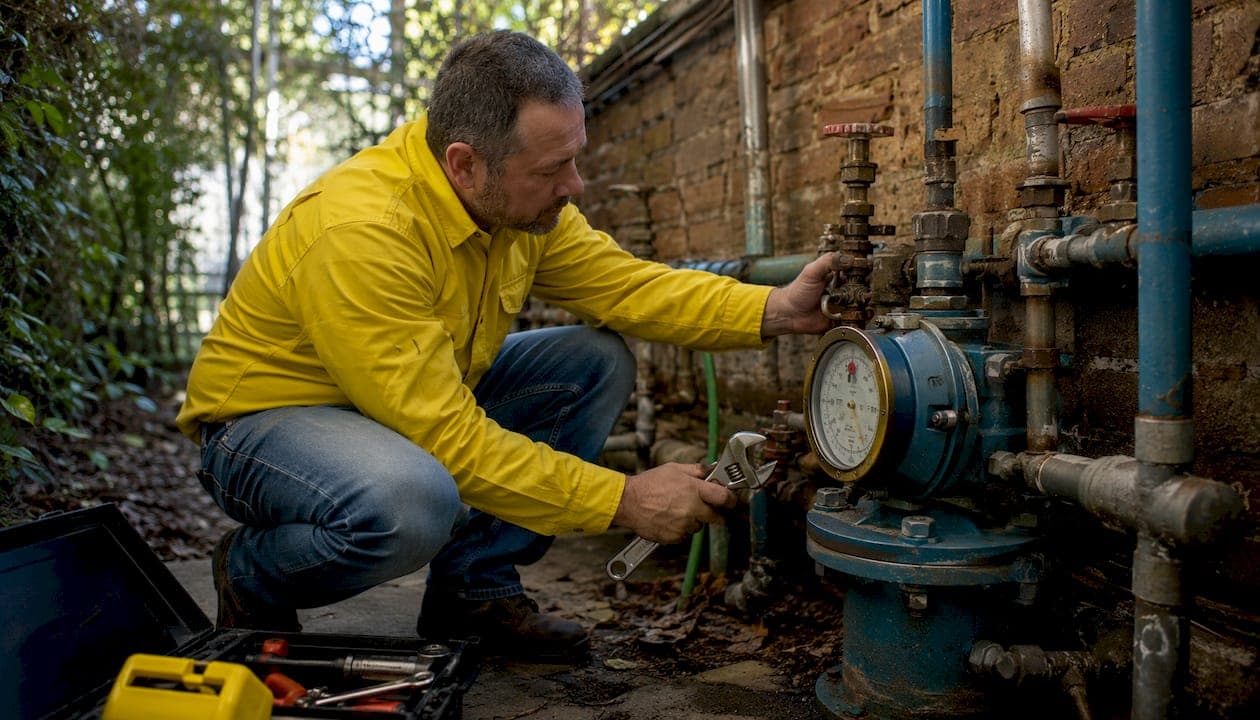
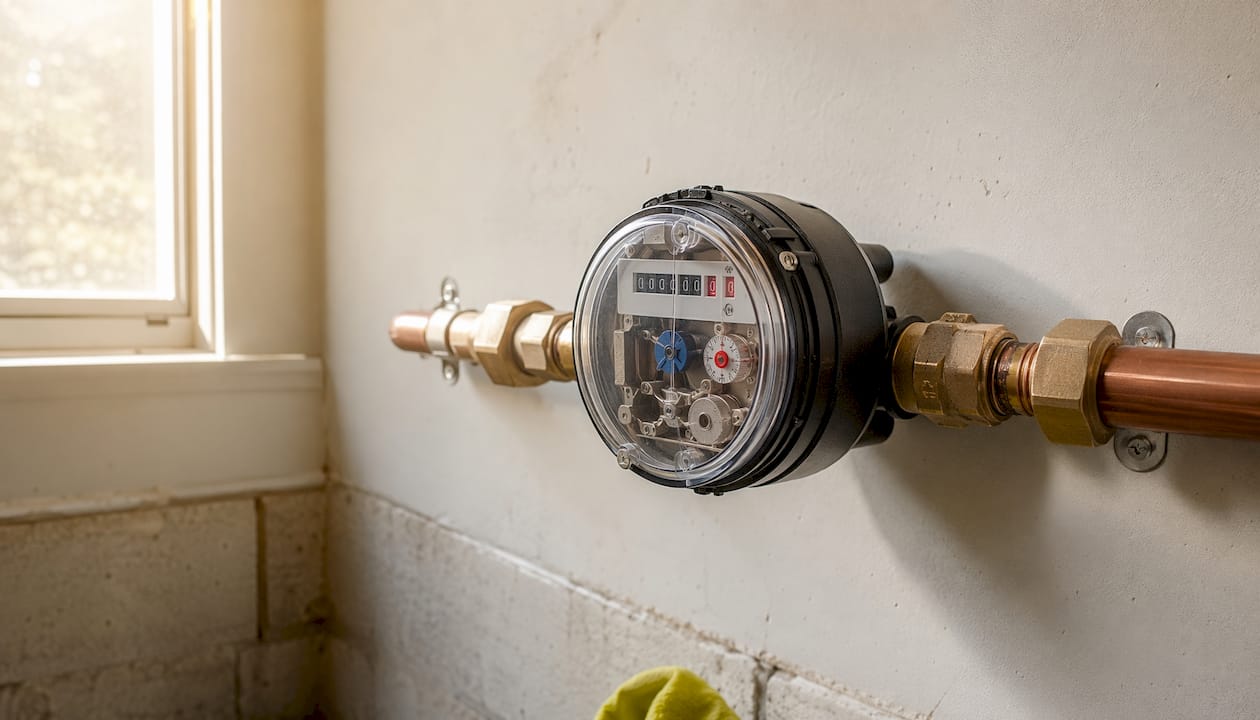
Commercial water metering measures the volume of water flowing through a building's plumbing system, giving facility managers and property owners the data they need to control costs, detect leaks, and meet billing requirements. At its core, a commercial water meter captures flow volume in gallons or cubic feet and records it on a mechanical register or digital display. US utilities collect billions annually by relying on accurate meter readings, which tells you exactly how much rides on getting this right.
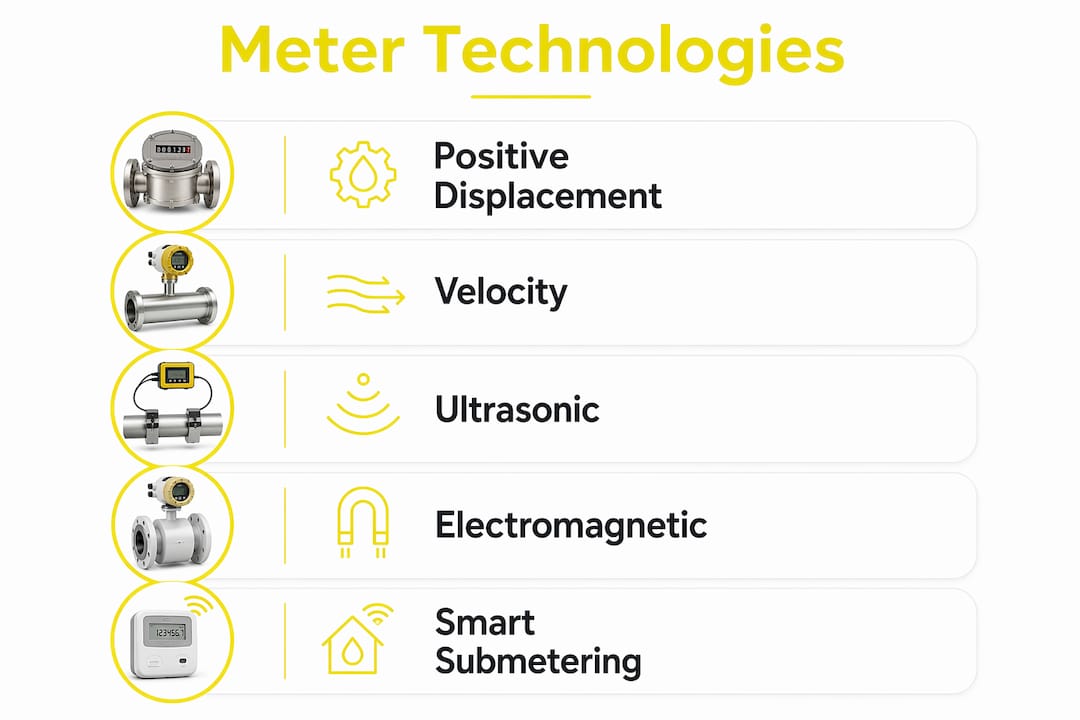
The three dominant meter technologies you'll encounter in commercial buildings are:
- Positive displacement meters (nutating disc design): high accuracy at low flows, ideal for smaller commercial lines
- Velocity meters (turbine, single-jet, multi-jet): built for higher flow volumes in larger facilities
- Ultrasonic and electromagnetic meters: no moving parts, suited for smart metering and retrofit applications
Standards from the American Water Works Association (AWWA), particularly ANSI/AWWA C715-18, govern how these meters are specified, installed, and tested across the US. Those standards aren't bureaucratic fine print. They're the reason a meter installed in a Boston office building today will still read accurately five years from now, assuming it's sized and maintained correctly.
Table of Contents
- 1. What meter technologies do commercial buildings actually use?
- 2. How should you install a commercial water meter correctly?
- 3. How do you test, calibrate, and maintain commercial water meters?
- 4. How do you read a commercial water meter accurately?
- 5. How smart submetering improves commercial water management
- Key Takeaways
1. What meter technologies do commercial buildings actually use?
The meter type you choose shapes everything downstream: billing accuracy, maintenance frequency, and how well the system handles your building's specific flow patterns.
Positive displacement meters work by capturing water in a measuring chamber and counting each fill-and-empty cycle. The nutating disc design, where a disc wobbles inside a chamber to displace a fixed volume with each rotation, is the workhorse for small commercial lines. Nutating disc meters excel at low flows with high precision, making them a natural fit for retail spaces, small offices, or any property where peak demand stays modest.
Velocity meters measure flow rate by tracking how fast water moves through the meter body. Turbine meters use a spinning rotor; single-jet and multi-jet designs direct water against a paddle wheel from one or multiple ports. These handle the higher volumes that larger commercial properties demand, from mid-size office buildings to light industrial facilities.
Ultrasonic and electromagnetic meters represent the current leading edge. Ultrasonic meters use sound wave transit time to calculate flow velocity; electromagnetic meters measure voltage induced by water moving through a magnetic field. Neither type has moving parts, which means no mechanical wear and a longer service life. They also integrate cleanly with smart building systems and remote monitoring platforms.
| Meter Type | Minimum Flow Accuracy | Ideal Application | Key Weakness |
|---|---|---|---|
| Positive displacement (nutating disc) | Very low flows | Small commercial lines, retail | Grit wear over time |
| Turbine (velocity) | Medium-high flows | Large commercial, light industrial | Less accurate at low flows |
| Multi-jet (velocity) | Low-medium flows | Mid-size offices, mixed-use | Limited at very high flows |
| Ultrasonic | Wide range | Retrofits, smart metering | Higher upfront cost |
| Electromagnetic | Wide range | High-purity or corrosive fluids | Requires conductive fluid |
A few practical points worth knowing before you specify a meter:
- Compound meters combine a turbine and a positive displacement element, automatically switching between them based on flow rate. They're common in properties with highly variable demand.
- Meter accuracy degrades at flows outside the rated range, so matching the meter to your building's actual flow profile matters more than picking the most expensive option.
- AWWA standard ANSI/AWWA C715-18 covers electromagnetic and ultrasonic cold-water meters specifically, giving you a benchmark for evaluating any vendor's claims.
2. How should you install a commercial water meter correctly?
Installation errors are responsible for a disproportionate share of meter inaccuracies, and most of them are avoidable. The AWWA Manual M6 lays out the governing guidelines, and the core requirements aren't complicated.
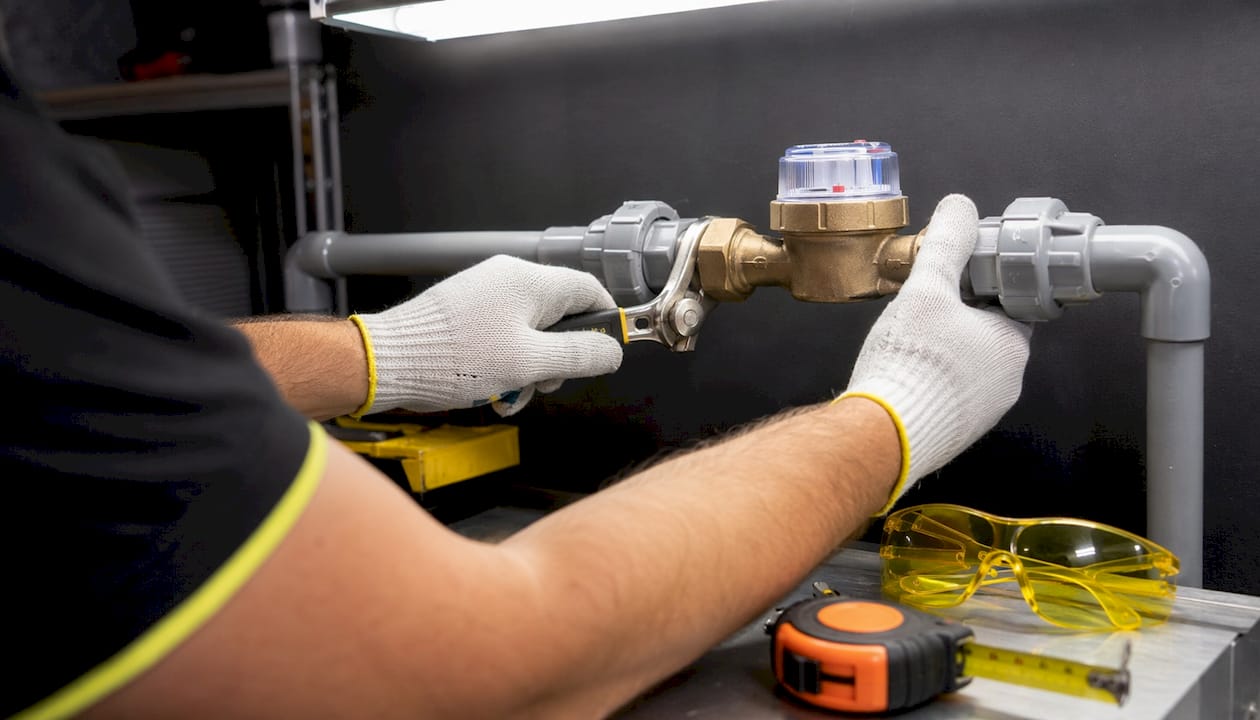
AWWA M6 guidelines require horizontal meter placement and protection from freezing temperatures and excessive heat. A meter installed vertically, or in a mechanical room that swings between 20°F and 120°F, will drift out of calibration faster than one installed under controlled conditions. That's not a minor accuracy concern. Over a billing cycle, even a 2% drift on a high-volume commercial account adds up to real money.
Sizing is the other critical variable. Correct meter sizing relative to expected flow range is the most common cause of premature meter failure and inaccuracy. An oversized meter runs at the low end of its range and misses low-flow events like slow leaks. An undersized meter runs at or above its rated maximum, accelerating wear and causing pressure loss. Understanding why pipe sizing matters in your building's plumbing system is the foundation for getting meter sizing right.
Critical installation precautions from AWWA M6: Install meters horizontally with the register facing up. Provide adequate straight pipe runs upstream and downstream to stabilize flow before it reaches the meter. Protect the meter from freezing with insulation or a heated enclosure. Avoid locations with vibration, water hammer, or direct sunlight. Always install a shutoff valve upstream and a test port downstream for future calibration access.
Additional installation considerations that frequently get overlooked:
- Strainers upstream of the meter catch grit and debris before they reach the measuring element, extending service life significantly for positive displacement designs.
- Bypass piping allows the meter to be isolated and serviced without shutting down the entire building's water supply.
- Backflow preventers are often required by local code downstream of the meter, and their placement affects pressure readings.
- Ultrasonic clamp-on meters avoid pipe cutting entirely in retrofit situations, which reduces installation time and eliminates service interruptions for occupied buildings.
For multi-tenant properties, the placement strategy gets more complex. Submeters at the tenant level require their own installation planning, separate from the utility master meter. A solid approach to managing multi-unit building plumbing accounts for both the master meter and the submeter network from the start.
3. How do you test, calibrate, and maintain commercial water meters?
A meter that was accurate at installation won't stay that way indefinitely. Mechanical wear is the primary culprit, and positive displacement designs are the most vulnerable.
Positive displacement meters wear due to grit, causing "slip" that allows water to pass through the measuring chamber without being counted. After roughly 15 years of service, this wear can become significant enough to produce systematic undercounting. The meter looks fine from the outside, but it's quietly letting water flow unregistered. That's a billing problem for utilities and a cost-control problem for property owners who rely on meter data to track consumption.
Routine testing and calibration steps include:
- Bench testing: removing the meter and testing it at multiple flow rates against a calibrated reference volume, typically done by the utility or a certified meter testing lab
- In-line testing: using a portable reference meter installed temporarily downstream to compare readings without removing the primary meter
- Leak testing: closing all fixtures and checking whether the meter register advances, which indicates a leak somewhere in the system
- Register inspection: checking for fogged or cracked register glass, which can make readings unreliable or unreadable
Recommended testing intervals vary by meter type and age. Positive displacement meters in commercial service typically warrant testing every 10–15 years, or sooner if billing anomalies appear. Turbine meters in high-flow applications may need testing more frequently because they accumulate operating hours faster. Electromagnetic and ultrasonic meters have no moving parts to wear, but their electronics and sensors still benefit from periodic verification.
Maintenance practices that extend meter life:
- Replace strainer screens on a scheduled basis, not just when they're visibly clogged
- Inspect meter body and connections for corrosion or joint leaks annually
- Keep the meter pit or enclosure clear of standing water and debris
- Document all readings, tests, and service events in a log tied to the specific meter serial number
Pro Tip: Set a calendar reminder to pull meter readings at the same time each month and compare them to the prior period. A sudden spike in consumption between readings, with no corresponding change in building operations, is almost always a leak. Catching it in week one versus week six is the difference between a minor repair and a major water damage claim.
Pairing meter maintenance with a broader plumbing maintenance program keeps the whole system accountable, not just the meter in isolation.
4. How do you read a commercial water meter accurately?
Reading a commercial water meter correctly is a skill that pays off every billing cycle. The register format varies by meter type, but the underlying logic is consistent.
Commercial water meters measure cumulative volume in gallons or cubic feet via mechanical register dials or digital displays. The number on the register represents total water consumed since the meter was installed or last reset, not usage for a specific period. To calculate consumption for a billing period, you subtract the previous reading from the current one.
Step-by-step meter reading process:
- Locate the meter register, which faces upward on a horizontally installed meter.
- On an analog dial meter, read the numbers displayed on the odometer-style register from left to right, ignoring any red digits (those typically represent tenths of a unit).
- On a sweep-hand meter, read the large dial like a clock face. One full rotation of the sweep hand equals one unit (gallon or cubic foot, depending on the meter).
- On a digital display meter, read the number shown directly. Some digital meters cycle through multiple screens, including flow rate and alarm status.
- Record the reading with the date and time.
- Compare to your previous recorded reading to calculate consumption for the period.
- Check the low-flow indicator (a small triangle or star on most meters) while all fixtures are closed. Any movement indicates a leak.
A few things that trip up even experienced facility managers:
- Unit confusion: some meters read in cubic feet, others in gallons. One cubic foot equals 7.48 gallons. Misreading the unit can make your consumption look wildly off from the utility bill.
- Multiplier registers: large commercial meters sometimes display a reading that must be multiplied by a factor (10, 100, or 1,000) to get the actual volume. The multiplier is printed on the register face.
- Fogged register glass: condensation inside the register cover obscures the reading. This is a maintenance issue, not a meter failure, but it needs to be addressed before the next read.
Understanding your meter readout directly connects to leak detection. A building consuming 50,000 gallons per month that suddenly shows 65,000 gallons in a billing period, with no change in occupancy or operations, has a problem worth investigating before the next bill arrives.
5. How smart submetering improves commercial water management
Submetering takes the data from a single utility master meter and breaks it down to the tenant, floor, or system level. For a facility manager overseeing a multi-tenant office building or a mixed-use property, that granularity changes what's operationally possible.
At the most basic level, submeters let you allocate water costs accurately to each tenant rather than splitting the master meter bill by square footage or some other proxy. That alone tends to reduce consumption, because tenants who see their own usage data use less water.
On the operational value of smart submetering: Smart submetering allows building operators to identify leaks early and conduct predictive maintenance by flagging abnormal water use compared to a normal baseline. Catching a slow leak in a tenant's restroom before it becomes a ceiling collapse is the kind of outcome that justifies the system's cost in a single incident.
The operational benefits extend well beyond billing:
- Early leak detection: a submeter that shows 3 AM water flow in a space that should be empty is a leak alert, not a mystery
- Predictive maintenance: usage patterns that drift from baseline over weeks can indicate a failing fixture, a running toilet, or a slow pipe joint failure
- Regulatory compliance: some jurisdictions now require submetering in commercial buildings above a certain size, and the trend is moving toward broader requirements
- Integration with property management software: modern submeter systems push data directly into building management platforms, eliminating manual reads and spreadsheet reconciliation
- Tenant transparency: usage dashboards give tenants visibility into their own consumption, which supports sustainability reporting and green building certifications
Automated Meter Reading (AMR) and Advanced Metering Infrastructure (AMI) enable remote data collection and two-way communications between meters and building management systems. AMR is one-way: the meter transmits data on a schedule. AMI is two-way: the system can query the meter, push firmware updates, and receive real-time alerts. For a large commercial property, AMI is the more capable choice.
Aquana and Metron both operate in the commercial submetering space and emphasize that the value of these systems compounds over time. The first leak caught pays for months of subscription cost. The operational picture that emerges from 12 months of granular data, showing which floors, tenants, or systems drive consumption, is something no single meter reading can provide. AWWA standards and guidelines provide the technical foundation that makes interoperability between meters and these monitoring platforms reliable.
Key Takeaways
Commercial water metering in US buildings works best when meter type, sizing, installation, and monitoring are treated as a connected system rather than independent decisions.
| Point | Details |
|---|---|
| Meter type determines accuracy | Positive displacement suits low flows; turbine and compound meters handle high-volume commercial demand. |
| Sizing errors cause most failures | Matching meter size to actual flow range prevents premature wear and sustained inaccurate readings. |
| AWWA M6 governs installation | Horizontal placement and protection from temperature extremes are non-negotiable for accurate operation. |
| Regular testing catches drift | Positive displacement meters develop slip after roughly 15 years; bench or in-line testing catches undercounting before it becomes a billing problem. |
| Smart submetering adds operational depth | AMR and AMI systems flag leaks, support predictive maintenance, and enable tenant-level cost allocation. |
Mysticvalleyservices works with facility managers and property owners across Massachusetts on commercial plumbing systems, including water meter installation, sizing, and maintenance. If your building's meters are aging, your billing doesn't match your expectations, or you're considering submetering for a multi-tenant property, the commercial plumbing services at Mysticvalleyservices are built for exactly that kind of work. A preventive plumbing contract keeps meter testing, maintenance, and system inspections on a schedule so nothing gets missed between billing cycles.