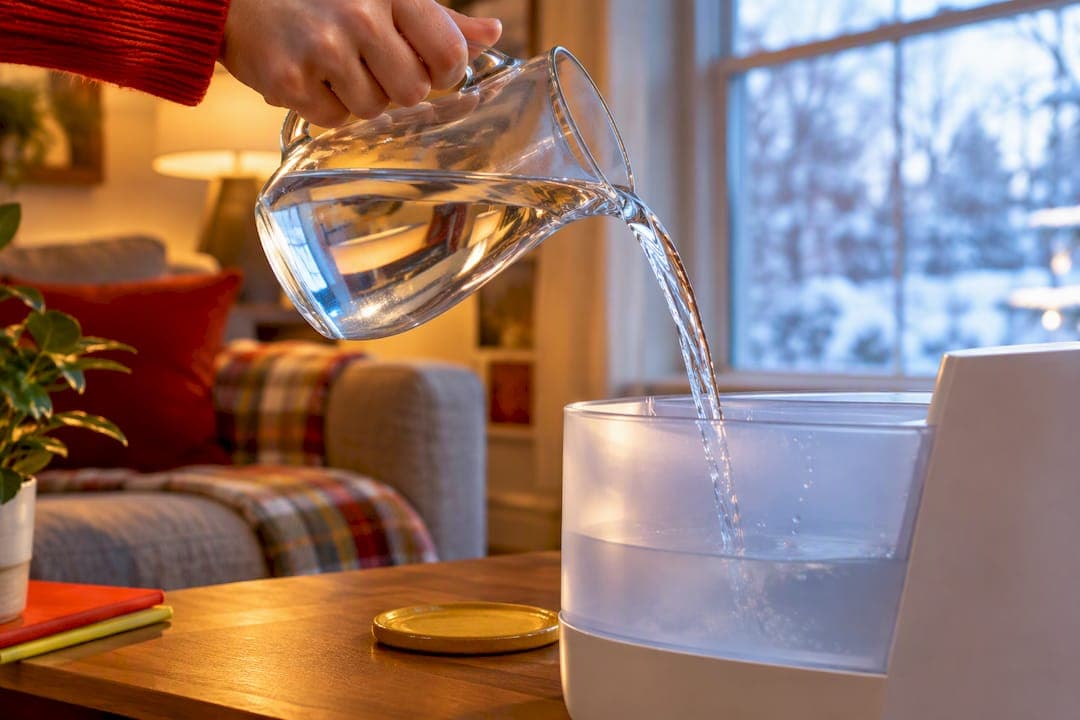
Winter makes indoor air dry because cold outdoor air holds far less moisture, and once you heat that air, its relative humidity drops even further. The EPA recommends keeping indoor relative humidity between 30% and 50% in winter. Before you do anything else, measure your home's humidity with a hygrometer. If you're below that range, add moisture carefully rather than guessing.
TL;DR:
- Forced-air furnaces dry out indoor air fastest because they circulate large volumes of air without adding moisture back.
- Opening windows in winter for ventilation will likely reduce indoor humidity due to colder outdoor air holding less moisture.
- Maintaining indoor relative humidity between 30% and 50% is crucial to prevent health issues and structural damage.
- Using a hygrometer helps accurately monitor humidity levels, preventing over-humidifying and mold growth.
- Whole-home humidifiers and building envelope improvements are more effective long-term solutions than portable units alone.
Table of Contents
- Why winter indoor air gets so dry
- Signs and health effects of dry indoor air
- Quick practical fixes homeowners can try right away
- Humidifiers: types, selection, and maintenance
- Preventing over-humidifying and how to monitor levels
- When to call an HVAC or plumbing professional
- Getting the balance right without guesswork
- How Mystic Valley Home Services can help with winter humidity
- Sources
- FAQ
Why winter indoor air gets so dry
Relative humidity measures how much moisture the air holds compared to the maximum it could hold at that temperature. Cold air simply can't carry much water vapor, so when your furnace or boiler heats that cold outdoor air as it enters your house, the relative humidity inside falls even though the actual moisture content hasn't changed much at all.
Your heating system's design affects how bad this gets. Forced-air furnaces tend to dry out a house fastest because they cycle large volumes of air without adding moisture back. Steam and hot-water radiators heat more gently and don't move as much air, so rooms often feel a bit less parched. Heat pumps fall somewhere in between, depending on how often they run.
Drafts and gaps in your building envelope make the problem worse.
- Air leaks around windows, doors, and attic penetrations let cold, dry outdoor air replace the humid air you're trying to hold onto.
- Poor insulation lets indoor humidity escape through walls and ceilings, similar to how heat escapes.
- Older homes with single-pane windows or minimal weatherstripping lose humidity faster than tightly sealed newer builds.
None of this means your house is broken. It means the combination of cold outdoor air and constant heating is working against you every day from November through March.
Signs and health effects of dry indoor air
Dry air announces itself in ways that are easy to miss until they add up. Static shocks when you touch a doorknob, chapped lips that won't heal, cracking in wood furniture or flooring, and a total absence of window condensation on cold mornings are all clues your indoor humidity has dropped too low.
- Skin gets tight, flaky, or itchy, especially on hands and lower legs.
- Lips crack and split more than usual.
- Nosebleeds become more frequent, particularly in kids.
- Sore throat or scratchy voice shows up first thing in the morning.
- Wood floors, doors, and furniture develop small gaps or cracks.
Breathing dry air is linked to increased respiratory irritation and susceptibility to infection, according to Cleveland Clinic guidance on winter air quality, which also notes that dry conditions can aggravate asthma and sinusitis. If you have asthma or eczema, dry winter air often makes flare-ups more frequent and harder to control.
See a doctor if you have nosebleeds that won't stop easily, a cough or sinus pain that lingers for more than a week or two, or asthma symptoms that worsen despite your usual medication. Humidifiers help with comfort, but they aren't a substitute for medical care when symptoms persist.
Quick practical fixes homeowners can try right away
You don't need to buy anything to start raising humidity tonight. Several no-cost or low-cost methods work well as a stopgap while you decide on a longer-term plan.
- Boil water on the stove for a few minutes at a time, always attended, and let the steam disperse into the kitchen.
- Set shallow bowls of water on radiators or near heating vents so evaporation adds moisture as the room warms.
- Dry laundry on an indoor rack instead of in the dryer, which releases water vapor into the air as clothes dry.
- Run a hot shower with the bathroom door open for a few minutes, then crack a window briefly afterward to vent excess moisture and prevent mold.
- Shorten shower length and lower the water temperature slightly, since very hot water strips more oil from skin and worsens dryness.
- Drink water consistently through the day and apply a fragrance-free moisturizer right after bathing, while skin is still damp.
A portable humidifier is the most consistent fix. Run it in the room where you spend the most time, usually the bedroom overnight, and place it a few feet from the wall on a hard, water-resistant surface. Fill the tank fresh each day, check the humidistat setting if it has one, and avoid running it right next to your bed where mist can settle on bedding.
Pro Tip: Check your indoor humidity before and after any fix with a $10 to $15 digital hygrometer. Without one, you're guessing whether it's working.

Humidifiers: types, selection, and maintenance
Not all humidifiers work the same way, and the right choice depends on your room, your budget, and whether anyone in the house has asthma or allergies.
- Warm mist or steam units boil water and release vapor, which kills most microbes in the tank but poses a burn risk around young children.
- Evaporative humidifiers pull air through a wet wick or filter, adding moisture gradually and self-regulating somewhat as humidity rises.
- Ultrasonic or cool-mist units use vibration to release a fine mist and run quietly, but they can disperse minerals and microbes into the air if the water or tank isn't clean.
- Whole-home systems connect to your furnace or ductwork and humidify the entire house evenly rather than one room at a time.
The EPA cautions that ultrasonic and cool-mist humidifiers can disperse minerals and biological pollutants into the air if not properly maintained, and recommends that people with lung conditions talk to a clinician before choosing a humidifier type. Using distilled or demineralized water instead of tap water cuts down on the white mineral dust that ultrasonic units can leave on furniture, and reduces what gets aerosolized into your lungs.
Maintenance isn't optional. Empty and dry the tank daily rather than letting water sit, since standing water grows bacteria and mold within days. Clean the unit on the schedule your manufacturer lists, usually weekly, using a vinegar solution or the cleaning product they specify. Replace filters or wicks on evaporative models as directed, and use a built-in or plug-in humidistat so the unit shuts off automatically once you hit your target range instead of running unchecked.
Preventing over-humidifying and how to monitor levels
More humidity isn't automatically better.
- Watch for water droplets or fog on the inside of windows on cold mornings, which usually means humidity is too high for the outdoor temperature.
- Check humidistat readings against a separate hygrometer placed away from direct sun or drafts for an accurate baseline.
- Keep targets on the conservative end, often 30% to 40%, during the coldest stretches of winter when the temperature difference between inside and outside is greatest.
- If you spot condensation or a musty smell, lower the humidifier's output first, then run bathroom or kitchen exhaust fans longer to clear excess moisture.
If mold appears despite adjustments, it's worth having someone check insulation and window seals, since the building envelope itself may be trapping moisture where it shouldn't be.
When to call an HVAC or plumbing professional
Some fixes go beyond what a portable humidifier or a bowl of water can solve. Call a professional when low humidity persists despite consistent effort, when you're considering a whole-home humidifier tied into your furnace, when condensation or mold keeps returning, or when you suspect duct leaks are pulling in unconditioned outside air.
- A pro can size a whole-home humidifier correctly for your square footage and integrate it with a humidistat and your existing heating system.
- Duct inspection and repair address leaks that waste heated, humidified air before it reaches your rooms.
- Air sealing work reduces the cold-air infiltration that keeps undoing your humidity fixes.
- A heating system tune-up makes sure your furnace or boiler is running efficiently, which affects both comfort and how hard your humidifier has to work.
Getting the sizing and duct connections right the first time saves you from chasing humidity problems all winter.
Getting the balance right without guesswork
The mistake most homeowners make isn't ignoring dry air, it's overcorrecting once they notice it. Cranking a humidifier to full blast without measuring anything just trades chapped lips for mold on the windowsill a few weeks later.
Measure first, adjust gradually, and treat air sealing as the fix that pays for itself over years, not one winter. Whether a portable unit or a whole-home system makes sense depends on your house's leakiness and your budget, not on which one sounds more impressive.
— Matt
How Mystic Valley Home Services can help with winter humidity
If portable humidifiers aren't cutting it, a whole-home system tied into your heating setup solves the problem for every room at once instead of just the one where you run a tabletop unit. 
We handle heating tune-ups, humidistat integration, and boiler and furnace repair across our Massachusetts service area, along with duct inspections and air-sealing work that stop cold, dry air from undoing your efforts room by room. Our visits typically include an inspection of the heating system and building envelope, followed by a recommendation and a quote before work begins. If dry air comes paired with an aging water heater or boiler, our high-efficiency boiler installation and water heater services team can address both at once. Reach out through our services page to schedule a visit.
Sources
This article draws on guidance from the EPA, Cleveland Clinic, Stanford research on humidity and viral survival, and a peer-reviewed environmental health study. Talk to a doctor for personal health concerns.
This article is general information, not a substitute for advice from a qualified doctor. Consult a qualified healthcare professional about your own circumstances before acting on anything here.
- Use and care of home humidifers | US EPA
- Dry Air Can Negatively Impact Your Health — Here’s What To Do About It
FAQ
Does opening a window help dry air?
Opening a window in winter usually makes indoor air drier, not less, since outdoor winter air holds even less moisture than heated indoor air. It's more useful briefly after a shower or cooking to vent excess steam and prevent condensation, not as a general humidity fix.
Does AC work better in dry or humid air?
Air conditioners are designed to remove humidity as they cool, so they work efficiently in humid conditions but aren't relevant to winter dryness. In cold weather, the heating system and any added humidification matter far more than air conditioning.
What are the signs of dry air in a home?
Common signs include chapped lips, dry or flaky skin, static shocks, cracked wood furniture or flooring, and a lack of condensation on windows during cold weather. Frequent nosebleeds and a scratchy throat, especially in the morning, are also common indicators.
Is dry air bad for your health?
Dry air can increase respiratory irritation and susceptibility to infection, according to Cleveland Clinic, and can worsen asthma, sinusitis, and skin conditions like eczema. Maintaining indoor relative humidity between 30% and 50% helps reduce these effects for most people.