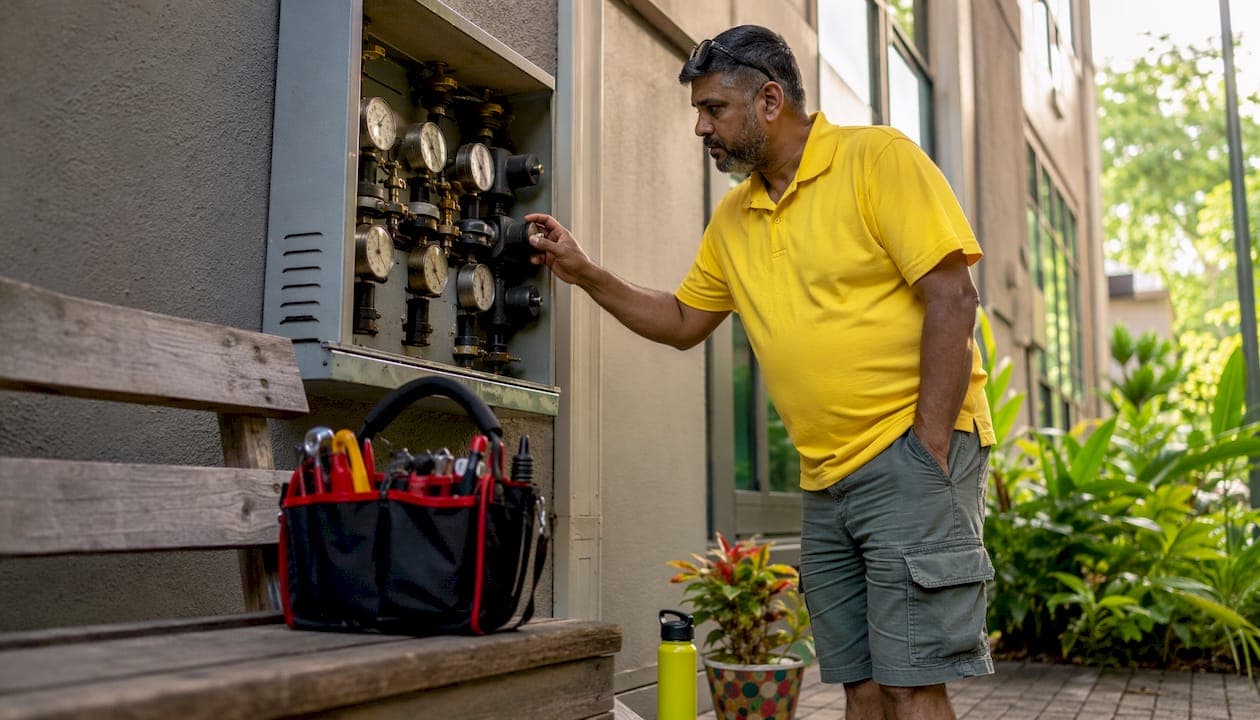
The three moves that cut commercial water bills fastest are metering your usage, fixing leaks immediately, and upgrading high-use fixtures and HVAC systems. Everything else builds upon those three.
Quick priorities:
- Read your main meter tonight during unoccupied hours. Any movement means you have an active leak.
- Check toilet flappers and urinal flush valves — these are the most common silent wasters in commercial restrooms.
- Submeter your cooling tower and irrigation before anything else; those two end uses hide the largest undetected losses.
- Replace pre-rinse spray valves in any commercial kitchen. It's a one-hour job with immediate payback.
- Schedule a boiler and hot-water loop inspection before winter. In Massachusetts, freeze damage and blowdown waste compound each other.
The EPA WaterSense program frames water efficiency as a total cost of ownership issue: every gallon saved also cuts energy for heating, sewer discharge fees, and chemical treatment costs.
Table of Contents
- What can your facilities team do this week to save water?
- How do you measure water use with meters, submeters, and smart monitoring?
- How do you find and fix leaks before they become expensive?
- Which fixture upgrades give commercial buildings the best ROI?
- How do boilers, cooling towers, and hot-water systems waste water?
- What water reuse options actually make sense for commercial sites?
- How do you reduce outdoor water use at a commercial site?
- How do you embed water conservation into daily operations?
- How do you calculate ROI and find rebates for water conservation projects?
- Massachusetts winterization: what do commercial buildings need before freeze season?
- How do you phase a water conservation program over time?
- Key Takeaways
- What commercial buildings in Massachusetts actually look like from the field
- Ready to stop water waste in your Massachusetts commercial building?
- Authority sources and where to read more
What can your facilities team do this week to save water?
Low-cost wins don't require a capital budget. Most take under two hours each.
- Read the main meter at midnight (30 min, maintenance staff). Record the reading, leave the building unoccupied, and check again in two hours. Any increase signals a leak.
- Inspect all toilet flappers and fill valves (1–2 hrs, janitorial or maintenance). A worn flapper can waste hundreds of gallons per month silently.
- Sweep exterior pavement instead of hosing it down (ongoing, janitorial). The EPA CII guide lists this as a no-cost O&M adjustment with immediate impact.
- Turn off continuous-flow equipment between uses (same day, staff training). Mop sinks, food disposals, and decorative fountains are common culprits.
- Check faucet aerators for flow rate (1 hr, maintenance). WaterSense labeled lavatory faucets flow at a reduced rate designed for efficiency — if yours are running higher, aerator swaps cost under $5 each.
- Pull two years of water bills and graph monthly use (2 hrs, manager). Spikes reveal seasonal leaks or equipment problems that went unnoticed.
Pro Tip: Schedule your overnight meter check during a holiday or long weekend when the building is guaranteed empty. That's the cleanest baseline you'll ever get, and it removes any doubt about whether a reading spike is occupancy or a real leak.
Tenants and janitorial staff should be briefed on steps 4 and 5. The EPA Getting Started guide is direct: education and clear performance metrics are what sustain reductions after the initial fixes are done.
How do you measure water use with meters, submeters, and smart monitoring?
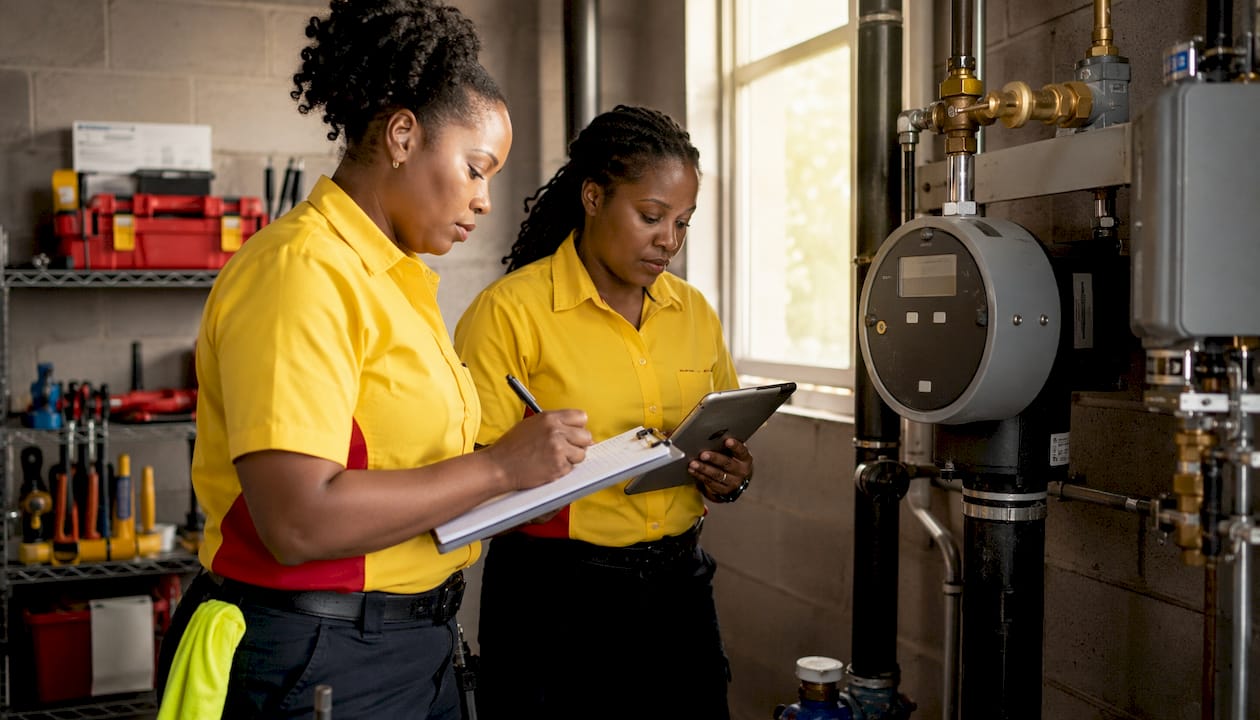
A single main meter tells you how much water enters the building. It tells you almost nothing about where it goes. Submeters are what reveal the difference.
What to submeter first:
| End Use | What the Submeter Reveals |
|---|---|
| Cooling tower makeup line | Evaporation losses, drift, and blowdown waste |
| Irrigation system | Seasonal overwatering, broken heads, controller errors |
| Commercial kitchen | Dishwasher and pre-rinse valve consumption |
| Domestic hot water loop | Recirculation losses and heat exchanger leaks |
| Tenant spaces (multi-tenant) | Individual consumption for billing and benchmarking |
The WaterSense at Work guide recommends integrating submeters with your building management system (BMS) or an advanced metering infrastructure (AMI) platform so you get automated alerts when flow exceeds a set threshold overnight. That alert is often the first sign of a pipe failure or stuck valve.
When selecting meters, require pulse-output or digital communication capability, a read frequency of at least hourly, and a durability rating appropriate for the installation environment (outdoor irrigation meters need freeze protection in Massachusetts).
How do you find and fix leaks before they become expensive?
Silent leaks are the most expensive kind because they run for months before anyone notices. A structured SOP catches them early.
- Read the main meter during unoccupied hours (nights, weekends, holidays). Any positive flow is unaccounted water.
- Isolate zones using submeters or valve shutoffs. Close one zone at a time and watch the main meter. The zone where closing the valve stops the flow is your problem area.
- Use acoustic listening equipment or a drain camera for lines you can't visually inspect. For underground or concealed drain lines, CCTV drain surveys can locate failures without opening walls.
- Log every finding — location, estimated flow rate, date discovered, and repair status. This log becomes your SOP record and supports rebate applications.
- Repair within 48 hours for active leaks; within 30 days for slow drips. Escalate to a licensed plumbing contractor for anything involving supply lines, boiler connections, or pressurized systems.
Pro Tip: The most reliable leak-test window is 2:00 AM to 4:00 AM on a weekday when the building is unoccupied but HVAC is still running normally. That eliminates the variable of overnight HVAC cycling and gives you the cleanest non-occupant flow reading.
A commercial plumbing inspection checklist adapted to your building layout makes this SOP repeatable for any maintenance staff member, not just the person who set it up.
Which fixture upgrades give commercial buildings the best ROI?
Rank these by payback speed and ease of installation:
- Pre-rinse spray valves (food service): Replacing a 1.6 gpm valve with a WaterSense labeled 1.0 gpm model saves roughly 7,000–9,000 gallons per year per station. Installation takes under an hour and costs $30–$80 per valve.
- Toilet flappers and fill valves: Flapper replacement costs under $15 and stops a running toilet that can waste hundreds of gallons per month.
- Low-flow or dual-flush toilets: High-efficiency models (1.28 gpf or less) cut flush volume significantly versus older 3.5 gpf fixtures. Expect $200–$600 per unit installed.
- Faucet aerators: A $5–$15 aerator swap brings most lavatory faucets to 1.5 gpm or below. In-house maintenance can handle this.
- Pressure-reducing valves (PRVs): If building pressure exceeds 80 psi, a PRV cuts flow at every fixture simultaneously. A licensed plumber should size and install these.
Use in-house staff for aerators and flappers. Hire a licensed contractor for PRVs, toilet replacements involving supply line work, and anything in a commercial kitchen. When requesting quotes, ask for WaterSense labeled products specifically and require the contractor to document pre- and post-installation flow rates.
How do boilers, cooling towers, and hot-water systems waste water?
HVAC systems are often the largest water consumers in a commercial building, and most of the waste is invisible.
Key waste points and fixes:
- Cooling tower makeup water: Optimize cycles of concentration (CoC). Running at CoC 3 instead of CoC 5 wastes roughly 20% more water in blowdown. Hire a water treatment vendor to monitor conductivity and maximize CoC safely.
- Boiler blowdown: Excessive blowdown wastes both water and the energy used to heat it. Clean conductivity meters monthly and verify that blowdown frequency matches actual water chemistry, not a fixed timer.
- Condensate recovery: Returning steam condensate to the boiler reduces makeup water demand and cuts energy costs. Install a condensate return system if one isn't already in place.
- Hot water recirculation loops: Uninsulated recirculation lines lose heat continuously, driving up both energy and water use as occupants run taps waiting for hot water. Insulate all accessible hot water lines.
- Single-pass cooling: Any equipment using once-through cooling water should be retrofitted or replaced. Install solenoid valves to shut off cooling water when equipment is idle.
The WaterSense commercial assessment checklist recommends installing flow meters on both the makeup and blowdown lines of cooling towers and boilers so you can track losses in real time. For annual boiler servicing in Massachusetts, always use a licensed contractor — commercial boiler work requires proper credentials under state law.
What water reuse options actually make sense for commercial sites?
Three reuse streams are practical for most commercial buildings without major infrastructure:
- Air handler condensate: Clean, low-mineral water that's ideal for cooling tower makeup or irrigation. Collection requires a simple drain pan and pump. Maintenance is minimal.
- Rainwater harvesting: Suitable for irrigation and toilet flushing where Massachusetts regulations permit. Requires a storage tank, first-flush diverter, and basic filtration. Check with your local municipality before installing — permitting requirements vary by town.
- Graywater from sinks: Technically feasible for toilet flushing but requires treatment, separate plumbing, and state approval under Massachusetts plumbing code. The permitting complexity makes this practical mainly for new construction or major renovations.
Reuse projects generally become cost-effective when they offset a large, consistent water demand — cooling tower makeup and irrigation are the best candidates. For smaller buildings, condensate capture is the easiest entry point with the lowest regulatory burden.
How do you reduce outdoor water use at a commercial site?
Irrigation is often the most controllable large water use on a commercial property, and the fixes are mostly low-cost.
Irrigation audit checklist:
- Walk every zone and adjust sprinkler heads for head-to-head coverage. Gaps mean dry spots; overlaps mean overwatering.
- Install rain sensors or soil moisture sensors on every controller. The EPA CII guide identifies these as high-impact, low-cost controls.
- Set watering schedules for early morning (4:00–7:00 AM) to minimize evaporation.
- Convert high-traffic turf areas to drip irrigation or native plantings where possible.
- Install a dedicated irrigation submeter to separate outdoor use from indoor consumption.
Planting recommendations: Native Massachusetts species like switchgrass, inkberry, and native ferns require little supplemental irrigation once established. Replacing turf in low-visibility areas with these species cuts irrigation demand without affecting curb appeal.
Sample landscape contract language to add to vendor agreements:
- Contractor shall install and maintain a functioning rain sensor on all irrigation controllers.
- Irrigation schedules shall not exceed [X] minutes per zone per week during non-drought periods without written approval.
- Contractor shall not irrigate during or within 24 hours of measurable rainfall.
How do you embed water conservation into daily operations?
Water savings don't stick without a team and a process. One-time fixes revert; SOPs don't.
Recommended team roles:
- Owner or property manager: Sets goals, approves capital, reviews monthly reports.
- Maintenance lead: Executes inspections, logs findings, coordinates contractor work.
- Tenant liaison: Communicates behavioral guidelines, collects tenant reports of leaks or waste.
- Contractor point-of-contact: Single relationship for licensed plumbing, HVAC, and irrigation work.
SOP outline for routine inspections:
- Monthly: Read all meters, compare to prior month, flag anomalies above 10%.
- Quarterly: Walk all restrooms, kitchens, and mechanical rooms with the leak-detection checklist.
- Seasonally: Winterization check (October), irrigation startup (April), cooling tower startup (May).
- Annually: Full water audit against the facility water balance.
Performance metrics to track:
- Gallons per square foot per month (benchmark against prior year)
- Number of leak incidents reported and resolved per quarter
- Percentage of end uses covered by submeters
The EPA WaterSense at Work guide frames this as a continuous cycle: plan, meter, act, and repeat. Embedding water tasks into existing O&M SOPs is what separates buildings that sustain savings from those that see a one-year dip and then drift back up.
How do you calculate ROI and find rebates for water conservation projects?
Total cost of ownership is the right frame. Water savings alone often understate the case.
TCO components to include:
- Water volume savings (gallons × utility rate)
- Sewer savings (most utilities charge sewer fees based on metered water input)
- Energy savings (heating water is expensive; reducing hot water use cuts gas or electric bills)
- Chemical and maintenance savings (fewer blowdown cycles mean less treatment chemical)
Sample leak-loss figures from EPA data:
| Leak Type | Estimated Loss |
|---|---|
| Leaking toilet (small) | hundreds of gallons per month |
| Dripping faucet (1 drip/second) | 7,000–9,000 gallons per year |
| Running toilet (medium) | Several thousand gallons per month |
A single running toilet left unrepaired for a year can cost hundreds of dollars in water and sewer charges alone, before accounting for energy to heat that water.
Where to find rebates in Massachusetts:
- Mass Save: Primarily energy-focused but includes rebates for heat pump water heaters that reduce hot water energy costs.
- Local water utilities: Many Massachusetts municipal water departments offer rebates for WaterSense labeled toilets, urinals, and irrigation controllers. Contact your utility's conservation office directly.
- EPA WaterSense: Maintains a searchable database of utility rebate programs at epa.gov/watersense.
- MassDEP: Offers guidance on stormwater and water reuse permitting that can reduce project costs.
Massachusetts winterization: what do commercial buildings need before freeze season?
Massachusetts winters are hard on plumbing. A single freeze event in an unprotected pipe can release thousands of gallons and cause structural damage.
Seasonal winterization checklist:
- Drain and blow out all irrigation lines by October 15. Residual water in lateral lines will freeze and crack fittings.
- Insulate all exposed supply lines in unheated spaces: parking garages, mechanical rooms with exterior walls, crawlspaces.
- Shut off and drain exterior hose bibs. Install insulated covers on any that remain connected.
- Service the boiler before heating season — clean heat exchanger surfaces, test pressure relief valves, verify expansion tank charge.
- Verify freeze protection on cooling tower basins. Electric basin heaters should be tested before the first hard frost.
- Check pipe insulation in attic mechanical spaces. Roof-mounted equipment is especially vulnerable in Massachusetts.
Contractor scope for winterization service:
- Irrigation blowout with compressed air (licensed irrigation contractor or plumber)
- Boiler inspection and tune-up (licensed MA plumber or HVAC technician)
- Pipe insulation inspection and repair (plumber or insulation contractor)
- Temporary heat verification for any space that drops below 40°F
Pro Tip: Book your winterization contractor by September. Massachusetts plumbers are fully booked by late October, and a freeze event before your pipes are protected is a much more expensive call.
For detailed commercial winterization procedures specific to Massachusetts building types, review the scope with your contractor before the first cold snap.
How do you phase a water conservation program over time?
Phase 1 — Assessment and metering (Months 1–2):
- Pull two years of water bills and create a facility water balance.
- Install submeters on cooling tower, irrigation, and kitchen end uses.
- Complete the EPA WaterSense simple assessment checklist.
- Budget: $2,000–$8,000 depending on number of submeters and building complexity.
Phase 2 — Quick wins and leak repairs (Months 2–4):
- Execute the week-one checklist from Section 2.
- Repair all identified leaks.
- Replace aerators, flappers, and pre-rinse valves.
- Budget: $500–$3,000 for parts and labor.
Phase 3 — Targeted retrofits (Months 4–12):
- Replace high-volume toilets and urinals with WaterSense labeled models.
- Install PRVs where pressure exceeds 80 psi.
- Optimize cooling tower CoC and boiler blowdown.
- Budget: $5,000–$30,000+ depending on fixture count and system complexity.
Phase 4 — Reuse and irrigation redesign (Year 2+):
- Implement condensate capture for cooling tower makeup.
- Redesign irrigation zones with native plantings and drip conversion.
- Budget: Highly variable; start with condensate capture as the lowest-cost entry.
Hiring checklist for each phase:
- Verify Massachusetts plumbing license for any supply-line or boiler work.
- Request WaterSense product specifications in writing before fixture orders.
- Ask for pre- and post-installation flow rate documentation.
- For commercial plumbing renovations, get at least two scoped quotes with itemized labor and materials.
For drain diagnostics during Phase 1, commercial drainage inspection services can identify hidden failures before you finalize your water balance.
Key Takeaways
Metering, leak repair, and fixture upgrades deliver the fastest, most measurable water savings in commercial buildings, and Massachusetts winterization prevents the losses that undo all of it.
| Point | Details |
|---|---|
| Meter first, then act | Install submeters on cooling towers, irrigation, and kitchens before spending on retrofits. |
| Leaks can account for a significant portion of water use | EPA data shows even a small leaking toilet wastes hundreds of gallons per month. |
| TCO beats simple water savings | Include energy, sewer, and chemical savings to make the full financial case for upgrades. |
| SOPs sustain savings | Embed monthly meter reads, quarterly inspections, and seasonal checks into written procedures. |
| Mysticvalleyservices covers the critical work | Licensed MA plumbers for boiler service, winterization, leak repair, and fixture upgrades across Massachusetts. |
What commercial buildings in Massachusetts actually look like from the field
The most common pattern Mysticvalleyservices sees in Massachusetts commercial properties is aging supply lines that haven't been touched since the original build, combined with irrigation systems that were set in spring and never adjusted. The result is slow leaks running through winter and irrigation controllers watering through rainstorms all summer.
The fixes that produce the clearest results are usually the least glamorous: a flapper replacement here, an aerator swap there, a cooling tower conductivity controller that was stuck on manual. None of those make a compelling capital project, but together they consistently move the needle on water bills within the first billing cycle.
Winterization is where the stakes get real. A single uninsulated pipe in a Massachusetts parking garage can fail during a January cold snap and release water for hours before anyone notices. The buildings that avoid that outcome are the ones with a written winterization checklist and a contractor relationship established before October.
Mysticvalleyservices works with commercial property owners across Massachusetts on exactly this kind of preventive work. The goal isn't a one-time project — it's a building that doesn't surprise you with a $4,000 water bill in February.
Ready to stop water waste in your Massachusetts commercial building?
Mysticvalleyservices provides commercial plumbing inspections, boiler servicing, winterization, and preventive maintenance contracts for property owners across Massachusetts. Where most contractors show up for emergencies, Mysticvalleyservices is built for the work that prevents them: the leak that hasn't burst yet, the boiler that needs service before heating season, the irrigation system that's been overwatering since April.
If you manage a commercial or mixed-use building in Massachusetts and want a licensed plumber to walk through your facility, document what's wasting water, and give you a prioritized repair plan, that's exactly what a preventive plumbing contract covers. You get scheduled inspections, priority response, and a contractor who already knows your building's systems.
See the full range of plumbing and heating services Mysticvalleyservices offers, or check areas we serve to confirm coverage for your property.
Authority sources and where to read more
The following EPA resources are the primary references behind this guide. Save them and share them with your property manager or contractor before starting any water conservation project.
- WaterSense at Work: Best Management Practices — The most comprehensive EPA guide for commercial facilities. Covers metering, submetering, fixture upgrades, cooling systems, and water management planning. Start here for technical depth on any topic in this article.
- EPA Getting Started Guide — Shorter and more accessible. Best for building owners who are new to water management and want a quick orientation before diving into the full WaterSense at Work document.
- EPA CII Users' Guide — Focused on commercial, industrial, and institutional users. Strong on no-cost O&M adjustments and irrigation controls. Share this with your facilities team.
- WaterSense Simple Assessment Checklist — A printable checklist covering every major end use. Use it as the starting document for your Phase 1 assessment walk-through.
- EPA Commercial Buildings Overview — Explains the business case for water efficiency, including the total cost of ownership framework. Useful for presenting the financial case to building owners or boards.
The WaterSense at Work document is the one to hand a contractor when you want them to understand the scope of a water audit or submeter installation. The CII guide is the one to give your maintenance team for daily O&M reference.